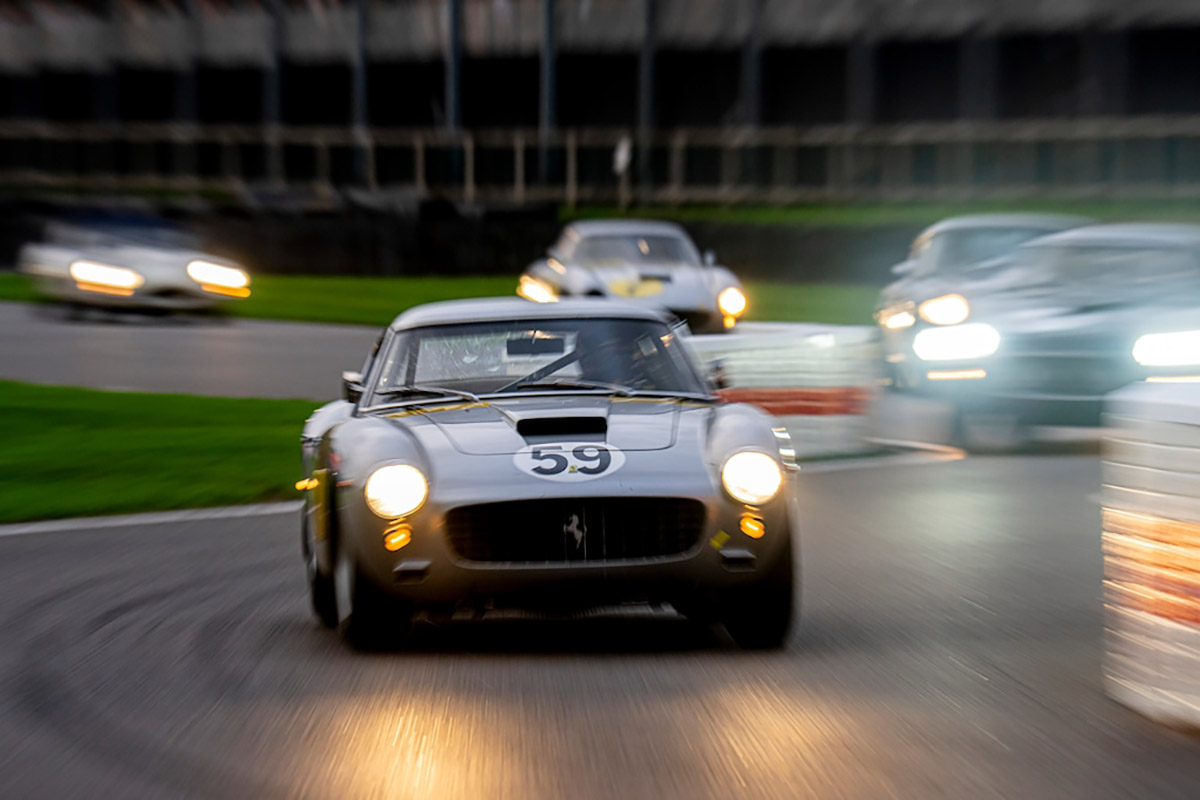
There are historic racing events, and then there is the Goodwood Revival.
For three days each September, the Goodwood Motor Circuit does more than assemble important cars. It brings an entire era back to life. Period clothing fills the paddock, mechanics work around machinery from another age, and some of the world’s most significant competition cars are driven as they were intended—at speed.
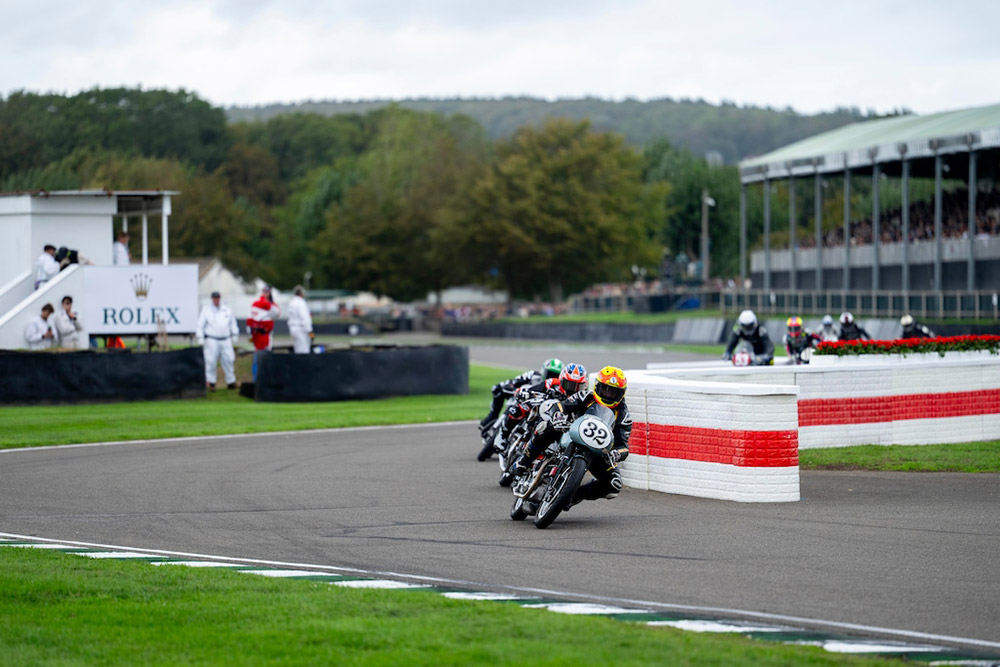
The 2026 Revival returned to West Sussex from September 18–20 with more than 150,000 spectators joining drivers, collectors and racing legends for a weekend celebrating the circuit’s golden years. This time, Goodwood added an unmistakably Italian flavor under the theme “La Dolce Vita,” while the racing program delivered 15 contests for historic cars and motorcycles. Rolex continued its long-running role as Official Timepiece of the event and Title Sponsor of the Rolex Drivers’ Club, a relationship dating to 2004.
FORD LE MANS HISTORY RETURNS TO THE TRACK
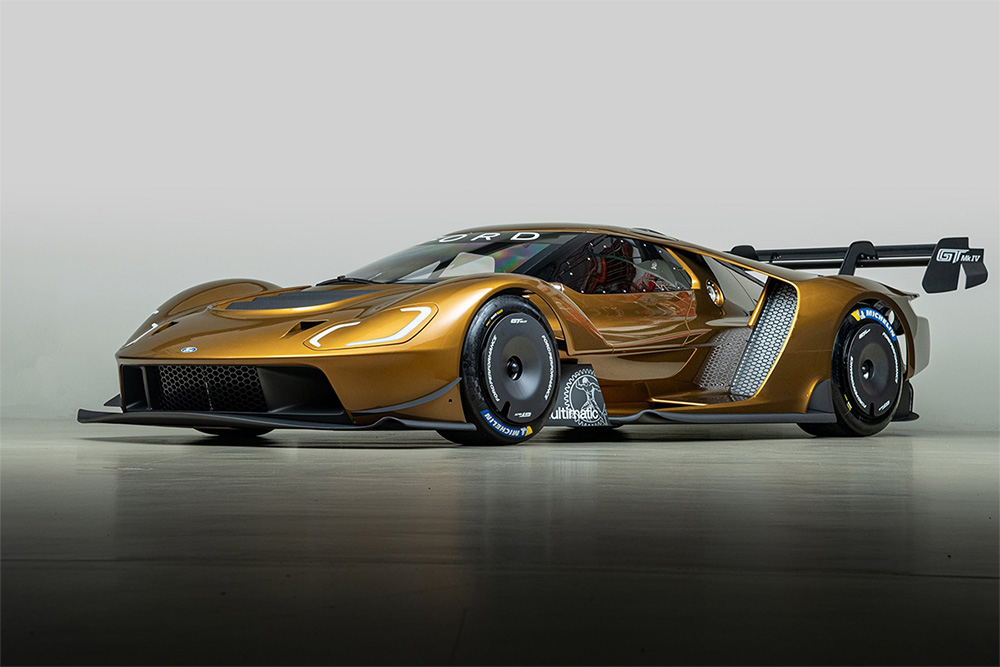
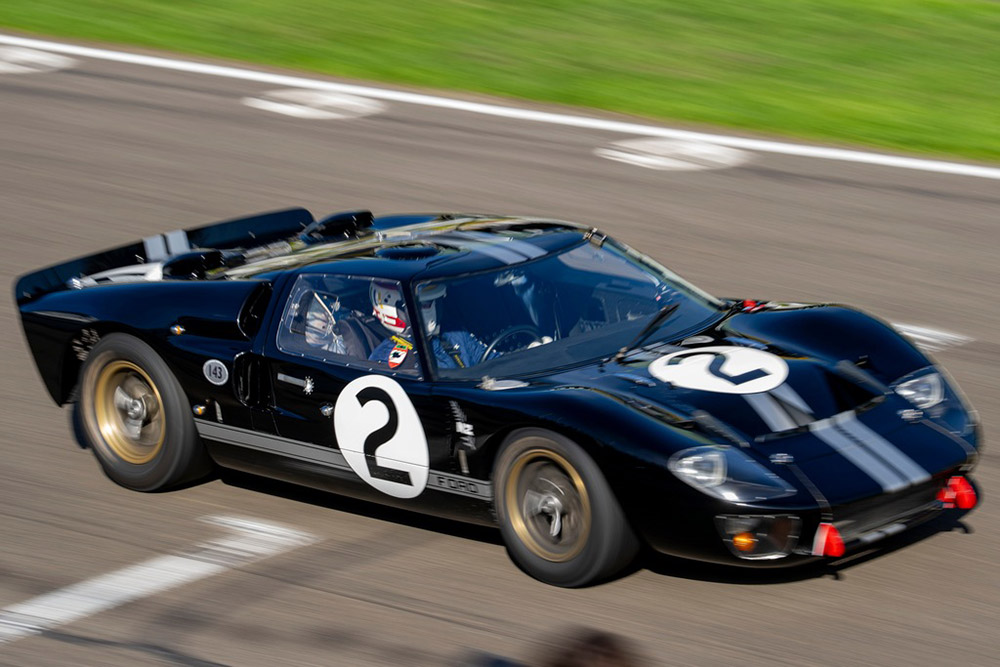
Among the defining moments of the weekend was a reunion of three Ford GT40s commemorating the 60th anniversary of Ford’s legendary 1-2-3 finish at the 1966 24 Hours of Le Mans.
Few drivers were better suited to connect that history with the present than Tom Kristensen.
The nine-time Le Mans winner climbed behind the wheel of a 1966 Ford GT MkII, bringing one of endurance racing’s most recognizable shapes back onto the Goodwood circuit six decades after Ford’s landmark victory in France.
For Kristensen, whose own career is inseparable from Le Mans, the opportunity carried significance beyond simply demonstrating a historic racing car. It represented a meeting of generations: one of endurance racing’s greatest modern drivers experiencing the machinery that helped redefine the race long before his own record-setting career began.
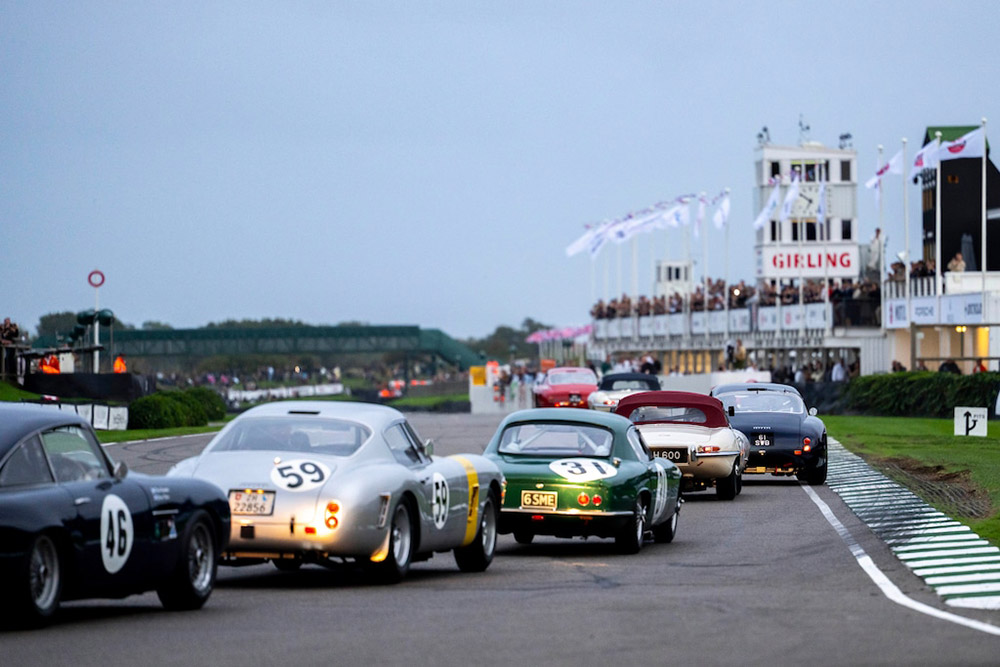
Kristensen was not at Goodwood simply to circulate historic machinery. He also competed during the weekend, driving a 1961 Ferrari 250 GT SWB in the Stirling Moss Memorial Trophy and a 1955 Lister-Jaguar “Flat Iron” in the Sussex Trophy.
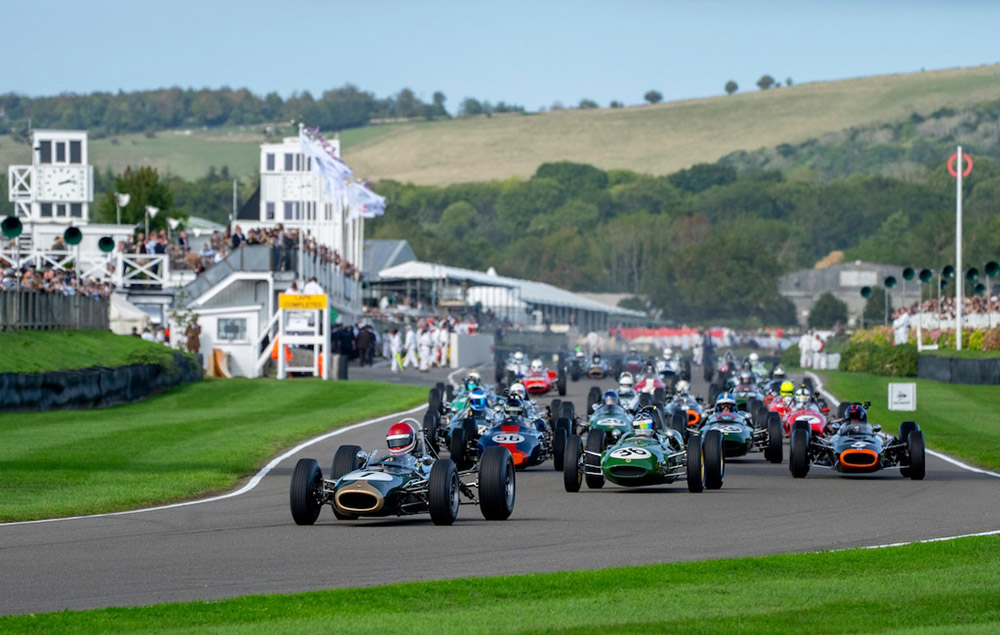
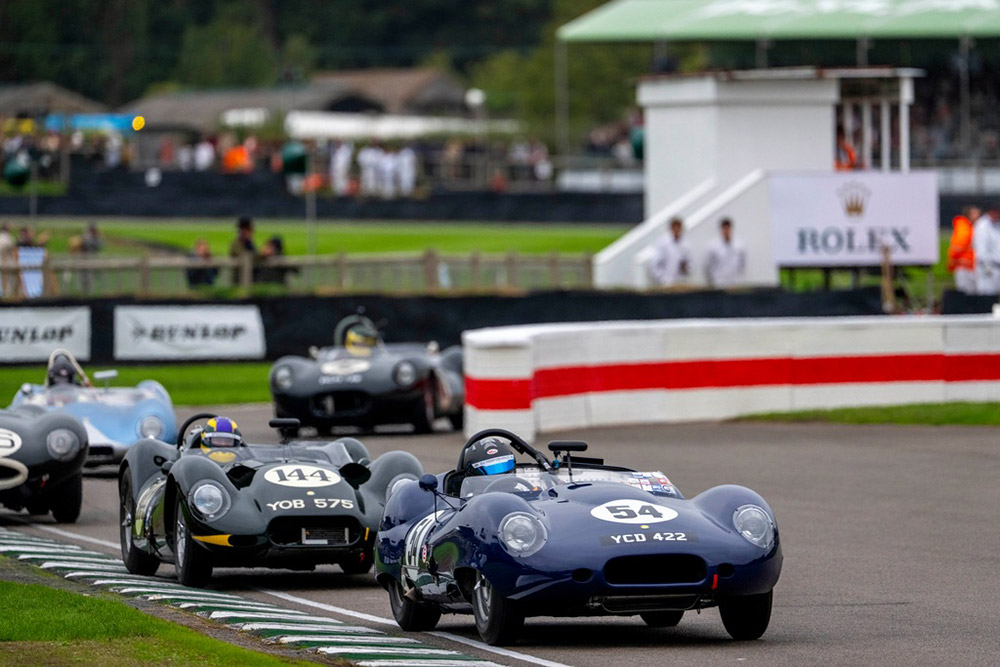
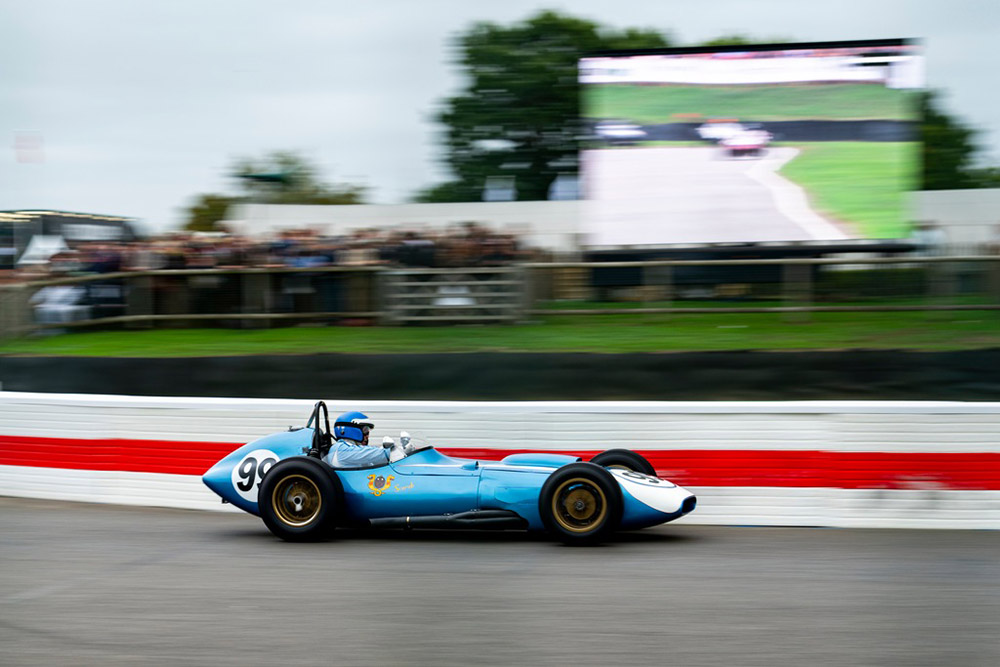
That remains one of the Revival’s defining qualities. These are not museum pieces being rolled into position for a static concours. They are racing cars being driven hard enough for spectators to understand why they became legends in the first place.
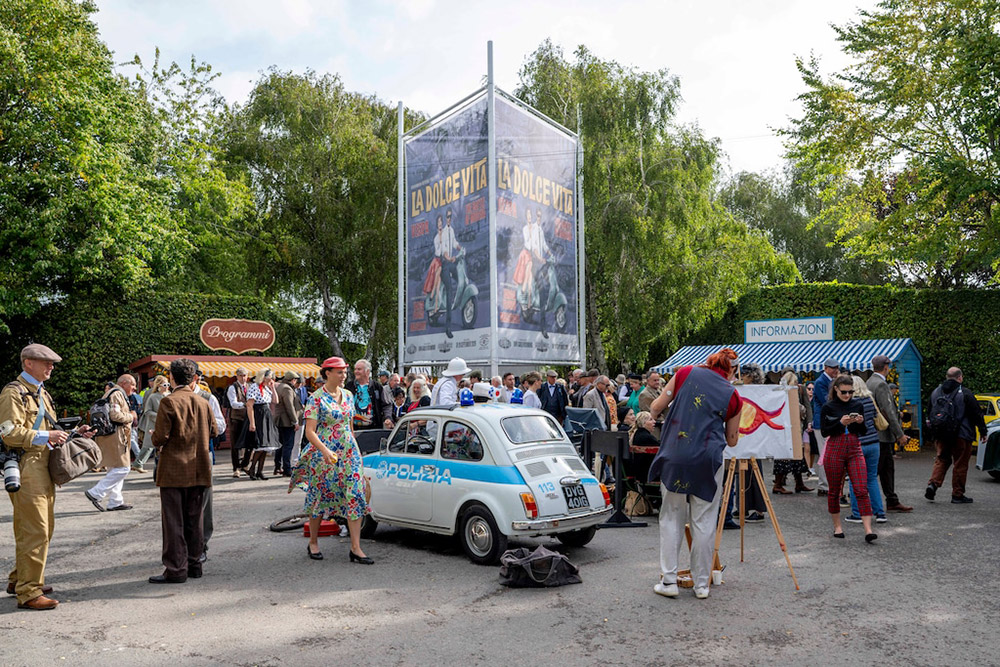
LA DOLCE VITA COMES TO GOODWOOD
Away from the racing line, Goodwood transformed itself into an elaborate celebration of Italian culture, design and style.
The Rolex Drivers’ Club became a centerpiece of the theme, with an atmosphere inspired by ancient Rome, while lemon trees, Italian cuisine and period details helped extend the illusion well beyond the paddock.
That immersive quality is central to the Revival. The cars may provide the soundtrack, but the clothing, architecture, entertainment and attention to detail are what make the weekend feel less like a historic race meeting and more like a temporary return to another time.
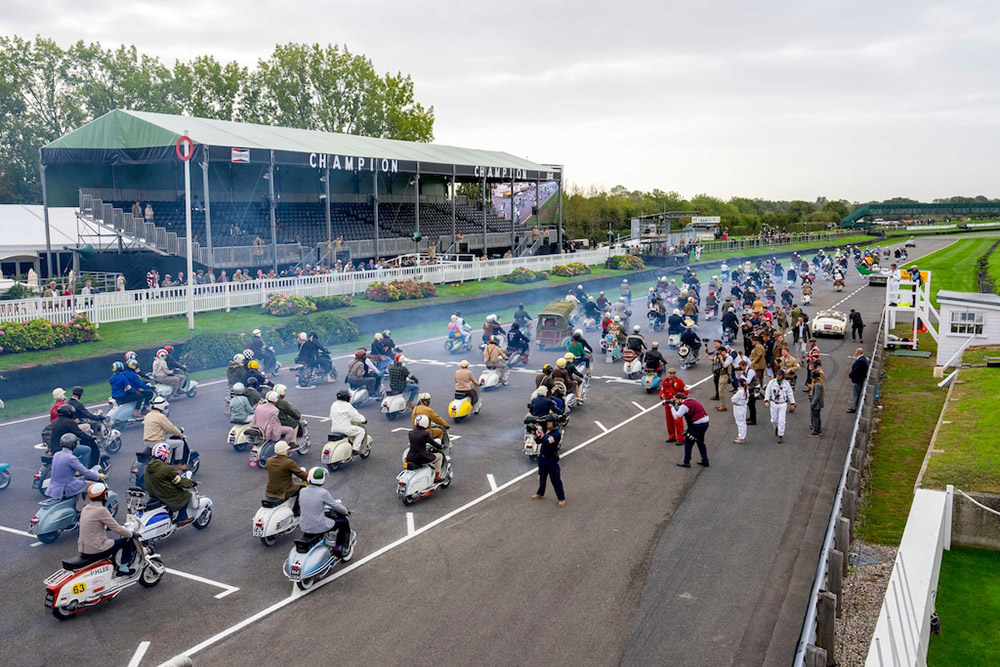
ITALIAN ICONS ON THE CIRCUIT
Italy’s contribution extended onto the circuit. More than 300 Vespas took part in the weekend as the iconic scooter celebrated its 80th anniversary, while Maserati was also recognized in connection with 100 years since the marque’s first Targa Florio victory.
The visual contrast could hardly have been more appropriate for Goodwood: Grand Prix machinery, sports racers and GT cars sharing the weekend with hundreds of Vespas and spectators dressed in carefully selected 1940s, 1950s and 1960s clothing.
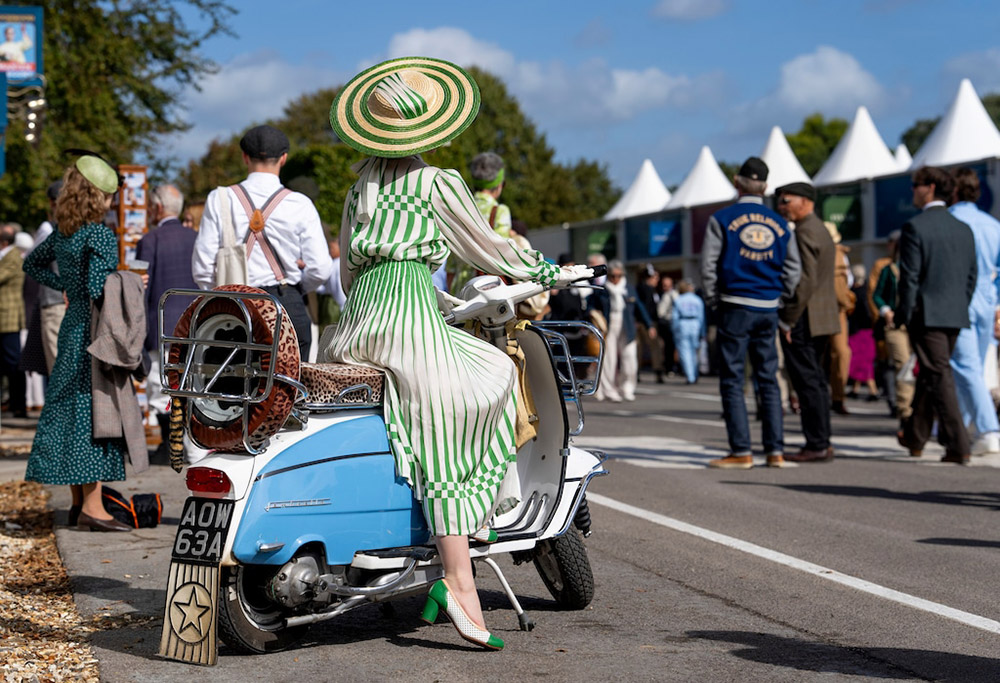
STYLE IS PART OF THE EXPERIENCE
At most race tracks, what spectators wear is incidental. At the Revival, it is part of the event.
The 2026 Best Dressed competition reflected fashion across the post-war decades, from tailored 1940s clothing to full-skirted dresses and leather jackets from the 1950s and the cleaner silhouettes of the 1960s.
It is one of the details that separates Goodwood from almost every other historic racing event. The objective is not merely to display old cars against a modern backdrop. The Revival attempts to recreate the environment in which those cars originally competed.
SIR JACKIE STEWART RETURNS TO WHERE IT BEGAN
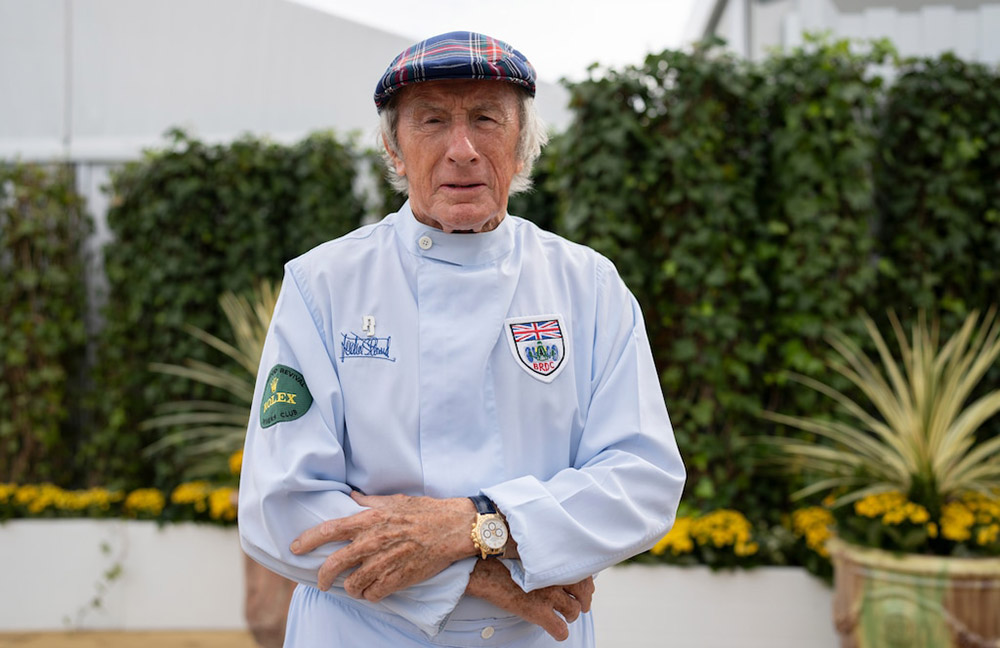
The weekend also welcomed Sir Jackie Stewart back to a circuit that occupies a particularly important place in his career.
Stewart first tested at Goodwood for Ken Tyrrell in 1964, an early chapter in a career that would ultimately bring three Formula 1 World Championships.
More than six decades later, Goodwood remains closely connected to Stewart’s story. His presence at the Revival creates another bridge between the circuit as it exists today and the period the event works so carefully to preserve.
A FINAL CELEBRATION BENEATH THE GOODWOOD CLOCK
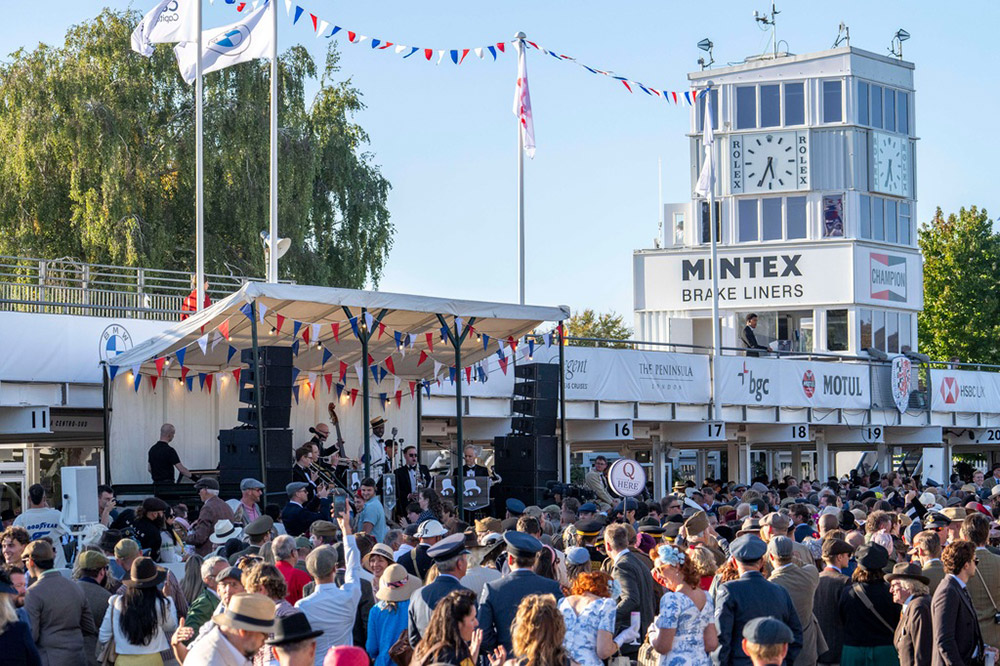
The weekend concluded Sunday evening with the RAC TT Celebration, followed by one of the Revival’s traditions as spectators were welcomed onto the circuit and the winning drivers received their laurel wreaths.
A marching band moved through the pit lane as the event shifted from racing to celebration beneath the familiar Goodwood clock tower.
For three days the circuit had been alive with the noise of engines, the smell of racing machinery and an enormous gathering of cars and people united by a fascination with motorsport’s past. Then, almost as quickly as it appeared, the time capsule began to close.
THE SPEED JOURNAL PERSPECTIVE
Historic cars matter because of what they represent, but they become infinitely more compelling when they are allowed to move, make noise and tell their stories again.
That is where Goodwood continues to get it right.
A Ford GT40 looks important standing under concours lights. Watching one accelerate around the same kind of circuit where drivers once risked everything gives it context. Put Tom Kristensen behind the wheel, surround it with Ferrari 250s, Lister-Jaguars, Grand Prix cars, motorcycles and generations of motorsport history, and the connection becomes stronger still.
The 2026 Goodwood Revival was not simply an exhibition of the past.
For one weekend in West Sussex, the past went racing again.