

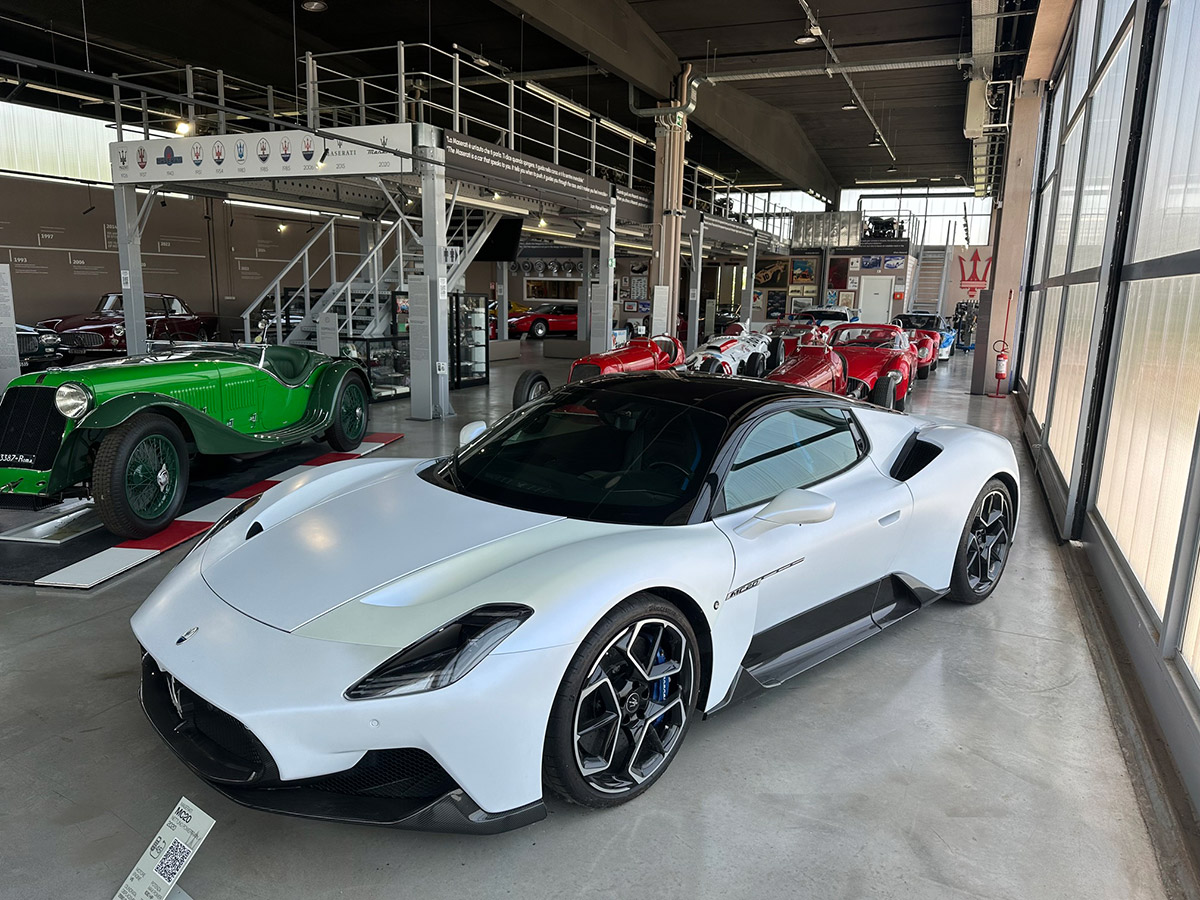
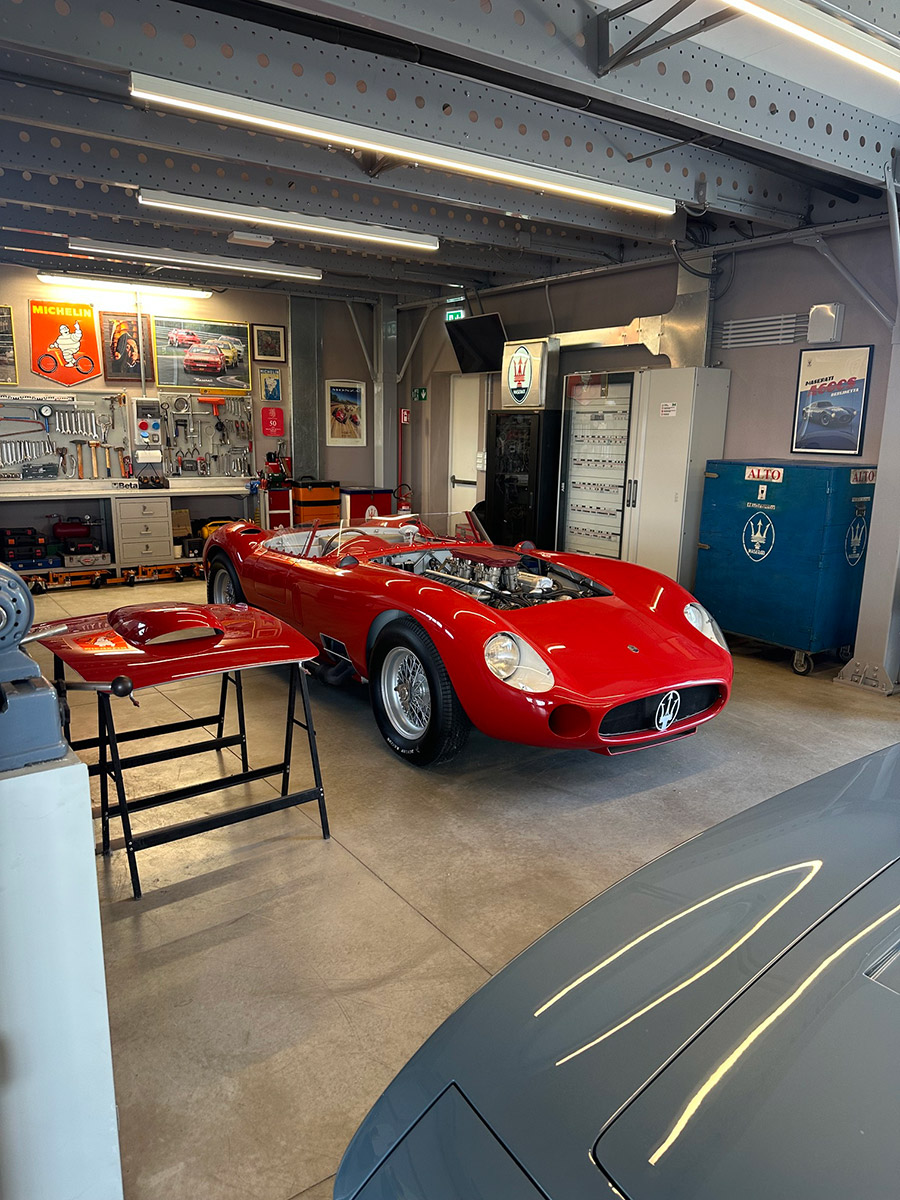
On the outskirts of Modena, the Panini Maserati Collection does not feel like a conventional museum. It feels more personal than that. The cars sit inside a working world of tools, posters, engines, farm history and Italian mechanical memory. There is polish, but not sterility. There is rarity, but not distance. The result is exactly what a Maserati collection should be: elegant, emotional and rooted in place.
The story begins with a near-loss. Maserati had preserved a historic factory collection that traced the Trident from its earliest competition machinery into the grand touring and prototype eras. By the mid-1990s, after years of ownership changes, the core of that collection was being prepared for sale at auction in England. For Modena, that meant more than cars leaving a warehouse. It meant a large piece of the city’s own motoring identity being scattered into private hands around the world.
Local authorities, enthusiasts and the Modenese community understood what was at risk. This was not simply a group of valuable automobiles. It was a rolling archive of the people, victories, experiments and design ideas that helped make Maserati one of Motor Valley’s essential names. Into that moment stepped Umberto Panini, part of the famous Panini family known globally for collectible stickers, and a proud Modenese with an instinct for mechanical culture.
Panini negotiated to buy the collection before it could be dispersed. The cars remained in their homeland and were moved just outside the city to Hombre, his agricultural estate known for Parmigiano-Reggiano production. It was an act of preservation, but also an act of cultural loyalty. The collection did not just survive. It stayed where its story still made sense.
The Beginning: Tipo 26
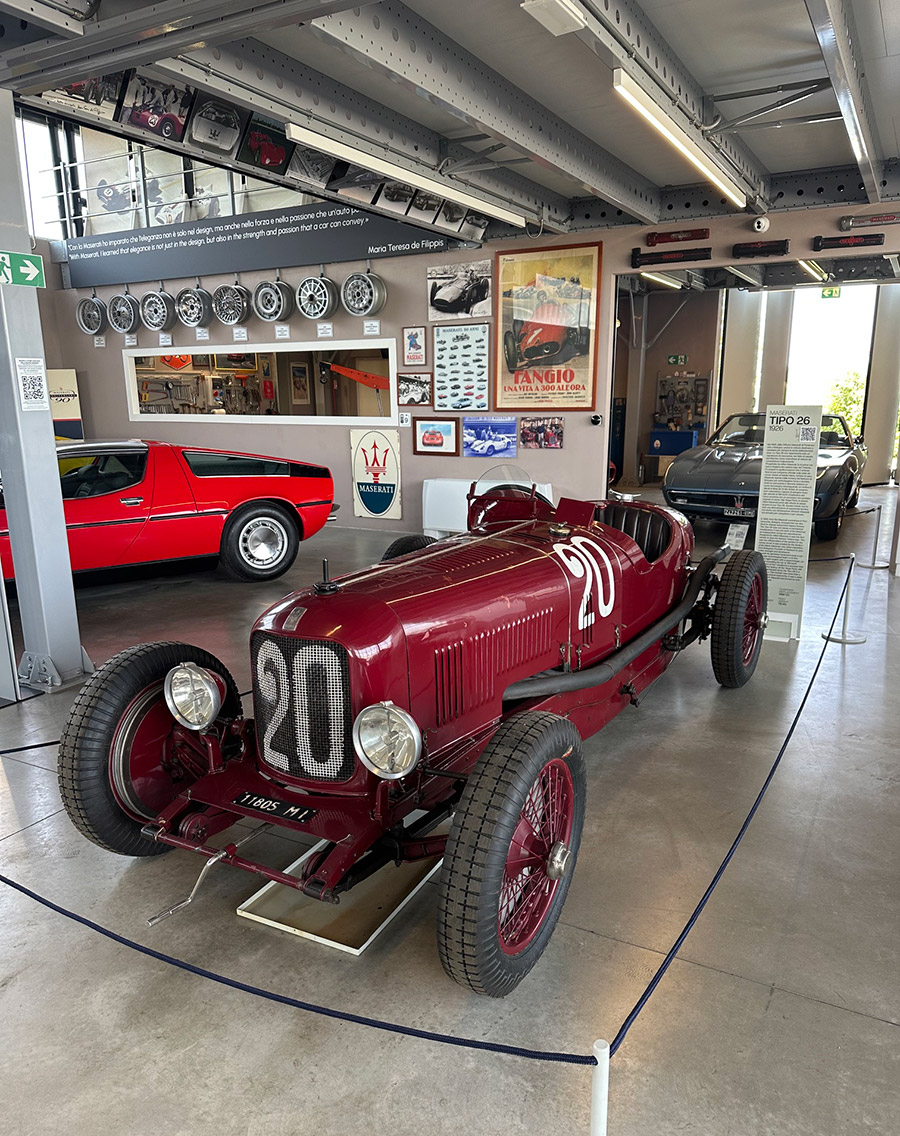
The Maserati Tipo 26 gives the collection its origin point. Introduced in 1926, it carried the Maserati name into competition and began the lineage of the Trident as a racing constructor. Long before Maserati was known for road-going grand tourers, it was a racing house, and the Tipo 26 still communicates that early identity in simple, purposeful forms: exposed wheels, a narrow body, visible mechanical courage and a sense that speed was still being invented by hand.
Seen in the Panini Collection, the Tipo 26 is more than an old racing car. It is a first chapter. Every later Maserati in the room, from the delicate pre-war racers to the voluptuous sports prototypes and glamorous GTs, can be traced back to this moment when the Maserati brothers turned engineering ambition into a car that wore their name.
Pre-War Speed and Modena Pride
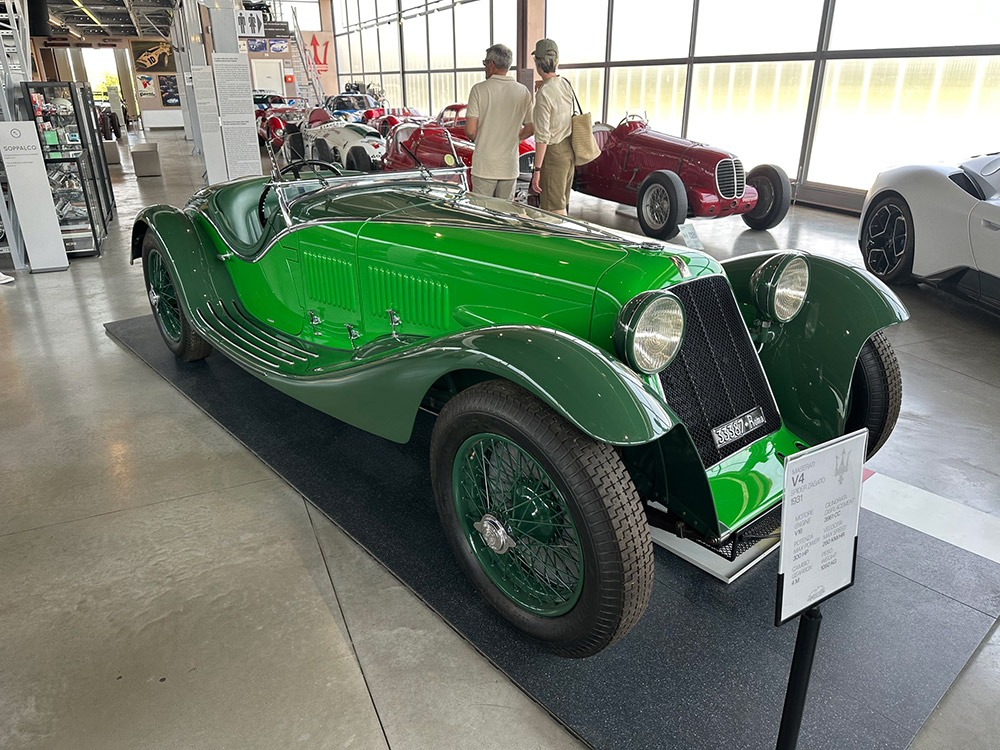
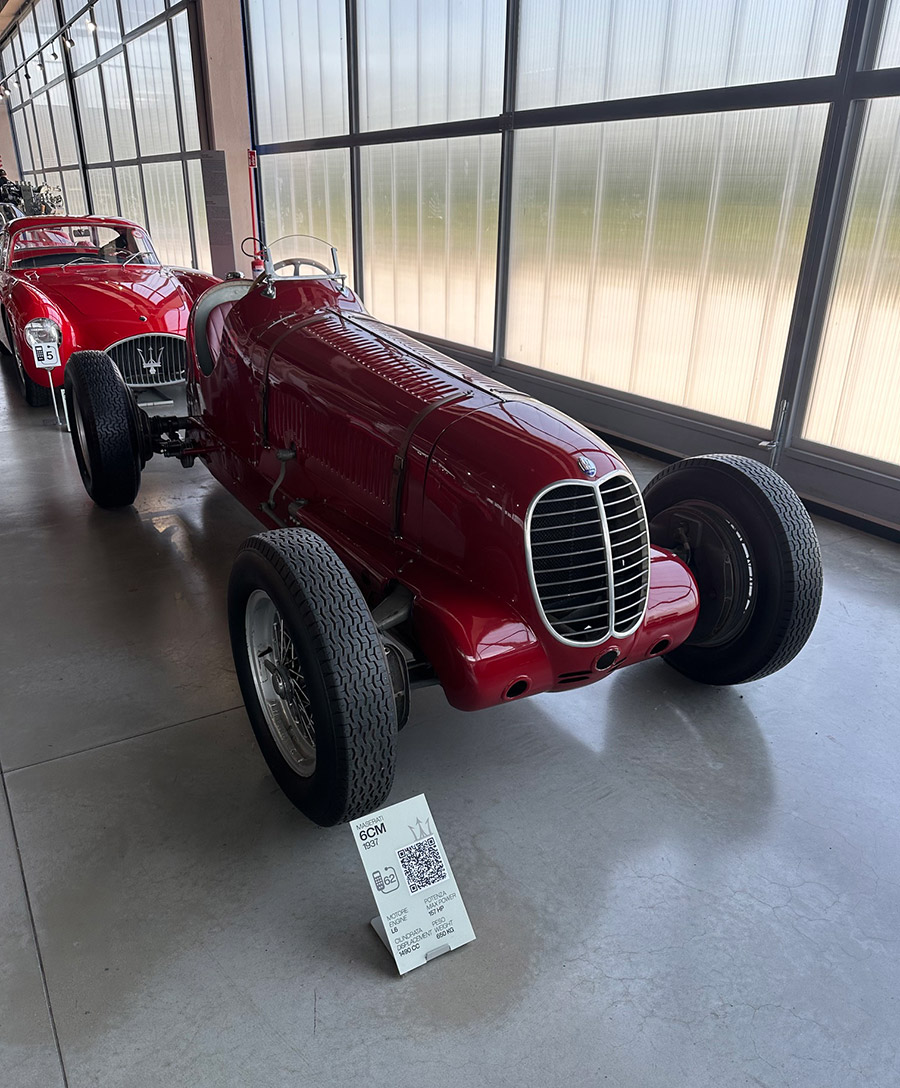
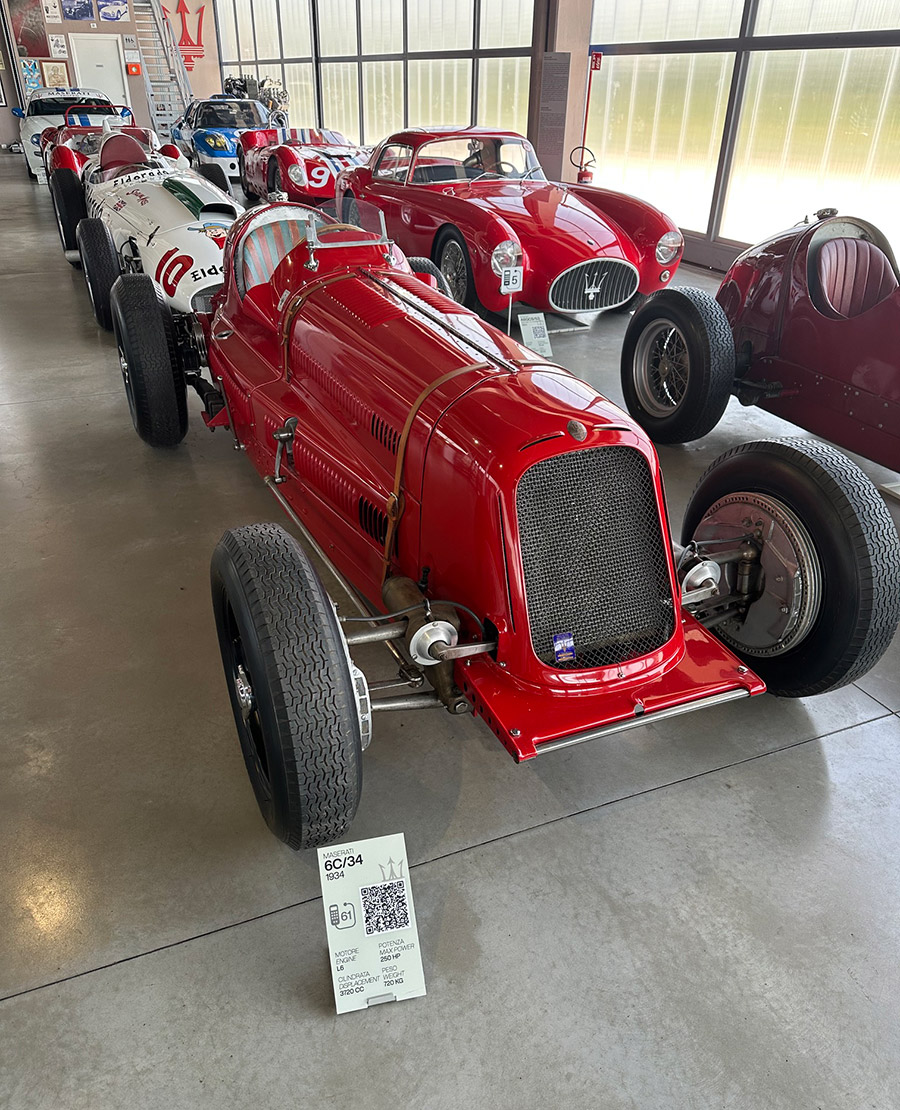
The early Maseratis in the collection show how quickly the company developed a language of speed. The V4 Sport Zagato, the 8CM and the 6C/34 each carry a different aspect of the era: elegant coachwork, Grand Prix intensity and the restless search for more performance from increasingly serious machinery.
The 6C/34 is especially important to Modena’s racing memory. It connects the collection not only to Maserati engineering, but to the competitive atmosphere of the city itself. These cars were not ornaments. They were weapons for road circuits, city races and heroic drivers who accepted enormous risk with calm faces and leather helmets.
Eldorado and the Birth of Modern Sponsorship
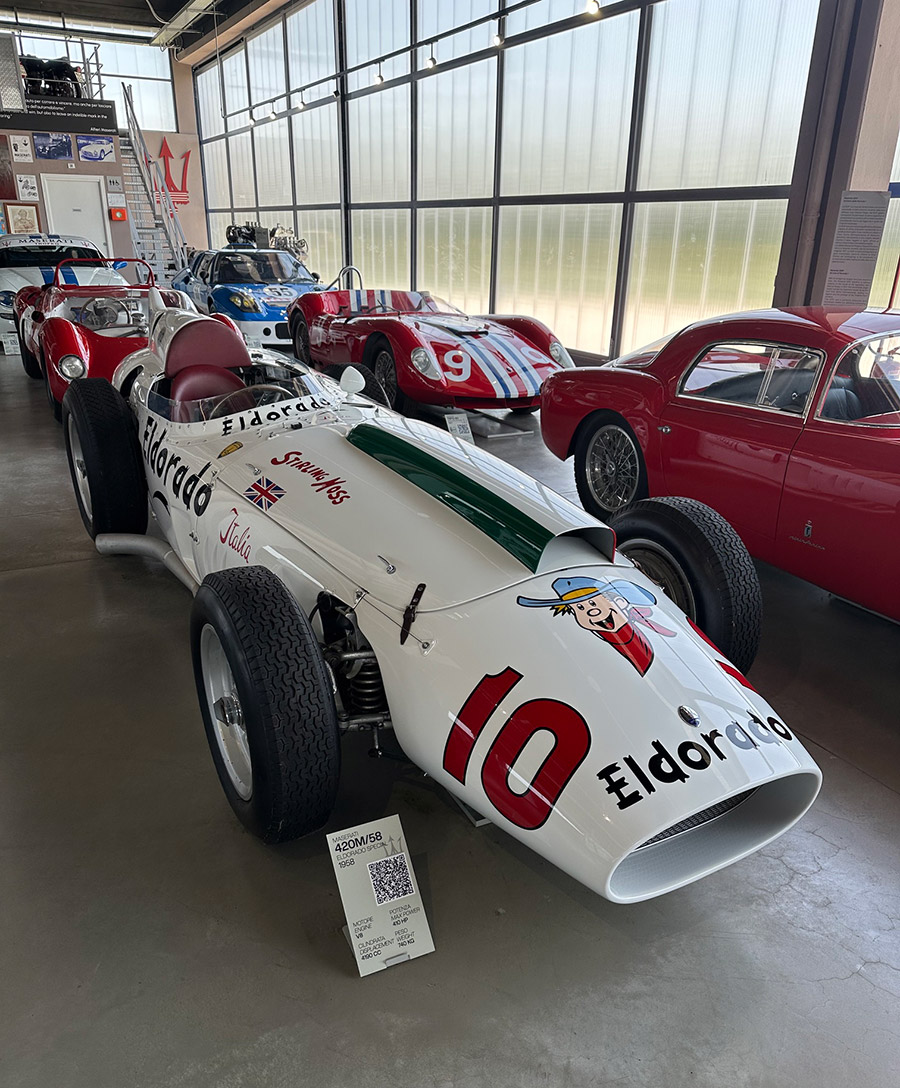
Few cars in the collection stop visitors faster than the white Maserati 420/M/58 Eldorado. Its shape is dramatic, but its livery is just as significant. Built for the 1958 Monza 500, the Eldorado carried Stirling Moss and an ice cream sponsor into one of the most unusual chapters of post-war international racing.
The car looks almost futuristic even now: long, low, purposeful and unmistakably commercial in a way that anticipated the modern sponsorship era. In a room filled with red Italian racing cars, the Eldorado stands apart because it was meant to stand apart. It is Maserati history, motorsport marketing history and pure visual theater in a single machine.
Birdcage Innovation
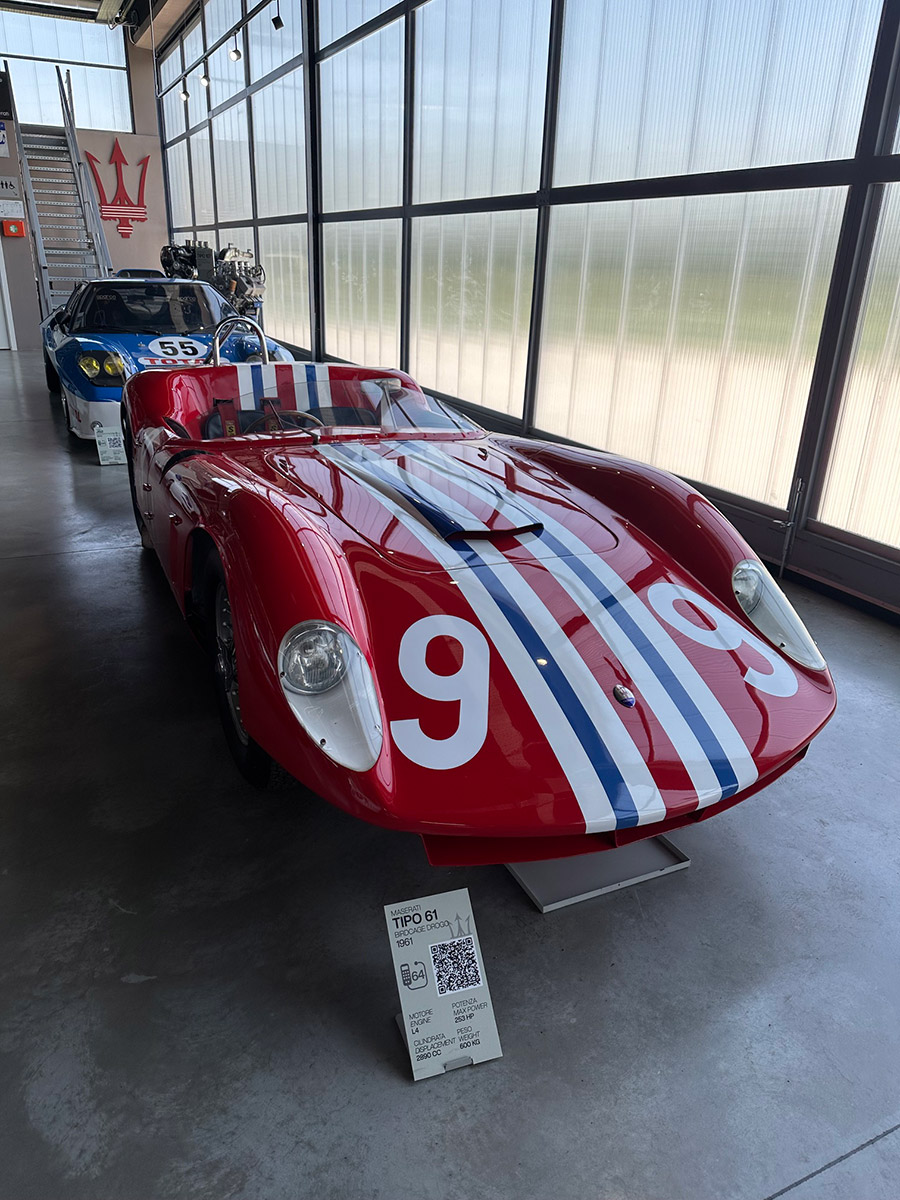
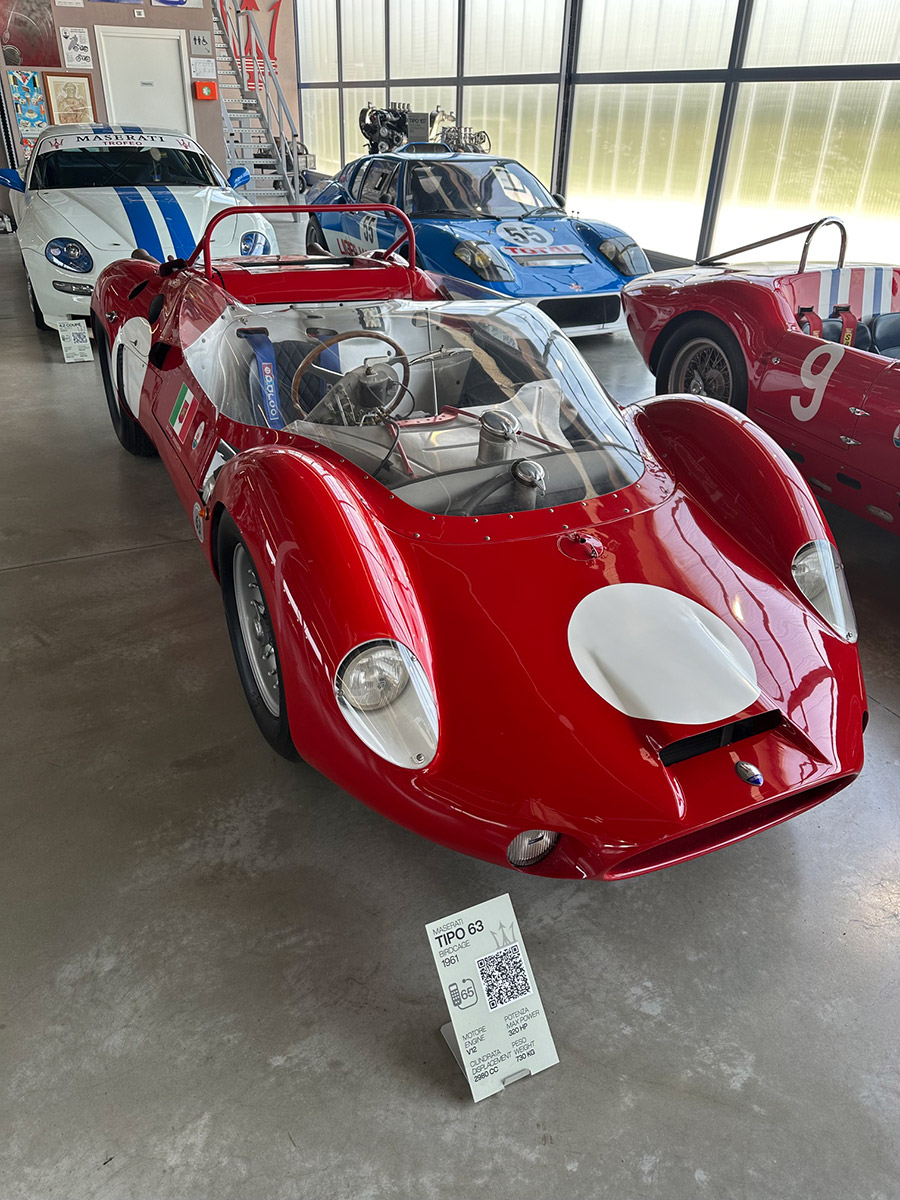
The Tipo 61 and Tipo 63 reveal a different Maserati personality: technical experimentation in plain sight. The Birdcage cars earned their nickname from their intricate tubular spaceframe construction, a structure that became as memorable as the bodywork itself. These were not just beautiful sports racers. They were engineering statements.
In the Panini Collection, the Birdcage cars help explain why Maserati’s sporting reputation is so durable. The brand was not simply following a racing formula. It was testing ideas, packaging engines and chassis in ways that made the cars lighter, sharper and visually distinctive. Their beauty comes from purpose.
Competition Sculpture: A6GCS/53 and the Sports-Racing Spirit
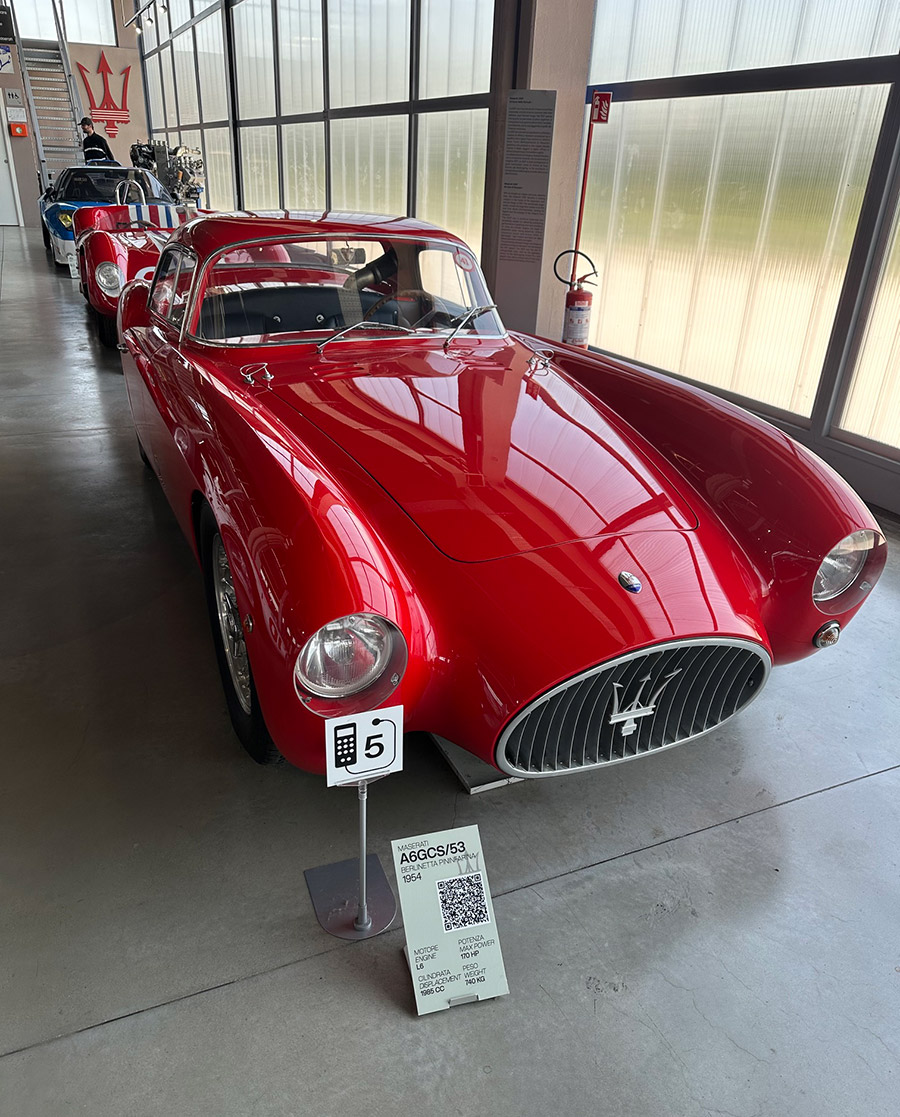
The A6GCS/53 Berlinetta Pininfarina is one of those rare cars that makes the boundary between sculpture and competition disappear. Its proportions are delicate, its surfaces are clean, and yet the car’s purpose remains serious. It is a reminder that Italian racing design at its best was never purely decorative. Beauty served speed, cooling, packaging, endurance and identity.
Nearby, red sports-racing machinery with exposed mechanical components reinforces the feeling that this is a living workshop of Maserati ideas. The collection is not arranged like a sterile trophy case. It feels like a place where history is maintained, understood and occasionally exercised.
Prototypes, GTs and the Road-Car Personality
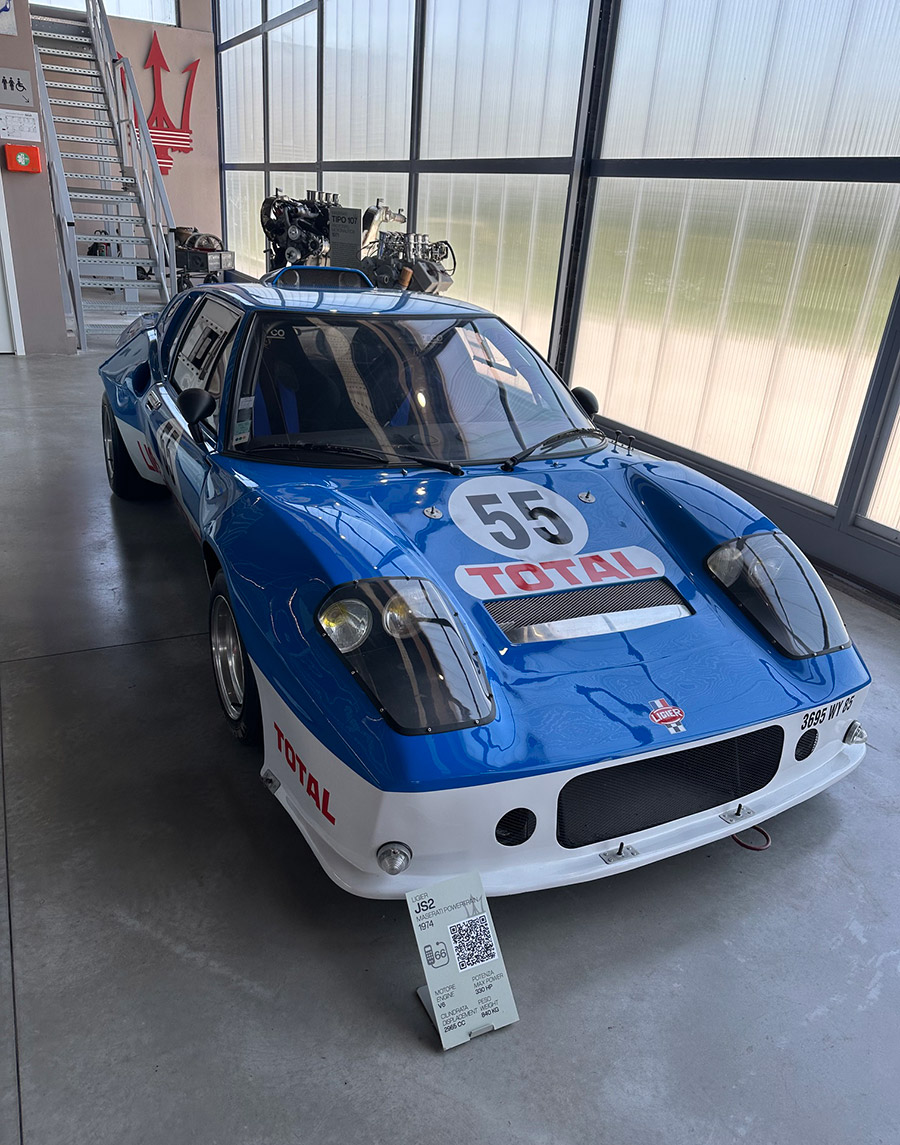
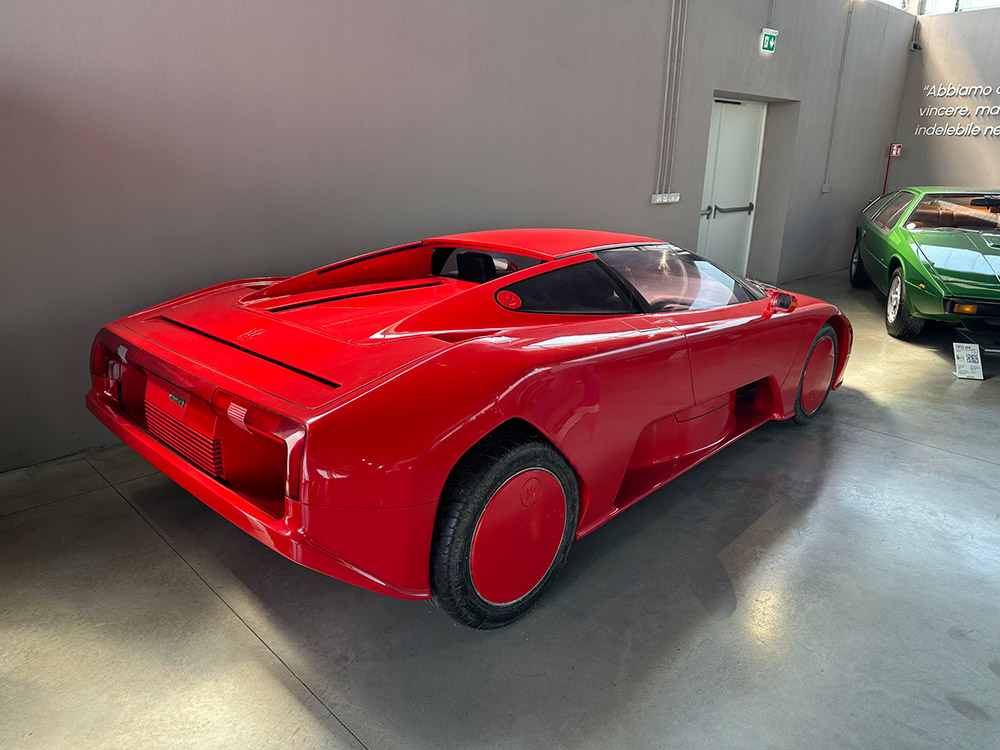
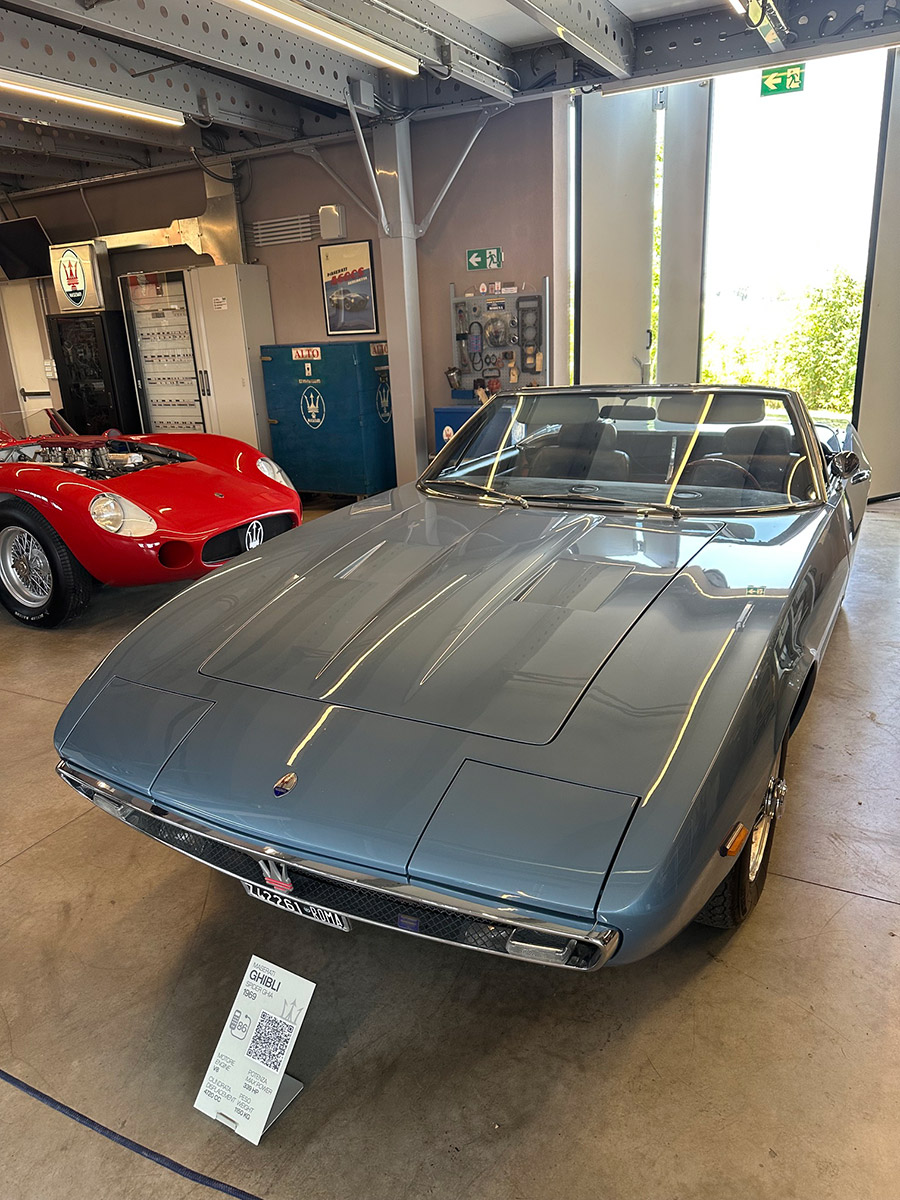
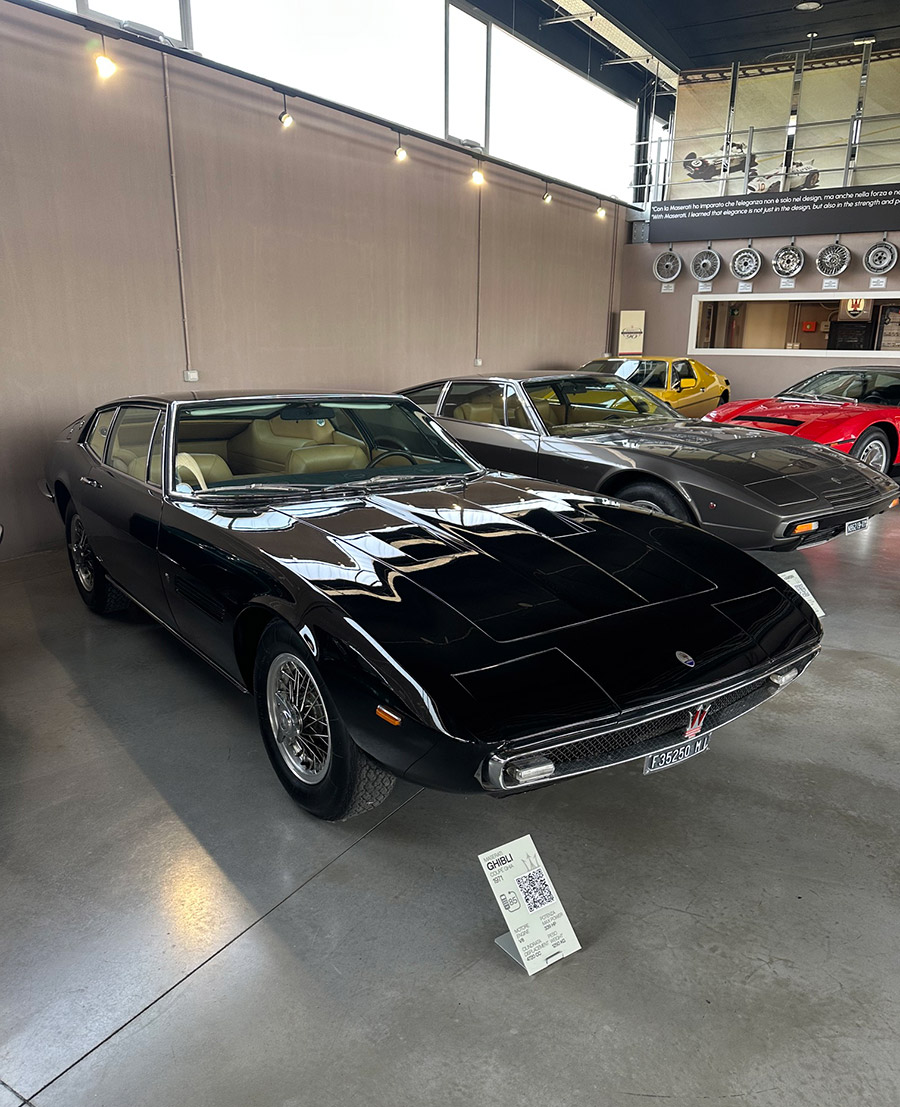
The Panini Collection is not only about racing. It also captures Maserati’s ability to turn performance into elegant road cars and daring prototypes. The red wedge-era concept shows the more experimental side of the marque, while the Ghibli models remind visitors that Maserati’s road-car identity has always been built around proportion, elegance and long-distance drama.
The Ghibli remains a perfect example of Maserati’s grand touring character. It does not need exaggerated decoration. The long hood, low roofline and clean stance create the presence. In the collection, seeing these GT cars near the pure racing machines gives the brand a fuller voice: Maserati as constructor, Maserati as stylist, Maserati as a company with one foot on the road and the other still on the grid.
A Collection That Stayed Home
What makes the Panini Maserati Collection so compelling is not just the value of the cars. It is the chain of custody. These cars were built into the identity of Maserati, preserved by the factory, threatened by dispersal, and then saved by a Modenese family that understood their meaning before the market could separate them from their place.
That is why the collection feels different. It is not a billionaire’s accumulation or a corporate display. It is a rescue story. A city cared, a family acted, and a piece of Maserati history stayed in the soil that created it. For anyone who loves Motor Valley, the Panini Collection is not a side trip. It is one of the region’s essential stories.