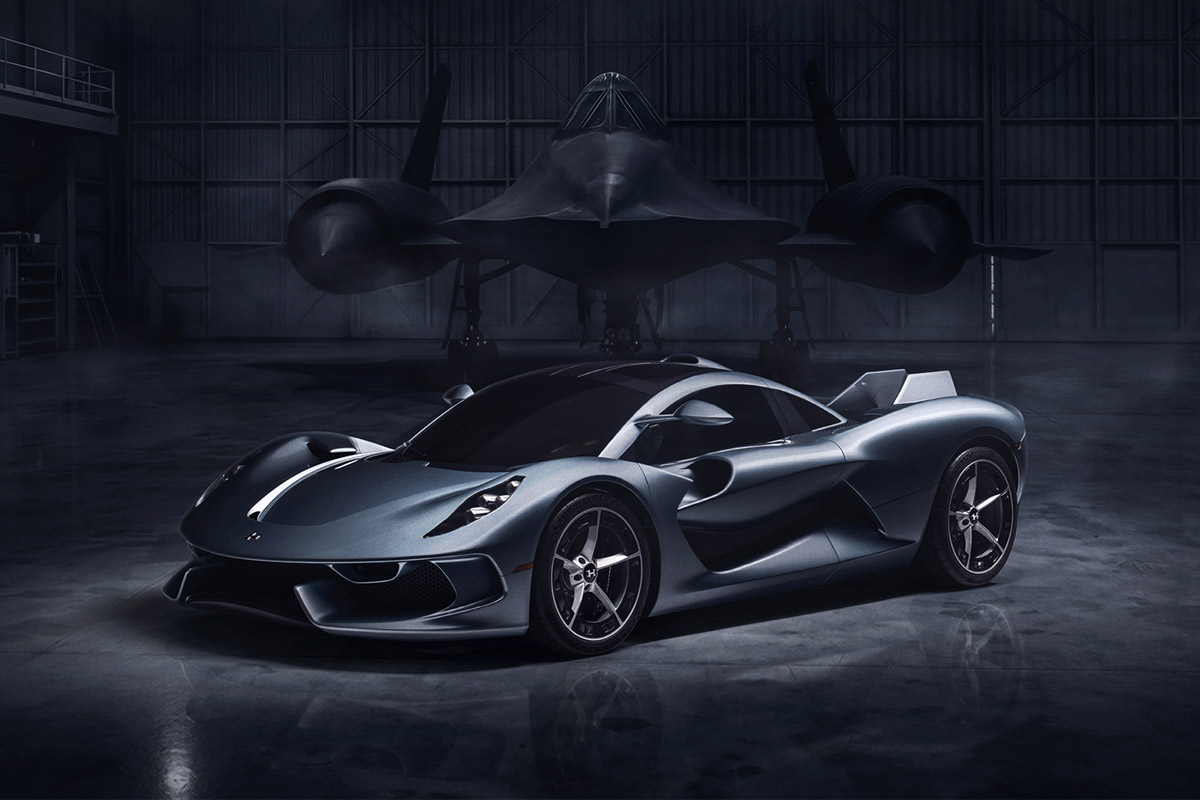
For its third hypercar, Hennessey Special Vehicles is stepping away from the familiar industry race toward more power, more software and ever-greater complexity. The all-new Blackbird instead begins with a simpler question: what makes a car memorable to drive?
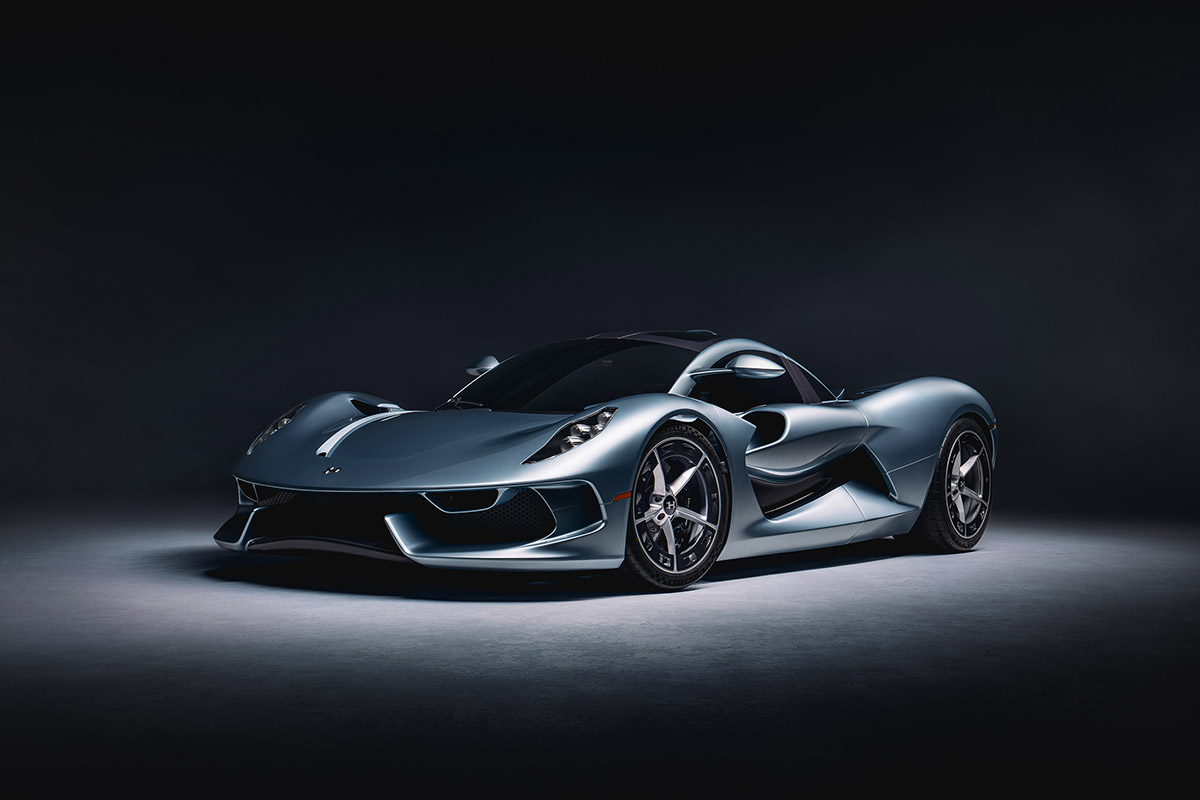
The answer is intentionally analog. Blackbird combines a naturally aspirated 6.2-liter V8 developed with Ilmor Engineering, a six-speed gated manual transmission, rear-wheel drive and a cockpit without visible screens. Its carbon-fiber construction and projected performance remain firmly within hypercar territory, but Hennessey says the car is being shaped around response, sound, visibility, comfort and the ritual of operating a machine.
A Different Measure of Performance
The Venom GT established Hennessey as a challenger to the world’s fastest production cars, while the clean-sheet Venom F5 pushed the company deeper into extreme power, aerodynamics and bespoke manufacturing. Blackbird follows those cars, but not their formula.
Hennessey is targeting 800 to 850 horsepower from the Ilmor-developed V8 and an engine speed beyond 9,000 rpm. The company projects a 0-60 mph time of 2.5 seconds and a 220 mph top speed, supported by a full-carbon tub, carbon-fiber bodywork and a target dry weight below 3,000 pounds. Those figures are substantial, yet the Blackbird program is less about chasing a record than building an experience that remains compelling well below the limit.
The SR-71 Influence
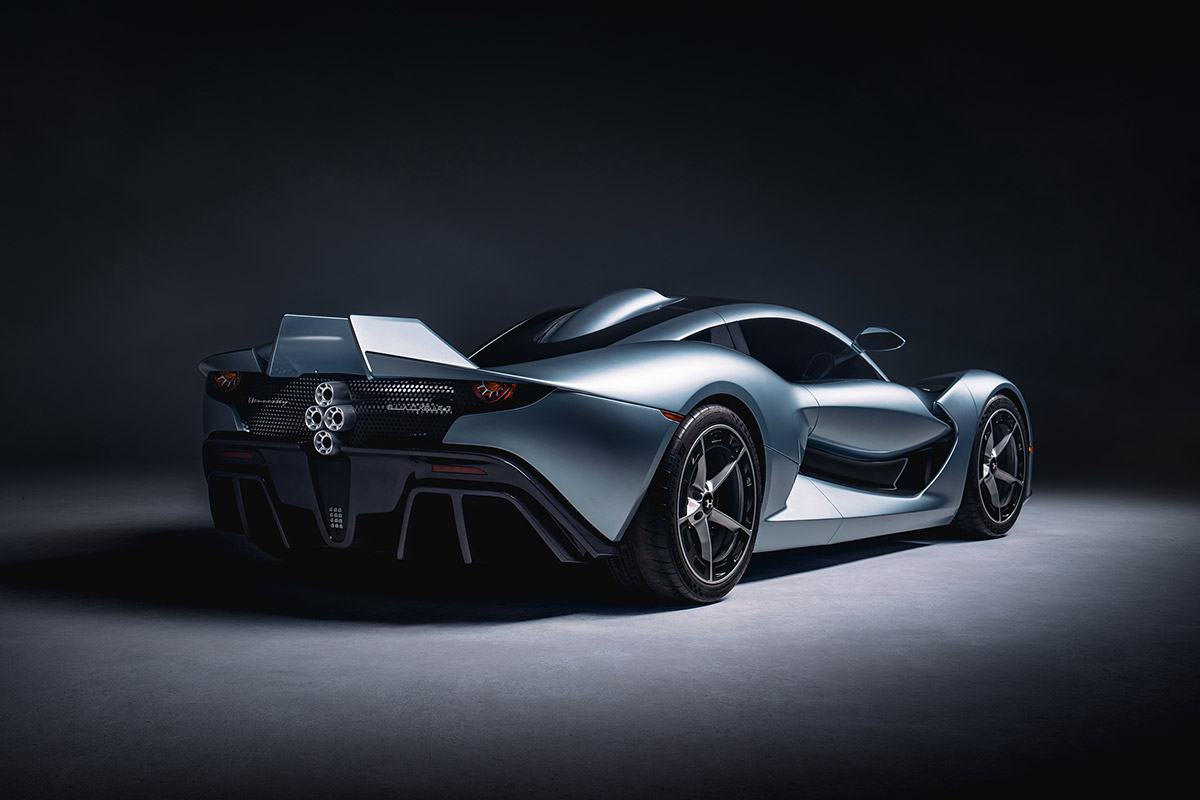
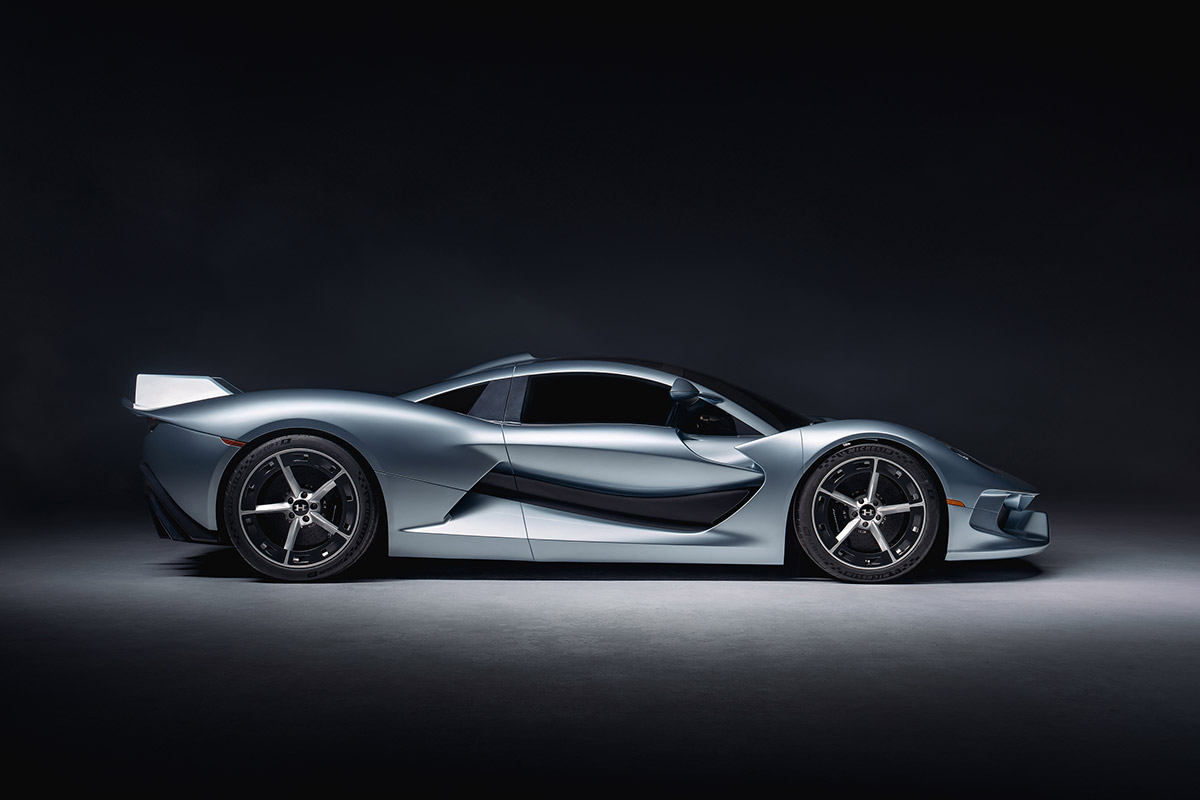
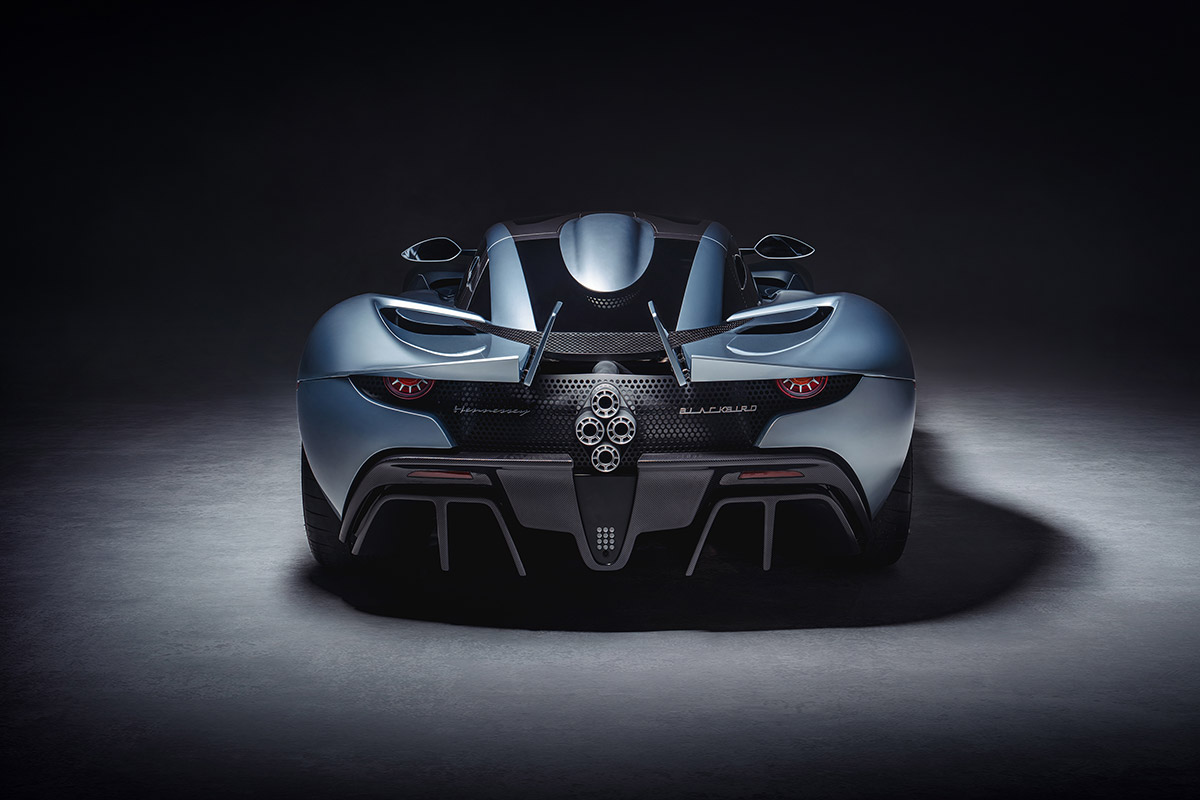
The Lockheed SR-71 Blackbird provides more than a memorable name. Its influence appears in the Hennessey’s long stance, tightly controlled surfacing and crisp body-side chine. The clearest reference is found at the rear, where two active vertical stabilizers deploy automatically at 71 mph and settle at plus and minus 71 degrees – a deliberate acknowledgement of the aircraft designation. The stabilizers can also be activated manually at any speed.
Other references reach across aviation and motorsport. The diamond-shaped quad exhaust echoes the nozzle form of the Bell X-1, the aircraft in which Chuck Yeager first exceeded the speed of sound. Formula One-style side pods and LMP1-inspired winglets add functional tension to the aerospace-led design language without turning the Blackbird into a track-special caricature.
Analog by Design
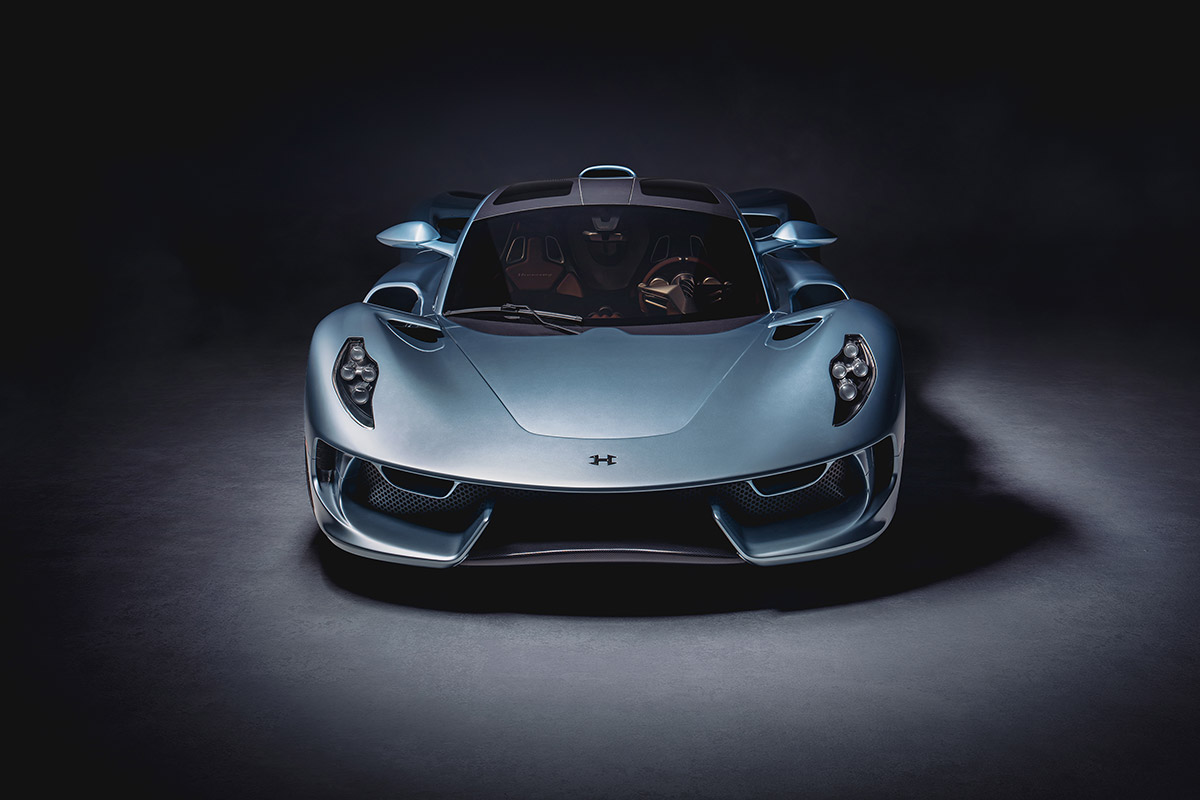
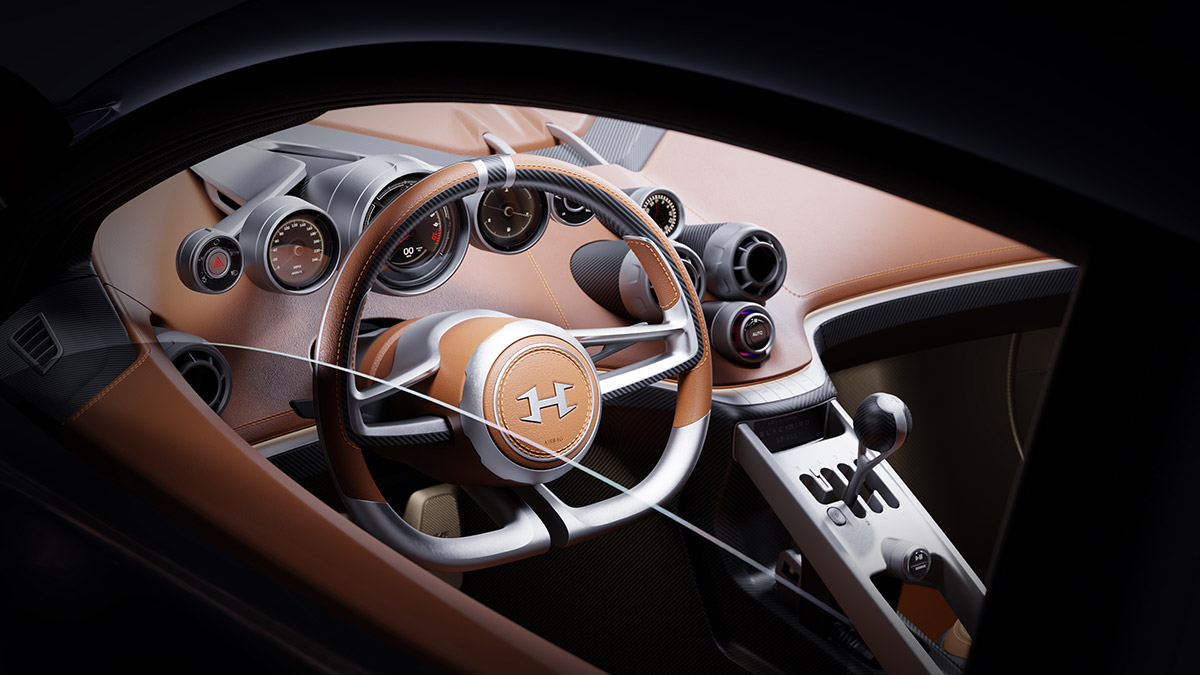
Inside, the Blackbird deliberately removes many of the interfaces that define modern performance cars. There is no conventional infotainment screen, no digital instrument display and no steering-wheel switchgear. A large analog tachometer occupies the center of the driver’s view, while a physical key, exposed shift linkage and gated six-speed transmission turn routine inputs into part of the occasion.
Technology has not disappeared; Hennessey has simply moved it out of the visual foreground. Navigation, Apple CarPlay and Android Auto are intended to operate through the driver’s device, secured in a dedicated holster. Premium audio and discreet connectivity remain available without allowing a dashboard screen to become the cabin’s dominant object. The approach is also meant to support the car’s long-term appeal. Physical gauges, mechanical controls and a straightforward cockpit architecture are less likely to feel dated than today’s fastest-moving digital systems. In a car intended to remain desirable for decades, that restraint may prove as important as any performance figure.
A Naturally Aspirated Heart
The powertrain is central to that sense of permanence. Hennessey and Ilmor Engineering are developing an all-new 6.2-liter naturally aspirated V8 with no turbochargers and no hybrid assistance. The goal is immediate throttle response, linear power delivery and an engine note that builds toward a projected 9,000-plus-rpm peak.
Hennessey expects the engine to become one of the most powerful and highest-revving naturally aspirated V8s offered in a road car. It will drive only the rear wheels through the gated manual gearbox. ABS and traction control provide a measured safety net, while adaptive inboard suspension and Michelin Pilot Sport Cup 2 tires are intended to give the car a broader operating range than a narrowly focused circuit machine.
Built to Cross Distance
The phrase “touring hypercar” is important to the Blackbird’s identity. Hennessey is engineering the car to cover more than 800 miles in a day, with a larger glasshouse and more cabin space than the Venom F5. Gullwing doors ease the sense of theater, but the practical details are unusually grounded: four cup holders, space for two full-size carry-on bags, rear-quarter storage and additional cabin stowage.
Adaptive suspension, improved visibility, strong noise-and-vibration targets and more accommodating ergonomics are intended to make long days possible without filtering out the mechanical character. The aim is not to create a softened grand tourer, but a hypercar whose most rewarding road need not be a racetrack or a closed high-speed runway.
Seventy-One Cars, One Configuration
Hennessey plans to build 71 Blackbirds worldwide, each with rear-wheel drive and the six-speed manual. Pricing begins at $2.5 million before taxes, and the company says more than two-thirds of the production run had already been allocated before the car’s public debut at The Quail on August 14, 2026.
Customer production is targeted for 2029-2030, following the expected conclusion of Venom F5 production around 2028. Every Blackbird will be designed, engineered and built in Texas, making the program Hennessey Special Vehicles’ next clean-sheet chapter and, by the company’s description, its most significant engineering and development commitment to date.
The result is an intriguing change of direction. Blackbird does not reject speed, but it refuses to let speed become the entire story. In an era when many hypercars are defined by hybrid systems, software layers and four-digit horsepower, Hennessey is betting that a high-revving engine, an open metal gate and a clear road ahead can still feel more extraordinary than another record.