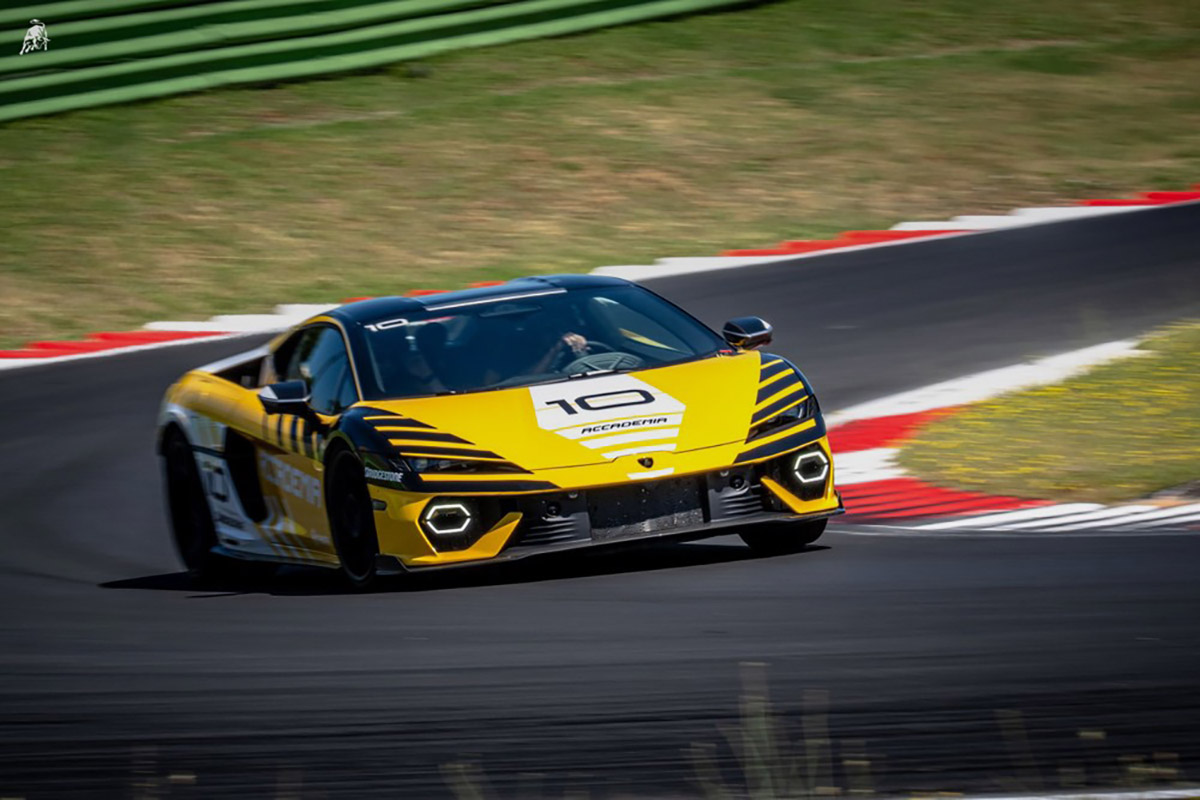
Vallelunga does not flatter cars. It exposes them. Lamborghini’s new Temerario arrived ready for the examination and left no doubt that it is exceptionally capable on a circuit.
The historic circuit north of Rome gave the Lamborghini Temerario enough room to reveal just how quickly acceleration, braking, vision and decision-making can compress into the same few seconds. It also provided an ideal setting for Lamborghini Accademia Mach II, an advanced program designed to move drivers beyond basic car control and into the finer disciplines of tire management, repeatable lap performance, racecraft and decision-making at speed.
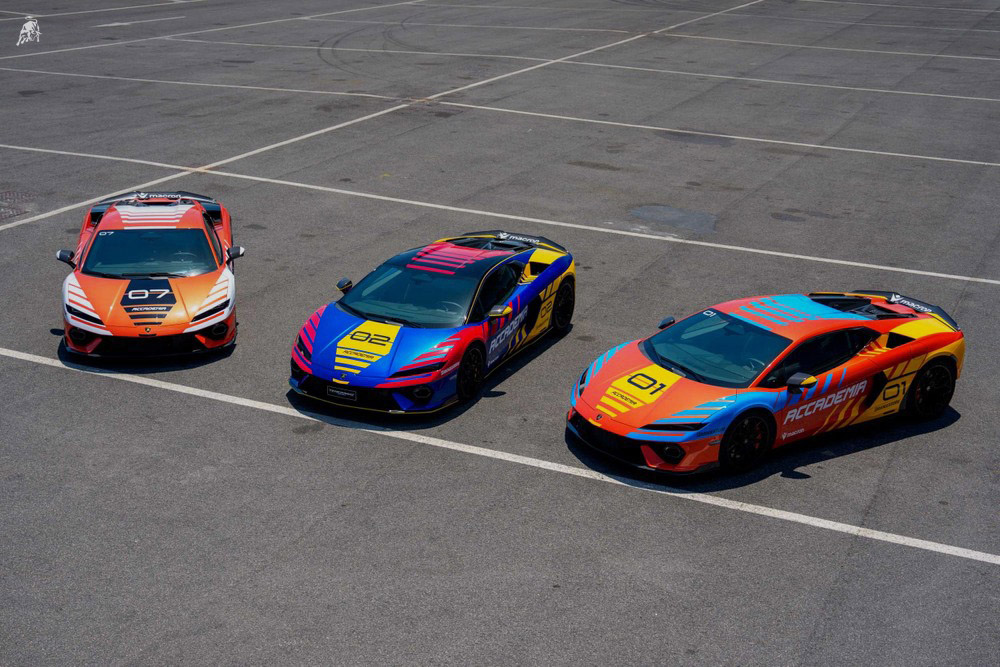
The program began with an arrival day in Rome, followed by two full days on track at Vallelunga. For participants who had attended previous Lamborghini Accademia programs, the experience also felt like a reunion.
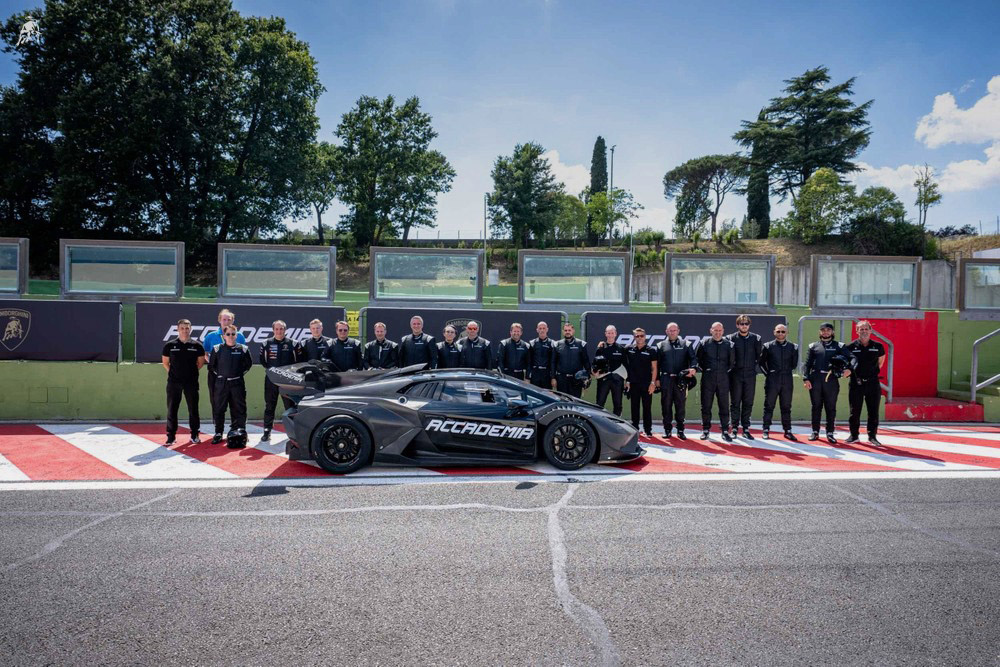
Old friends greeted one another in the paddock, while familiar members of the Lamborghini team welcomed the group back. The technicians, instructors, event staff and hospitality team operated less like separate departments and more like an extended family – one that Lamborghini has assembled around a shared enthusiasm for its cars and the people who drive them.
That sense of community continued away from the circuit. Participants stayed at Rome Cavalieri, A Waldorf Astoria Hotel, while excellent Italian lunches at Vallelunga and dinners in Rome framed the demanding track sessions in first-class Italian style. Lamborghini understands that an experience does not have to choose between intensity and elegance. Mach II delivered both.
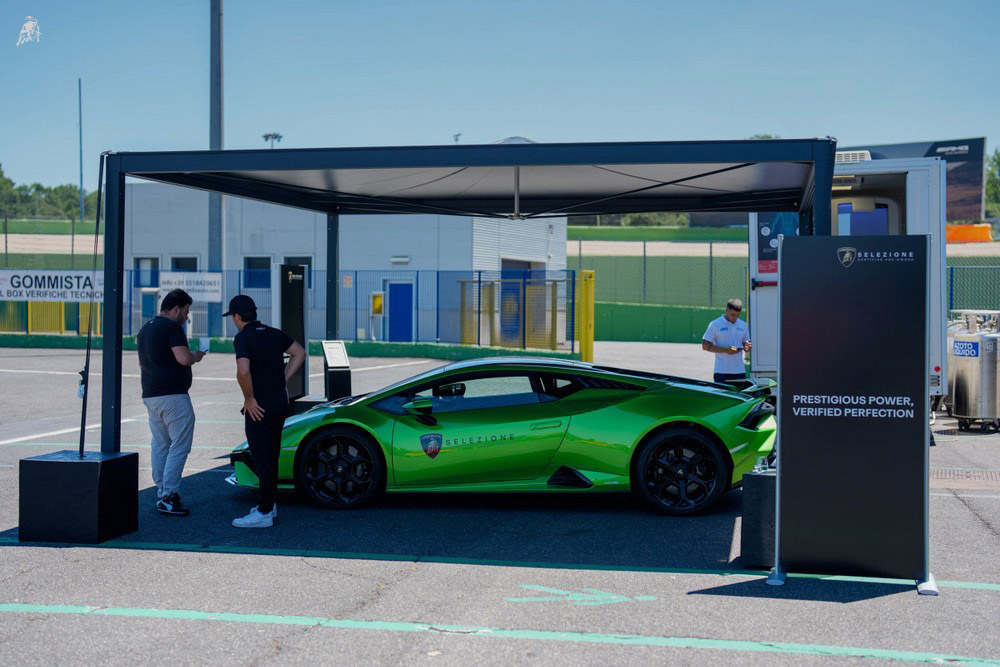
Selezione Lamborghini also brought a Revuelto, Huracán Tecnica and Murciélago to Vallelunga, creating a compact display that connected the marque’s current hybrid era with its V10 and V12 heritage. Together, the three cars formed a seductive snapshot of Lamborghini’s evolution—sharp-edged, theatrical and unmistakably Italian.
A New Kind of Teaching Tool
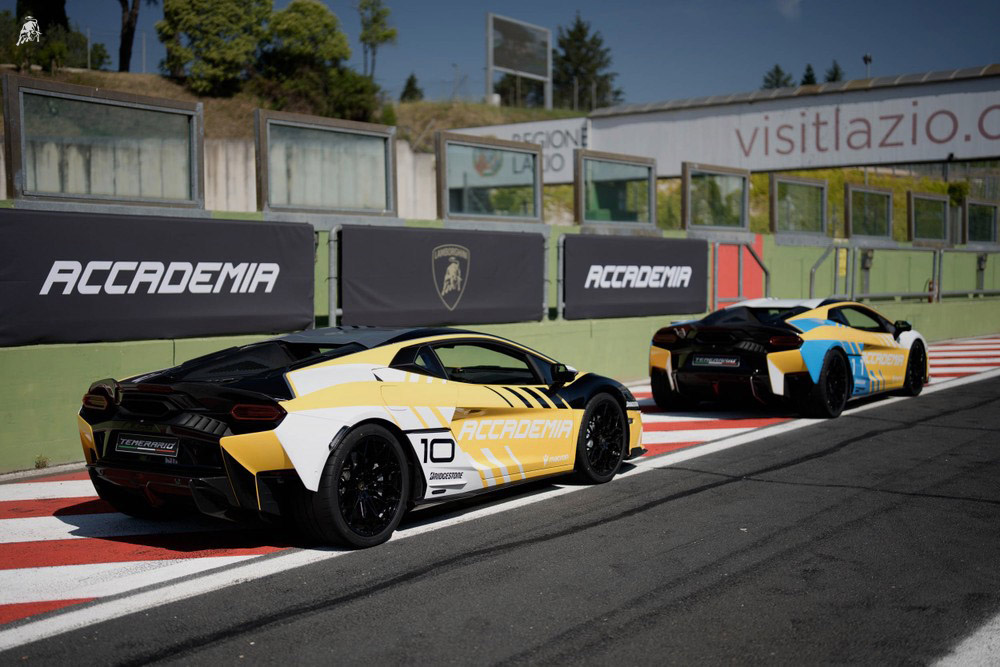
The Temerario was the centerpiece of the driving program, and the Accademia fleet was equipped with Lamborghini’s Alleggerita package. The track-focused specification reduces weight by more than 25 kilograms while further increasing downforce and aerodynamic efficiency, making an already serious super sports car even more appropriate for sustained circuit work.
Its hybrid powertrain combines a 4.0-liter twin-turbocharged V8 with three electric motors to produce 920 CV, while the V8 itself revs to 10,000 rpm. Those numbers establish the potential, but they do not fully describe what happens when the car is released onto Vallelunga.
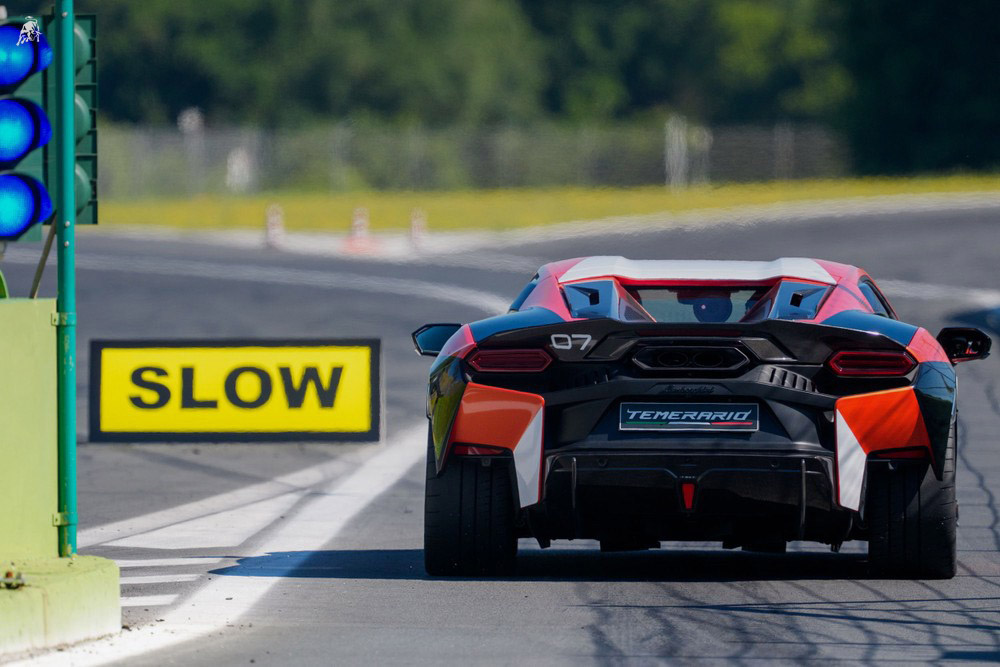
The Temerario is blindingly fast, yet its acceleration is only part of the story. Its braking capability repeatedly required drivers to recalibrate what they thought was possible. The instinct to slow down arrived well before the car actually required it.
Bespoke Bridgestone Potenza tires provided the essential connection between the Temerario and the circuit. Their grip and consistency allowed the program to build speed progressively without losing sight of the central lesson: every input ultimately passes through four relatively small contact patches.
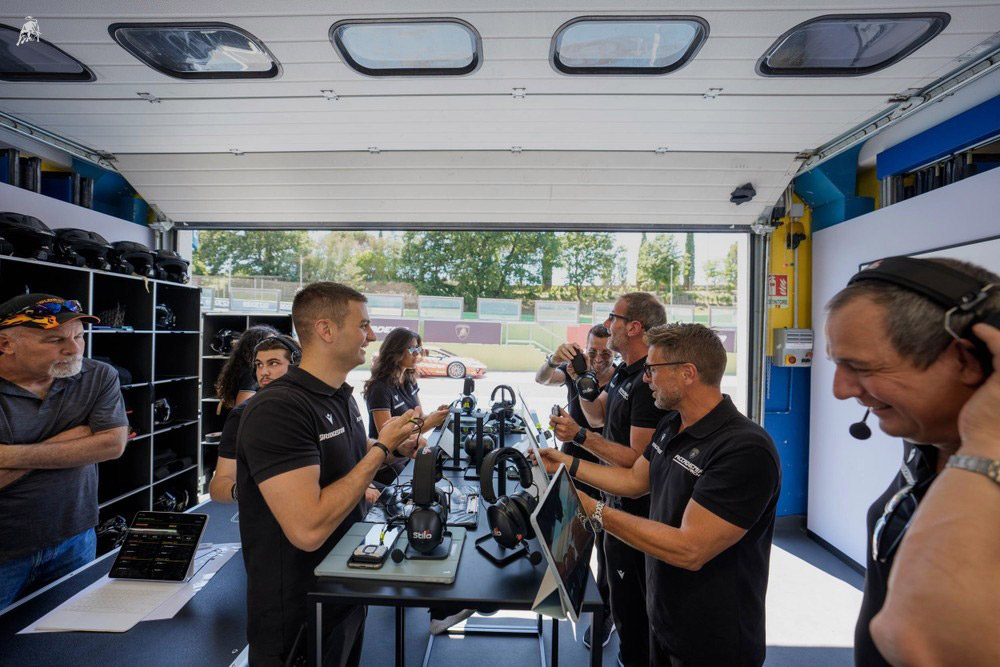
The instructor team was exceptional, combining impressive racing credentials with an ability to communicate clearly as the speed began to rise. The Speed Journal’s Jeff Francis was paired with Giovanni, whose résumé includes British Formula 3, British Formula Renault, victory in Formula Opel Nations Cup and competition in international sports-car racing.
More important in the moment was Giovanni’s calm, measured coaching. The most effective instructors do not fill every straight with conversation. They identify the one adjustment that will unlock the next part of the lap, deliver it clearly, and then allow the driver to experience the difference.
Coaching, Then Trust
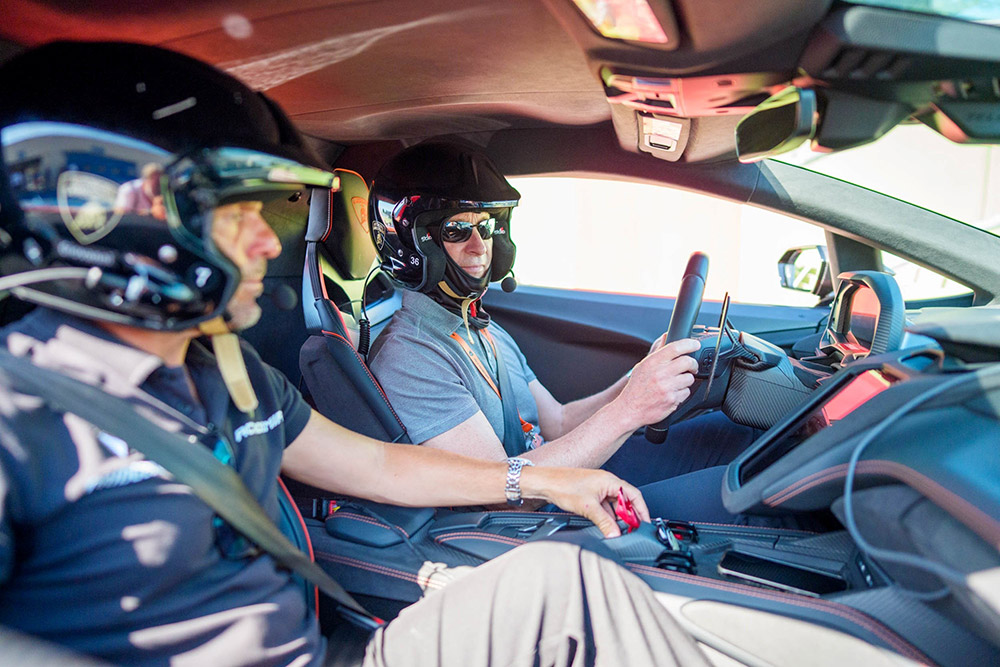
The first sessions placed a coach in the passenger seat. At this level of training, that arrangement was particularly valuable. Feedback was immediate, and instruction could be connected directly to what the driver was seeing and feeling.
A braking point could be adjusted by several meters. A turn-in could be delayed. A steering input could be softened to preserve front-tire grip. The coach could also explain why a line had worked – or why a lap that felt dramatic had not necessarily been fast.
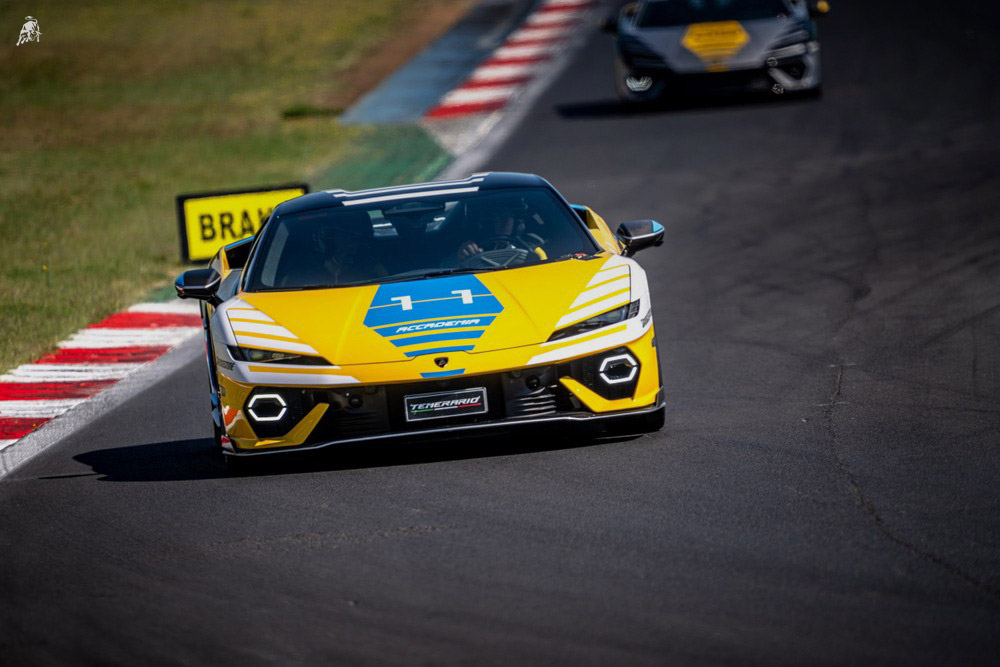
Once those lessons had been established, the format changed.
Participants were outfitted in full Lamborghini Alpinestars racing equipment prepared in advance for each driver. The package included a custom-tailored race suit, shoes and gloves to keep, along with a helmet and HANS device provided for the experience. The gesture added another layer of anticipation, making the next step feel more tangible before participants climbed into the passenger seat of a Lamborghini Huracán Super Trofeo EVO2 for professional hot laps.
That shift was one of Mach II’s most effective teaching methods. With no instructor in the passenger seat, every braking point, turn-in and throttle application became the driver’s own decision. The coach remained present as a safety net and an observer, but the responsibility for constructing the lap had moved behind the wheel.
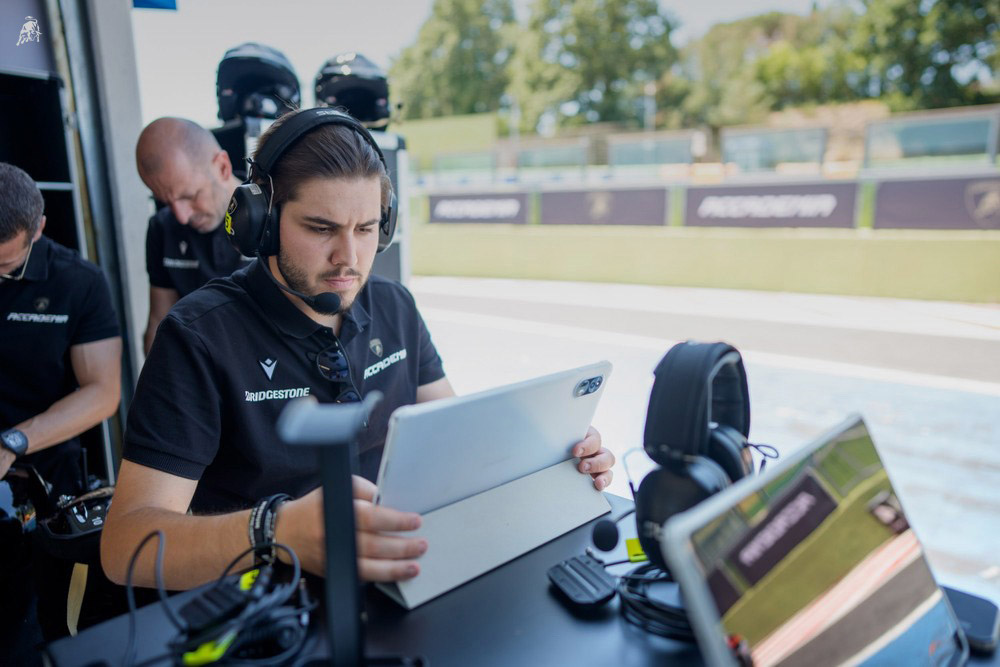
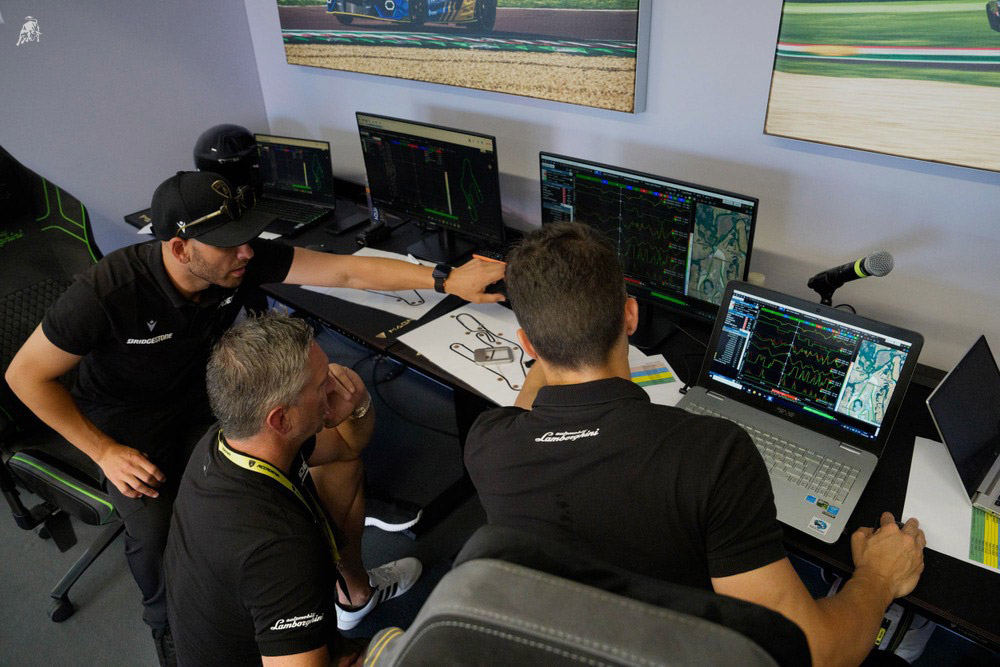
Telemetry then removed any ambiguity. Speed traces, braking points, steering behavior and onboard video showed whether a change had produced genuine improvement or merely felt faster from the cockpit.
The 150-Meter Question
Vallelunga’s layout combines high-speed commitment with corners that reward patience and precision. It is not a circuit that allows a driver to concentrate on one technique for long.
Turn 7 became one of the clearest examples of the Temerario’s performance and Mach II’s approach to line selection. In one session, telemetry showed an indicated speed above 270 km/h—approximately 168 mph—before braking near the 150-meter board.
At that speed, 150 meters does not feel like a long distance.
The Temerario remained stable as the brake pedal was pressed with a force that would seem excessive in almost any road-driving environment. The car shed speed with such authority that the braking zone initially felt beyond what should be physically possible.
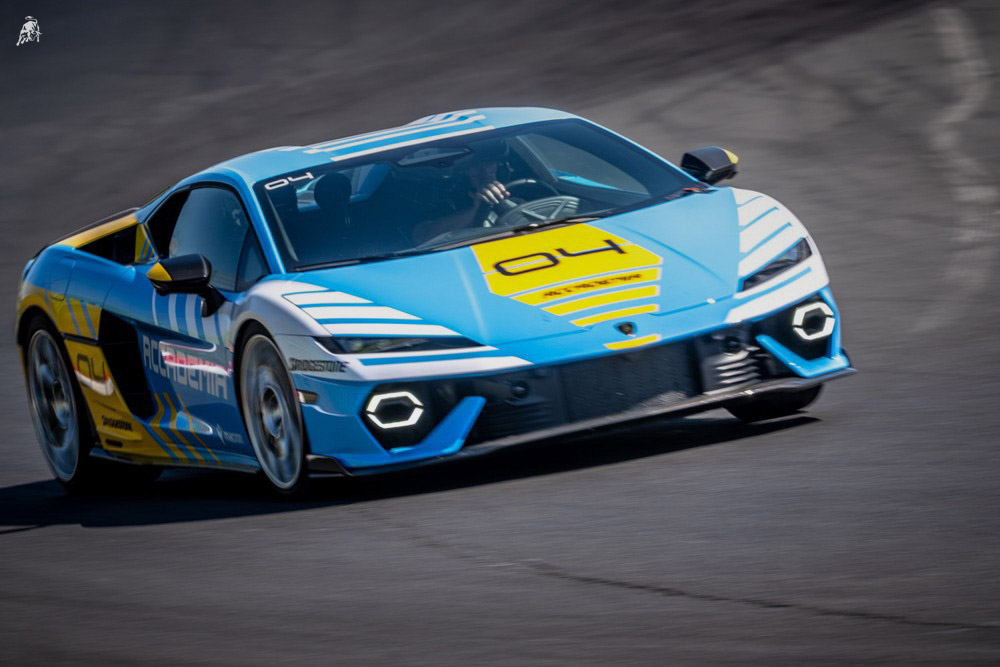
From there, Turn 7 could be approached with a flowing late-apex line or with a deeper, more squared-off V-line. The latter asked the driver to remain straighter under braking, rotate the car later and prioritize the exit. Neither approach was presented as a universal answer. The lesson was to understand what each line required from the car and how the choice affected the next section of the lap.
Mach II was not simply teaching participants to brake later. It was teaching them to arrive at a corner with a plan.
As speeds increased, the emphasis remained on repeatability. One spectacular lap is less meaningful than a sequence of disciplined laps in which the braking points, steering inputs and exits remain consistent. The program introduced more pace without allowing pace to replace technique.
When the Coach Steps Away
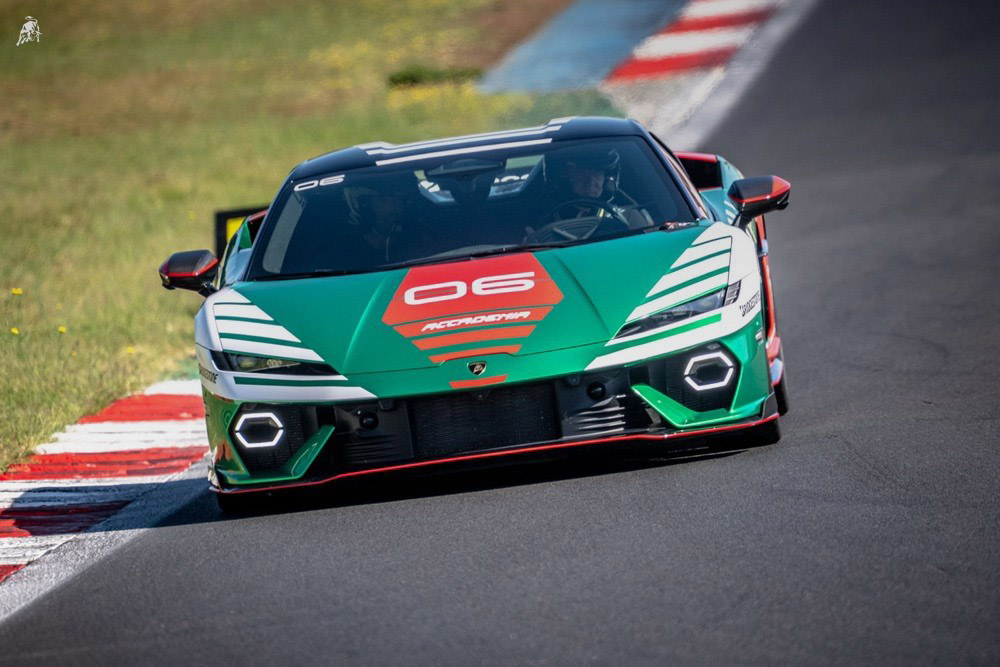
The solo sessions demonstrated how much information a driver absorbs without realizing it. With the radio mostly quiet, the lap began to feel less like a sequence of instructions and more like a continuous rhythm.
Vision moved farther ahead. Braking became more progressive. The transition from brake release to steering input became smoother. The Temerario could then be allowed to settle, rotate and use its tremendous traction rather than being forced into the corner.
This was where the Alleggerita-equipped car became particularly rewarding. Its performance was immense, but it was not inaccessible. The Temerario communicated clearly enough that improvements in technique could be felt immediately, particularly when the driver stopped trying to dominate the car and began working with it.
The two on-track days provided enough repetition for those changes to become habits rather than isolated successes. Drivers could make an adjustment, test it, review the result and return to the circuit while the previous session was still fresh.
A Visceral Glimpse of Super Trofeo
At the end of the second and final track day, the program changed character once again.
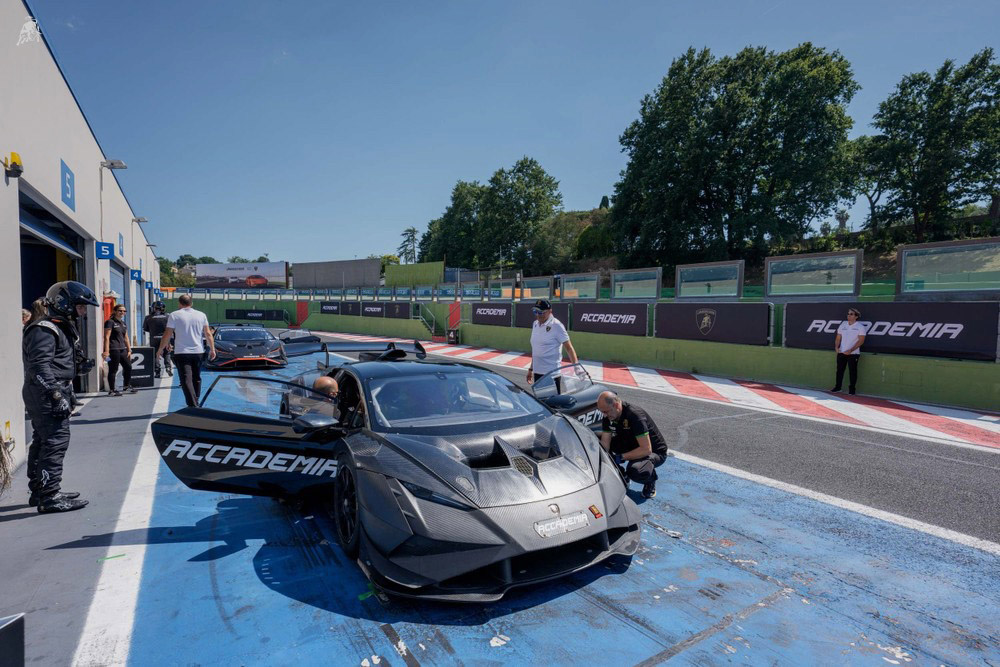
Participants were outfitted in full Lamborghini Alpinestars racing equipment prepared in advance for each driver. The complete package—including a custom-tailored race suit, racing shoes, gloves, helmet and HANS device—provided the appropriate protection for the next experience and was theirs to keep. The gesture added another layer of anticipation, making the next step feel more tangible before participants climbed into the passenger seat of a Lamborghini Huracán Super Trofeo EVO2 for professional hot laps.
The distinction between a road-legal super sports car and a purpose-built racing machine became clear before the first lap was complete.
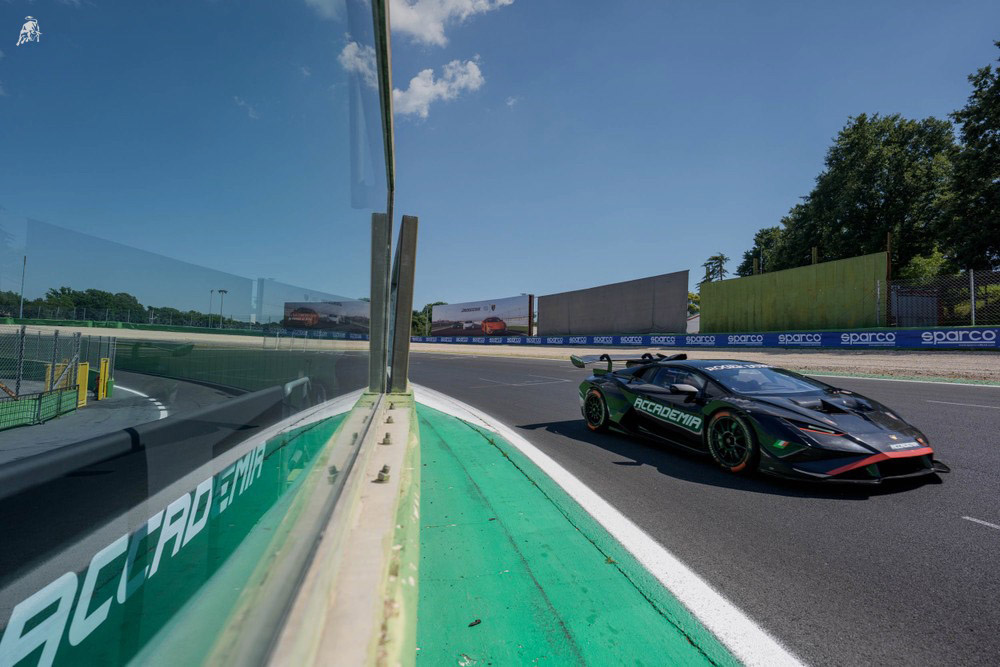
The Super Trofeo EVO2’s 5.2-liter V10 produces 620 CV and sends its power through a six-speed sequential X-Trac gearbox. Its aerodynamics, suspension, braking system and slick racing tires are designed for one environment. There are no compromises intended to make the car more accommodating away from the circuit.
The hot lap with Nick at the wheel was visceral.
Curva Grande arrived at a speed that was difficult to comprehend from the passenger seat. The combination of velocity and sustained lateral force compressed perception, leaving little time to process one corner before the next was already approaching.
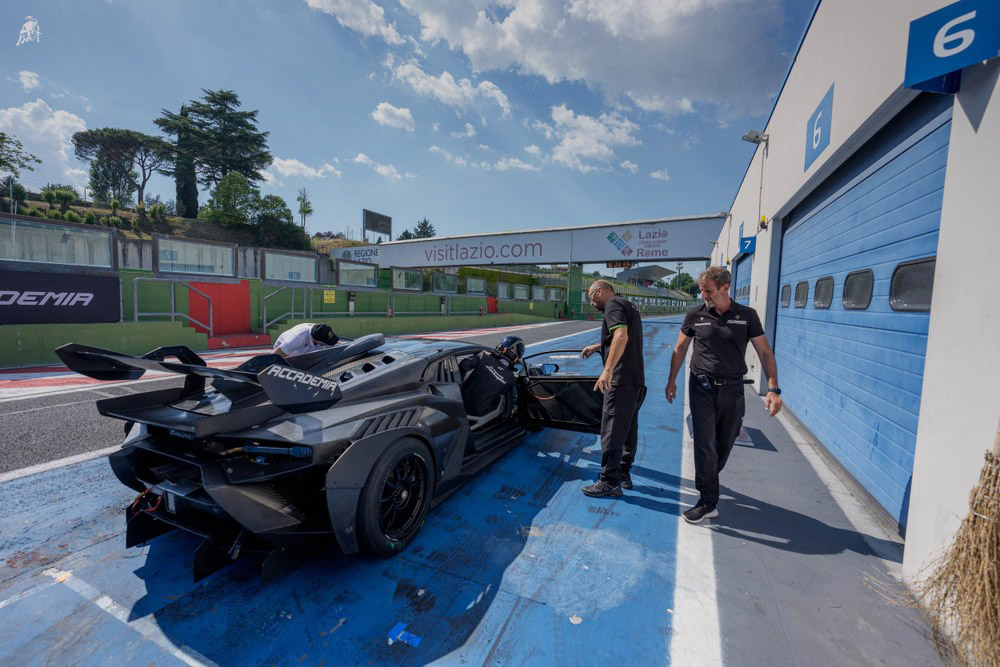
On slick tires, the Super Trofeo car responded to deliberate steering inputs with extraordinary immediacy. It seemed to go precisely where it was pointed, carrying a level of cornering speed that would be impossible to understand from specifications alone. A race car speaks an entirely different language from a street car, and that contrast was precisely the point.
The Bridge to Racing
Lamborghini has structured Accademia as a progressive path rather than a collection of unrelated driving events. Mach I establishes the foundation. Mach II adds speed, telemetry, tire management, independent driving and race-oriented decision-making.
Mach III is intended to complete that progression, honing every detail of driving technique and preparing participants to compete at professional levels.
As outlined to participants at Vallelunga, the next level is designed to deepen the connection between advanced Accademia training and Lamborghini’s Super Trofeo pathway. The passenger hot laps at the conclusion of Mach II therefore offered more than entertainment. They provided a preview of the racing environment toward which the program is building.
Mach II’s value was not in promising instant transformation. Instead, it demonstrated how professional habits are developed: through precise instruction, repetition, objective data and gradually increasing responsibility.
It also showed why Lamborghini’s approach works so well. The machinery is extraordinary, and the people complete the experience. The instructors, technicians, hospitality team and returning participants create a community around the pursuit of better driving.
At Vallelunga, the laps became faster, but speed was never the only measure of progress. Drivers left with a clearer understanding of where to brake, where to look, how to construct a corner and when to trust the car.
The next lap will be in Mach III—and, for those who continue the journey, perhaps eventually on a Super Trofeo starting grid.
The Speed Journal thanks Automobili Lamborghini, the Accademia instructors and the entire event team for an exceptional experience at Vallelunga.