
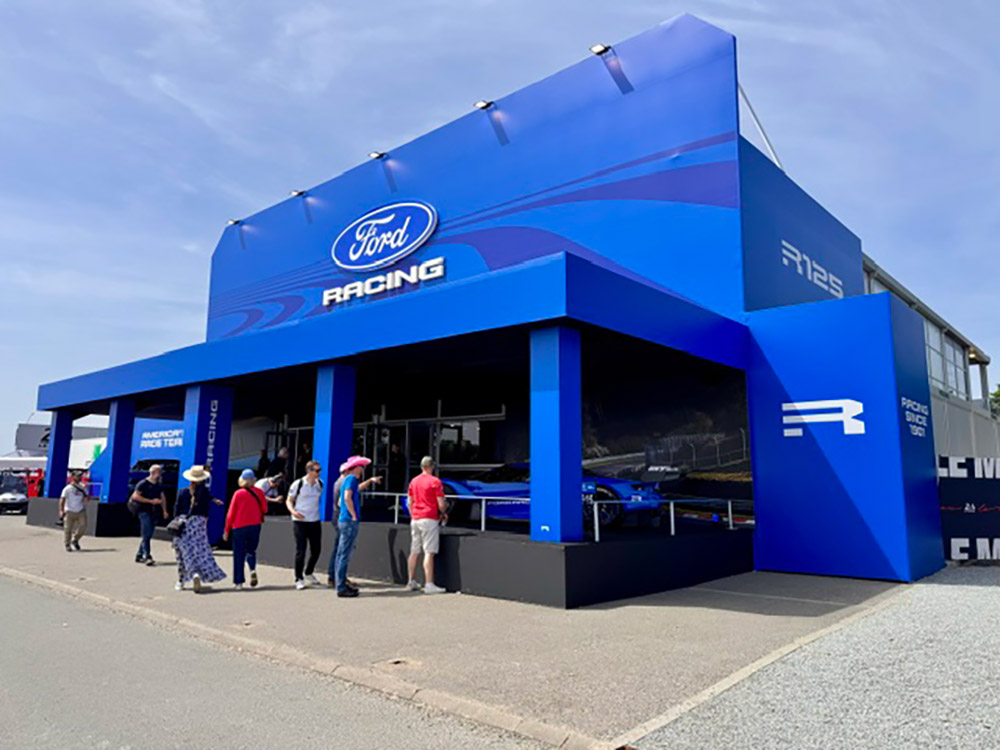
At Le Mans, hospitality is more than a place to eat, sit, and watch timing screens. Done properly, it becomes the front door to a manufacturer’s racing purpose. For Ford Racing, that door was painted unmistakably in blue.
Friends and contributor of The Speed Journal, Alastair & Freddie Iles of Trofeo Automotive Assets, attended the 24 Hours of Le Mans as a guest of Ford Racing and came away with the kind of impressions that matter at La Sarthe: the scale of the effort, the energy around the Mustang GT3, the sound of Ford’s V8 in race trim, and the seriousness behind the company’s 2027 return to the top category.
Hospitality With a Purpose
Inside, the experience was what a proper manufacturer hospitality program should be: food and beverage service, Ford hosts, live race coverage, timing screens, Mustang on-board feeds, elevated viewing, track-level atmosphere, and enough access to remind guests that Le Mans is not a static display. It is a living, breathing, sleep-depriving endurance machine.
That distinction matters. Anyone can build a lounge. Ford built a vantage point. The hospitality space gave guests a comfortable base, but the real value was the way it framed the race. The garage tour, the pit-side views, the driver and team proximity, and the constant live feeds connected the hospitality experience directly to the competitive effort outside.
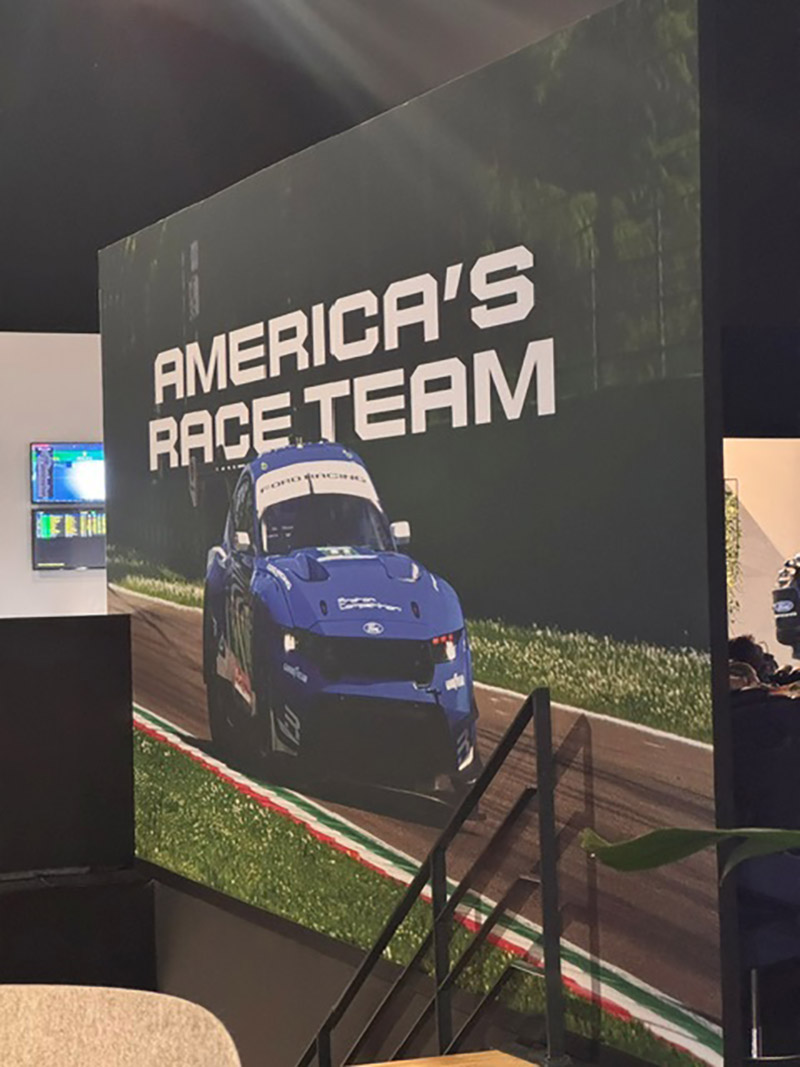
America’s Race Team, On Display
Ford’s messaging at Le Mans was direct. The words America’s Race Team were not treated like a slogan in the background; they were part of the architecture of the experience. The hospitality program, the garage access, the branded food details, and the Mustang GT3 display all worked together to make the guest experience feel connected to the racing program rather than adjacent to it.
That is the strength of a manufacturer-led Le Mans presence. It can make the weekend feel larger than a class result. It can make guests understand the intent behind the investment.
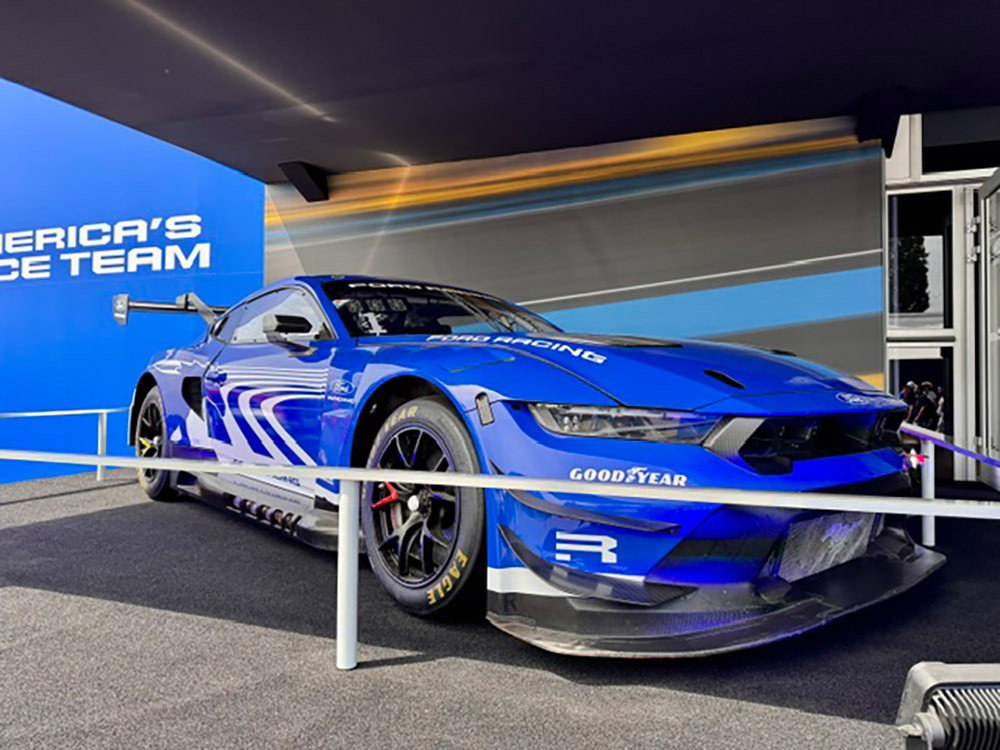
The Mustang GT3: Ford’s Current Le Mans Voice
The Mustang GT3 was the central character. Finished in Ford Racing blue and carrying the attitude of America’s Race Team, the car looked at home in a European paddock yet sounded distinctly American. The naturally aspirated V8 note is a major part of the car’s identity, and at Le Mans, where so much of the race is felt before it is seen, that matters.
Ford and Proton Competition entered the race with two Mustang GT3s in the LMGT3 category. A single result never tells the whole story of an endurance program, and the broader narrative around the Mustang GT3 is that Ford is developing a global platform for major GT and endurance racing, with Le Mans as one of its most visible proving grounds.
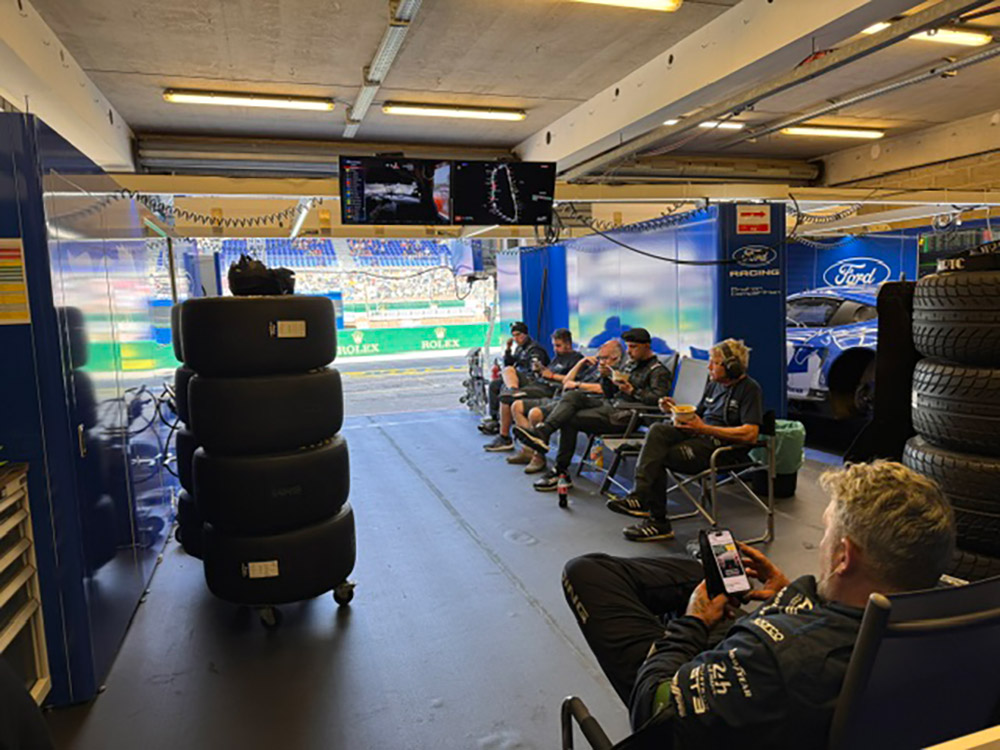
Inside the Garage
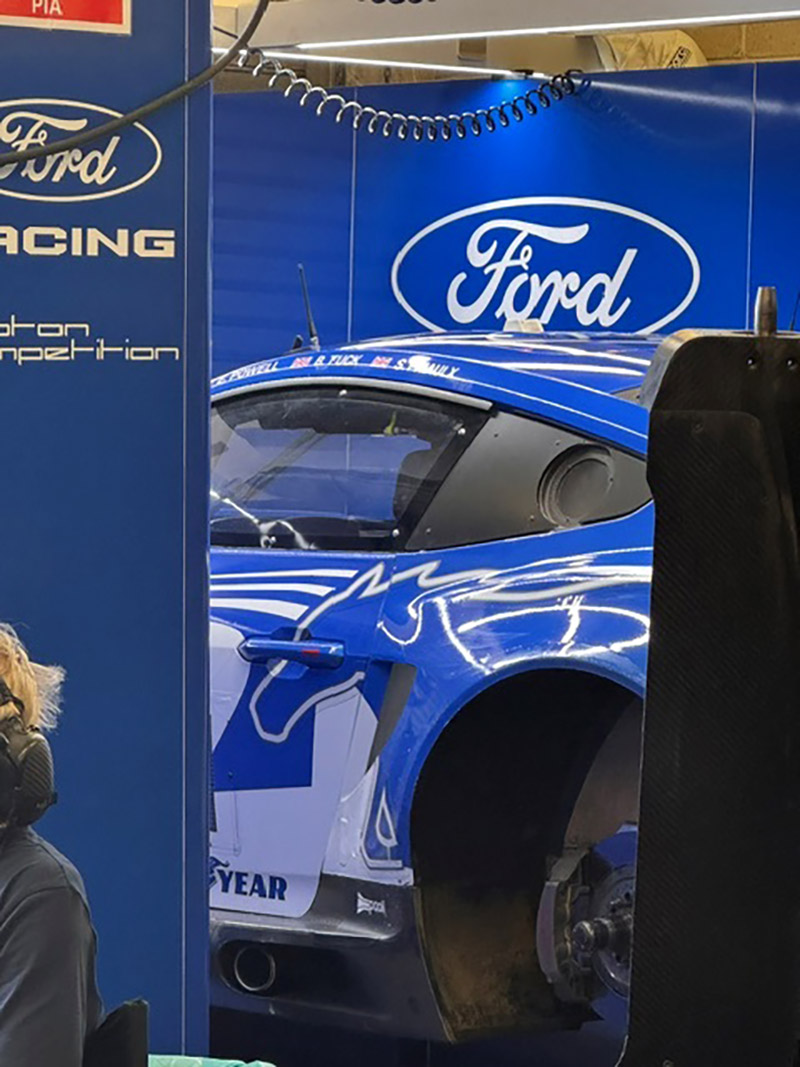
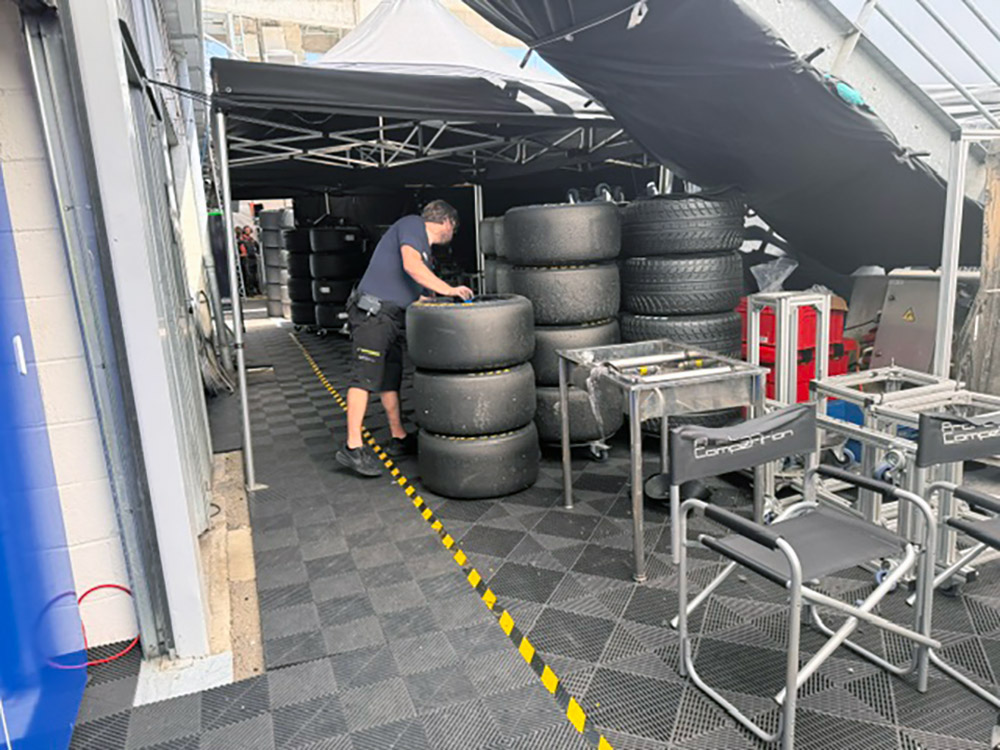
The garage tour was one of the most meaningful parts of the Ford hospitality experience. It gave guests a closer look at the work that sits behind every lap: tires, tools, crew discipline, engineering process, and the constant management of a race that never stops asking questions.
Seen from inside the garage, the Mustang GT3 is no longer just a poster car. It is a working endurance machine surrounded by people, data, equipment, and pressure. That proximity is what separates true hospitality from simple premium seating.
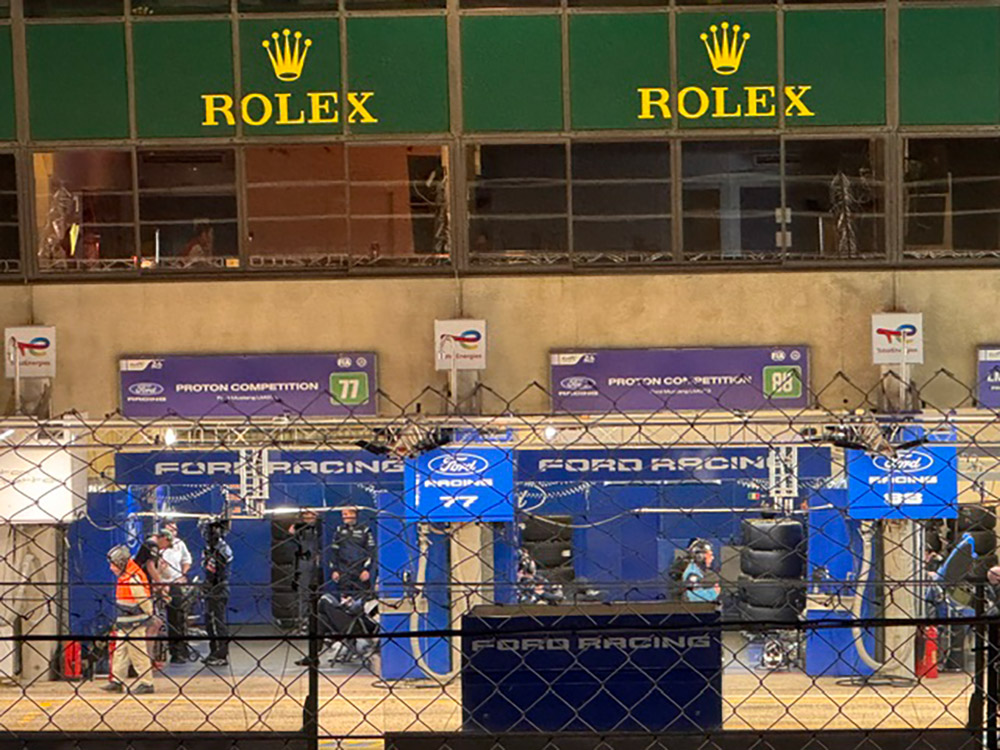
The Race Beyond the Lounge
Ford’s hospitality position gave guests a close connection to the competition environment. The pit-lane perspective, the garage access, and the ability to follow the cars through Ford’s live feeds made the building feel like part of the race rather than a retreat from it.
Le Mans rewards that kind of immersion. The event is too large, too long, and too layered to understand from one angle. Ford’s program gave guests multiple angles: comfort, viewing, data, sound, access, and brand context.
Through the Night
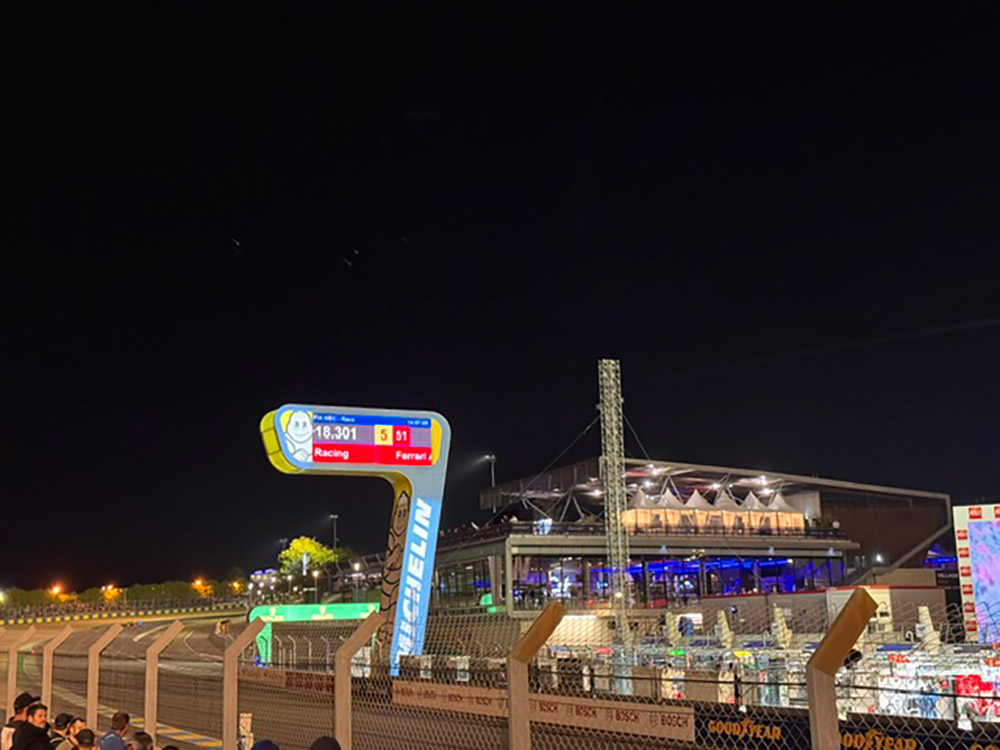
At Le Mans, night changes everything. The cars become streaks of light and sound, the circuit feels larger, and the atmosphere becomes more intimate even as the race grows more demanding. Ford’s hospitality space remained part of that rhythm, glowing against the night while the Mustang GT3s continued the work outside.
That is when a good hospitality program proves its value. It becomes a home base without dulling the edge of the race. Guests can recover, eat, follow the timing screens, return to the viewing areas, and stay engaged as the hours accumulate.
The Details Matter
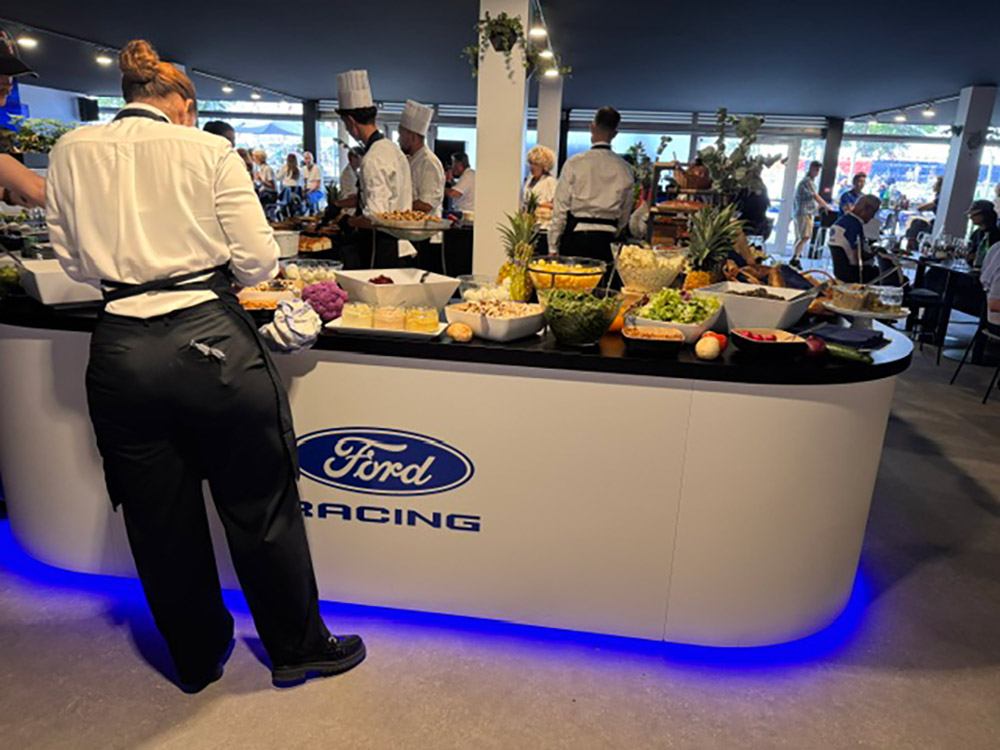
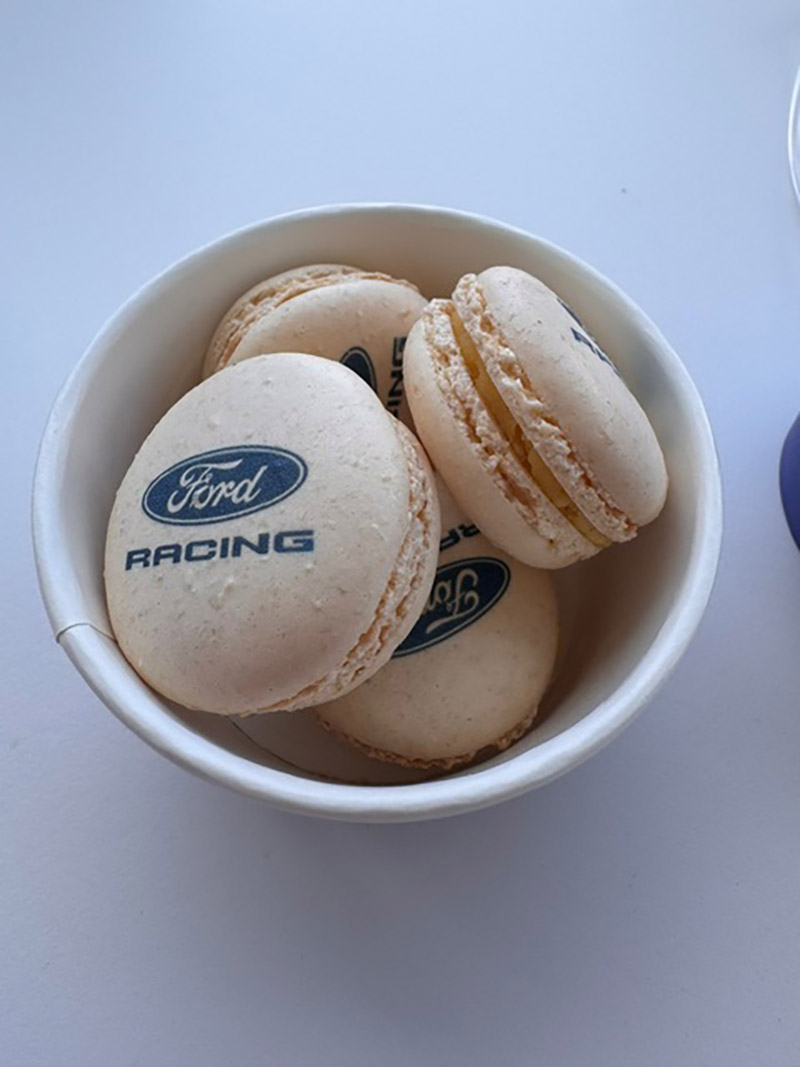
Small details help define a hospitality program. The Ford Racing branding did not stop at the building or the car display. It carried through the food presentation, the guest experience, and the sense that the entire weekend had been designed as a Ford Racing environment.
That level of consistency is important at Le Mans because the paddock is filled with competing stories. Ford made its story easy to understand: Mustang GT3 now, Hypercar next, and Le Mans as the place where both matter most.
The Road to 2027
For Ford, Le Mans is never simply another weekend. The company’s 1966 1-2-3 finish with the GT40 remains one of motorsport’s defining stories, and Ford’s four consecutive overall victories from 1966 through 1969 still shape how the brand is judged at this race. Even when Ford competes in GT, the question of overall victory is never far away.
That is why the 2027 Hypercar program matters so much. Ford is returning to the top tier of the FIA World Endurance Championship with a factory Hypercar effort aimed at Le Mans. The program is being positioned as Ford-powered, Ford-built, and Ford-raced, with ORECA selected as chassis partner.
Ford has also confirmed a serious driver roster for the program, including Logan Sargeant, Mike Rockenfeller, Sebastian Priaulx, Matt Campbell, Nick Yelloly, and Tom Blomqvist. The message is not subtle: Ford is building toward a proper return to the front of the endurance-racing grid.
A V8 Heart for the Hypercar Era
The 2027 prototype is expected to use a 5.4-liter naturally aspirated Coyote-based V8 developed in-house in Dearborn, creating a direct technical and emotional bridge between the Mustang GT3, Ford’s road-going performance identity, and the future Hypercar. It is a very Ford answer to the modern endurance era: global, hybrid-era prototype racing, but with a V8 heartbeat.
For guests inside Ford hospitality, that future was not abstract. The garage tour and program discussions gave the weekend context beyond the 24-hour race itself. The impression was clear: Ford is not returning to Le Mans merely to be present. Ford wants to win again.
Present Sound, Future Ambition
At Le Mans, Ford’s past is impossible to ignore. But from inside the blue hospitality building, the bigger takeaway was that Ford’s future at La Sarthe is no longer theoretical. It is being built, staffed, tested, and prepared, with the Mustang GT3 carrying the sound today and the Hypercar carrying the ambition tomorrow.