
There’s a particular kind of silence you only notice in the mountains—right before it’s punctured by a turbocharged five-cylinder warming its throat.
Saalbach-Hinterglemm, tucked into Austria’s winter rhythm, has a way of making normal driving feel like a compromise. The roads are beautiful, sure—but the real education happens away from traffic, where the surface is glassy and the cones are spaced with intent. This region hosts winter driving programs built specifically around low-grip car control, and it doesn’t take long to understand why.
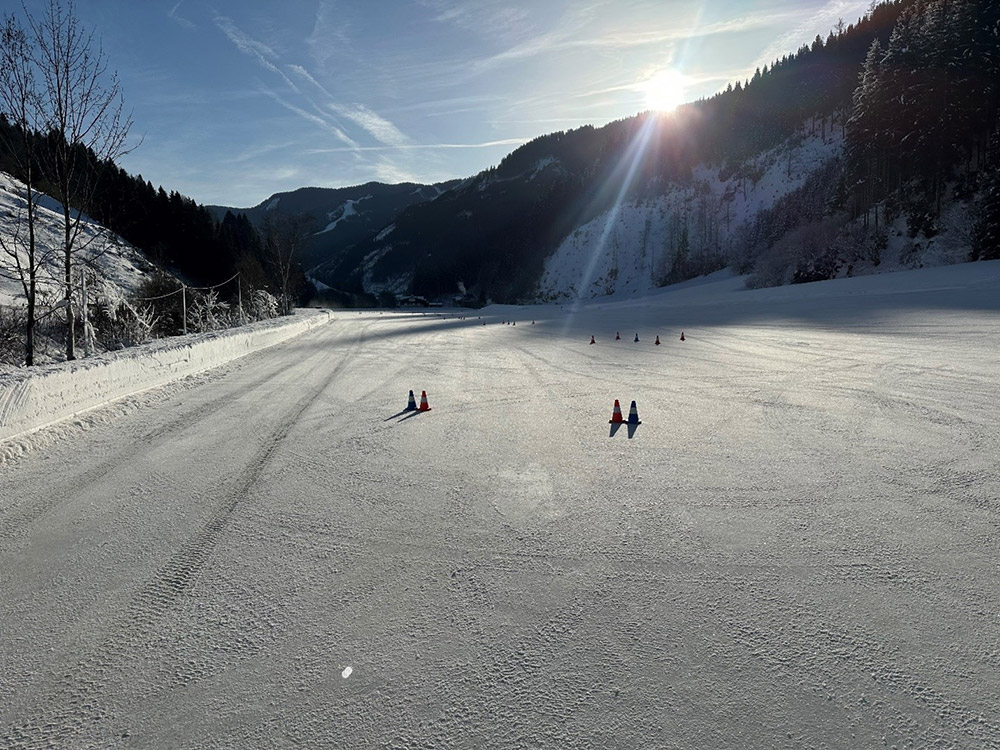
The Speed Journal’s Jeffrey Francis was there for the training, which unfolded over two days—the first focused on drift fundamentals, the second built around a drift challenge that was timed, technical, and just humbling enough to make you respect every input you’ve ever rushed.
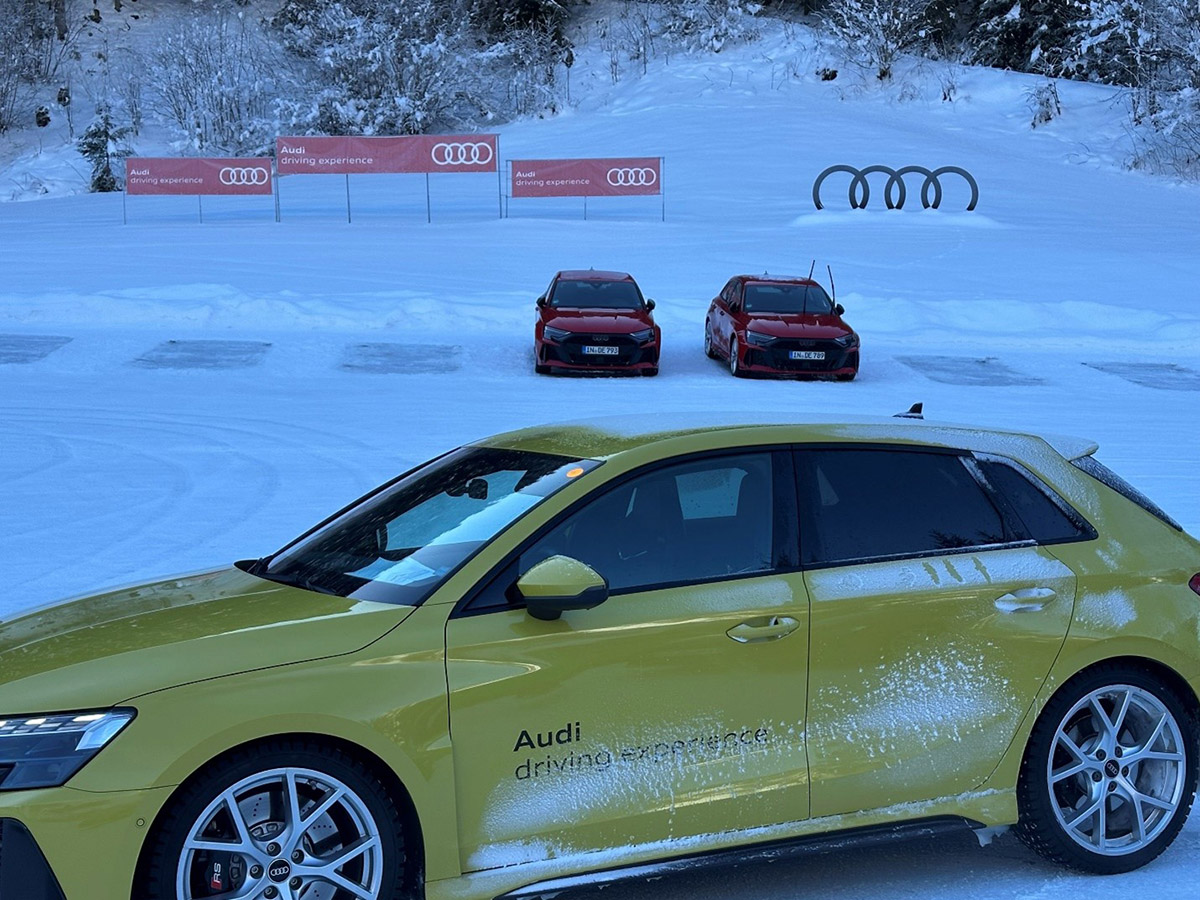
The tool for the job was Audi’s RS 3 Sportback, a compact five-door with a 2.5-liter turbo inline-five—one of those layouts that feels slightly rebellious in 2026 simply because it still exists. Numbers matter less on ice, but it’s worth noting what’s trying to break traction: around 400 PS and 500 Nm is plenty when the “road” is basically a skating rink.
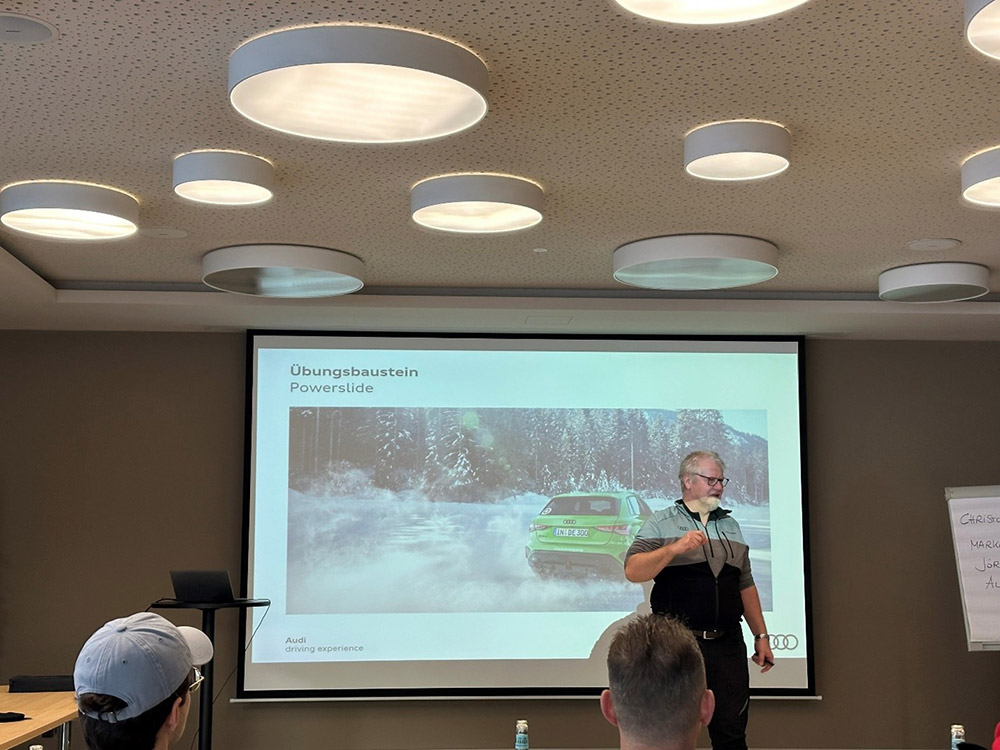
Day One: Learning the Slide Without Chasing It
The morning began the way all good driving instruction should: simple exercises that punish ego and reward patience.
First up was the purest drift primer imaginable—power slides from right to left, then left to right. No fancy transitions. No hero angles. Just the fundamentals: eyes up, weight settled, steering smooth, throttle measured. On ice, “more throttle” isn’t a solution—it’s a question. And the surface answers immediately.
From there, a slalom drill designed to teach weight transfer and pendulum timing. If the power slide is about starting the drift, the slalom is about preparing for it. You learn to load the chassis, to feel the mass shift before the car actually rotates, to create the moment instead of reacting to it. It’s the difference between “saving a slide” and “building one on purpose.”
Then came the exercise that tied everything together: the figure-eight.
View this post on Instagram
The figure-eight forces honesty because it’s continuous. Drift one direction, transition, drift the other—over and over—until your hands stop fighting the car and start negotiating with it. This is where we began bringing the brake into the conversation—not as a panic button, but as a fine tool. A light tap here to take a little speed out. A brief brush there to help the car rotate and tighten the line before the next transition. Done right, it feels like editing: removing the extra speed that doesn’t belong so the drift can stay clean.
Driver’s were paired two-to-a-car, swapping driver and passenger roles throughout the day. It changes the learning curve in a good way. You watch the same corner from two perspectives—one with your hands on the wheel, the other with bandwidth to notice what you missed.
And the instructors—professional, precise, and refreshingly hospitable—kept the tone focused without draining the fun out of it. The vibe wasn’t “look what I can do,” it was “here’s how to do it again, on command.”
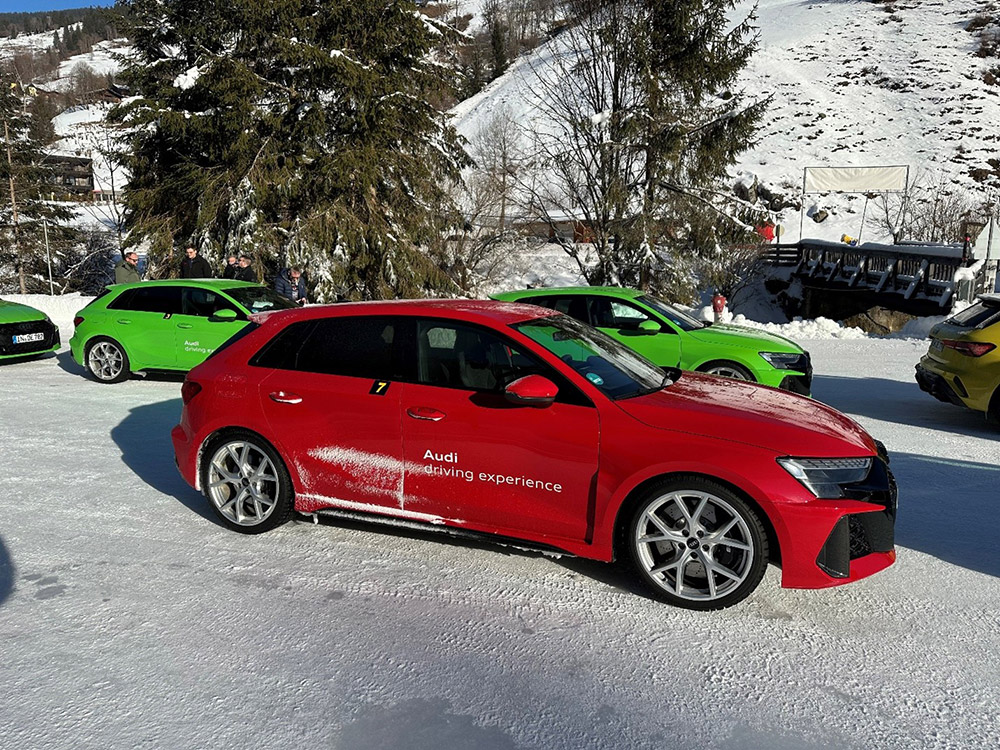
Day Two: The Challenge Course Finds Your Weak Spots
The second day raised the stakes without turning it into theater.
We warmed up with familiar drills—the kind you’re grateful for because they remind your body what the conditions feel like before the clock gets involved. Then it was time for the real course.
Timed. Coned. And laid out in a way that made every mistake expensive.
The track had a subtle elevation change—enough uphill to disrupt your rhythm and enough downhill to tempt you into carrying speed you couldn’t afford. We ran it, then ran it reversed, which effectively doubled the puzzle. Corners that felt generous in one direction became tightening traps in the other.
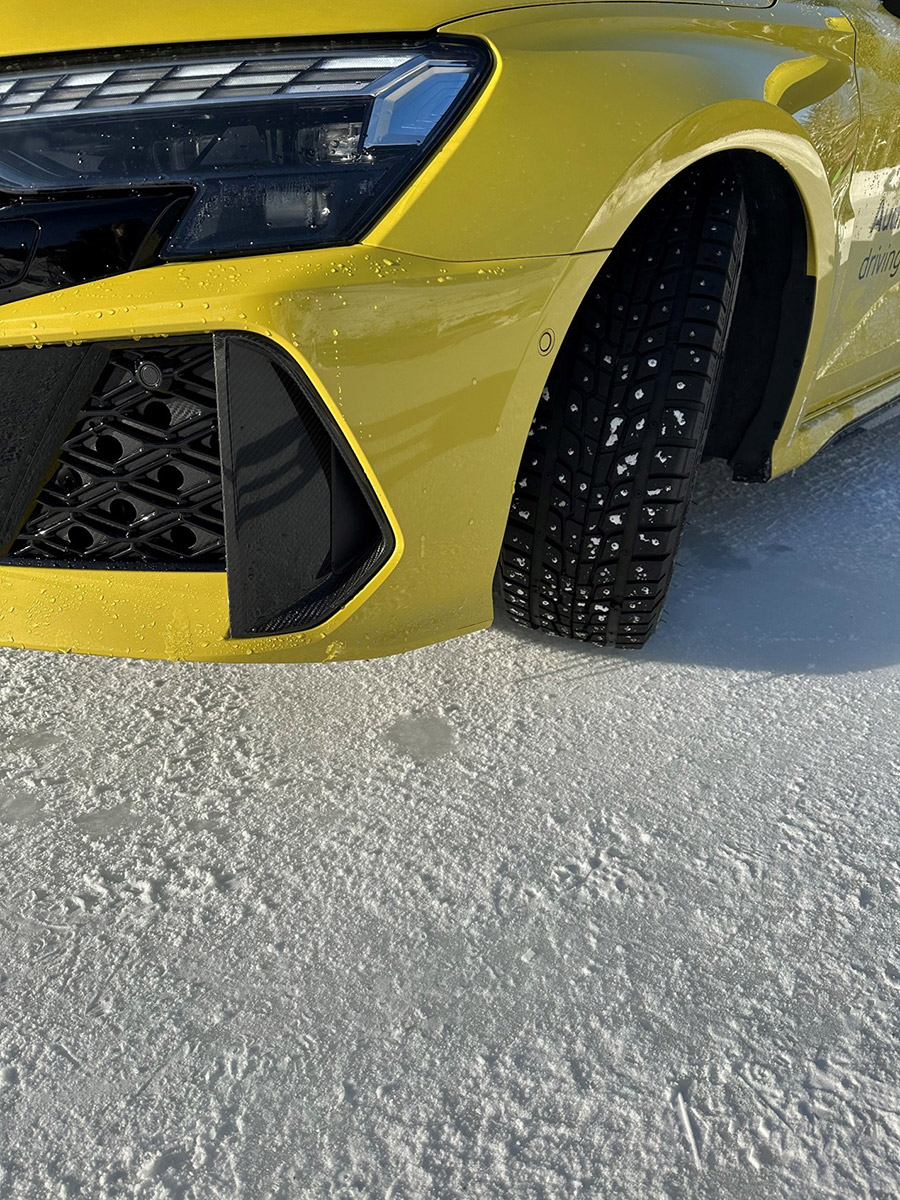
It wasn’t just a “drift course,” either. It was a full vocabulary test: fast sweepers, tight corners, decreasing-radius moments that punished early commitment, and increasing-radius sections where you had to stay in it longer than your instincts wanted. Braking became a major part of the lap—not heavy, dramatic stops, but quick taps to shave just enough speed before the car rotated into the next gate.
The challenge wasn’t about being the most sideways. It was about being the most repeatable.
A timed finale is a common way these winter programs bring everything together—slalom elements, tight turns, wide drift corners, and a final precision box or braking zone that demands you finish under control, not just in style.
And that’s the whole point. Ice doesn’t care what you meant to do.
Final thoughts
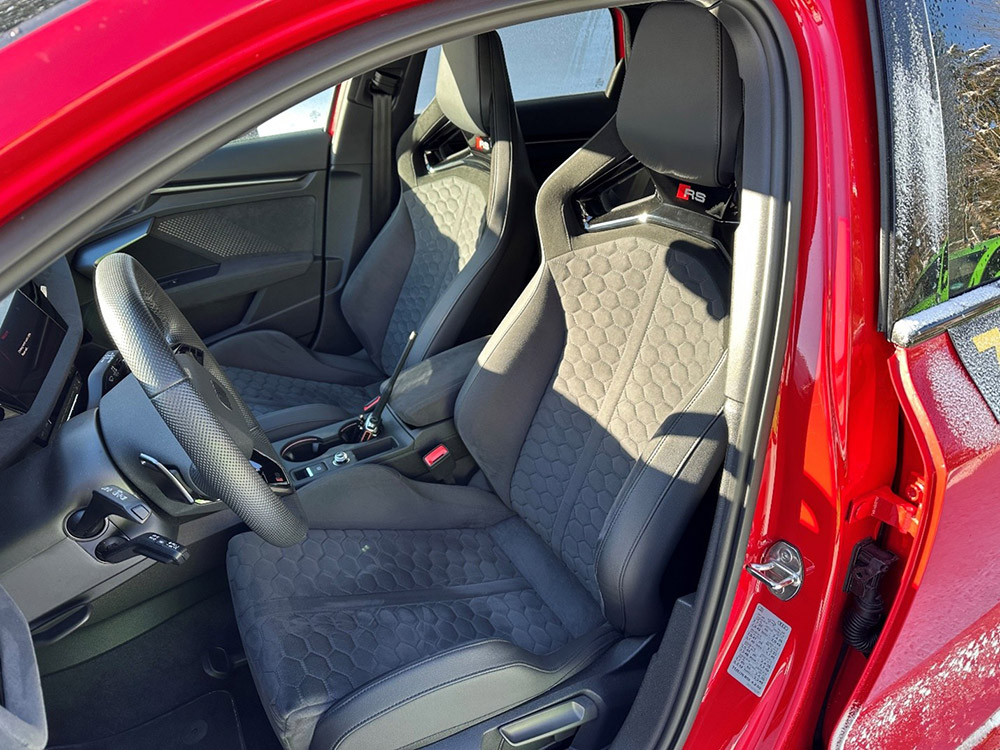
The RS 3 Sportback’s five-cylinder is the kind of engine that makes you grin even when you’re concentrating—its rhythm always present in the background, urging you to be braver than the surface allows.
But the bigger takeaway wasn’t the soundtrack or the speed. It was the mental reset.
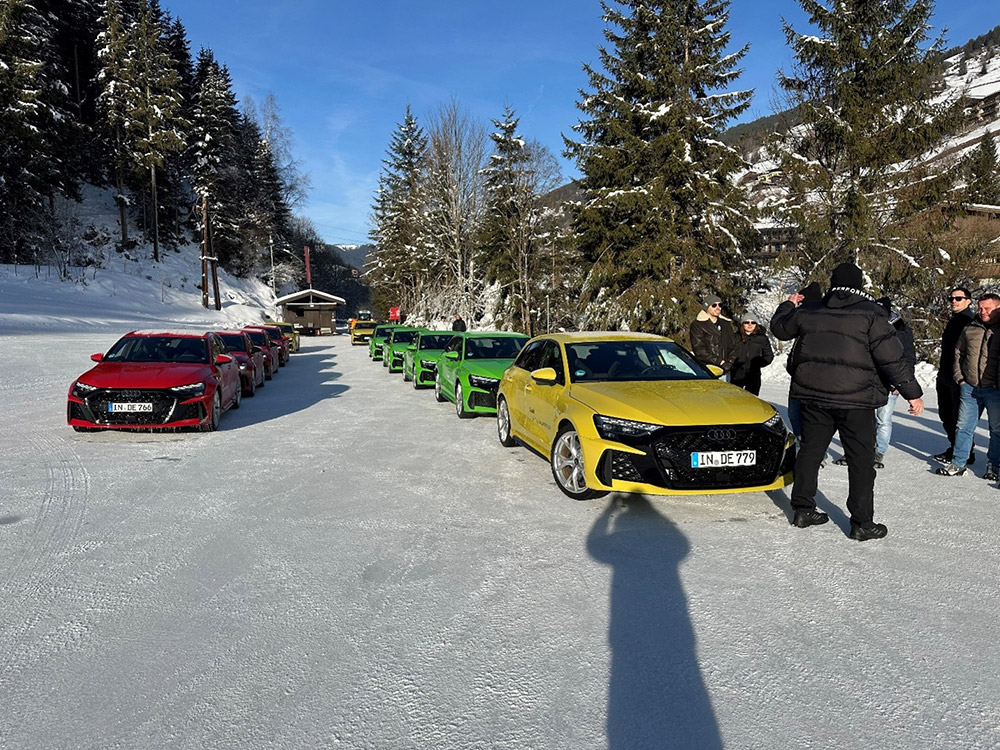
After two days, drifting stopped feeling like a party trick and started feeling like a discipline—built on weight transfer, vision, timing, and the calm use of the brake as a shaping tool rather than a surrender. Saalbach delivered that lesson in the only way ice can: immediately, repeatedly, and with zero interest in excuses.
The Speed Journal extends its thanks to the Audi team for two impeccably run days of instruction—serious training delivered with genuine warmth and a healthy dose of fun.