
Italy’s Motor Valley is filled with places where speed feels close. The roads around Modena and Maranello carry the soundtrack of engines, the restaurants are filled with racing photographs, and Ferrari’s presence is woven into the landscape. For the faithful, however, one address stands apart.
Fiorano is not merely a circuit. It is Ferrari’s private proving ground, a sanctuary of speed where Maranello’s performance philosophy comes to life.
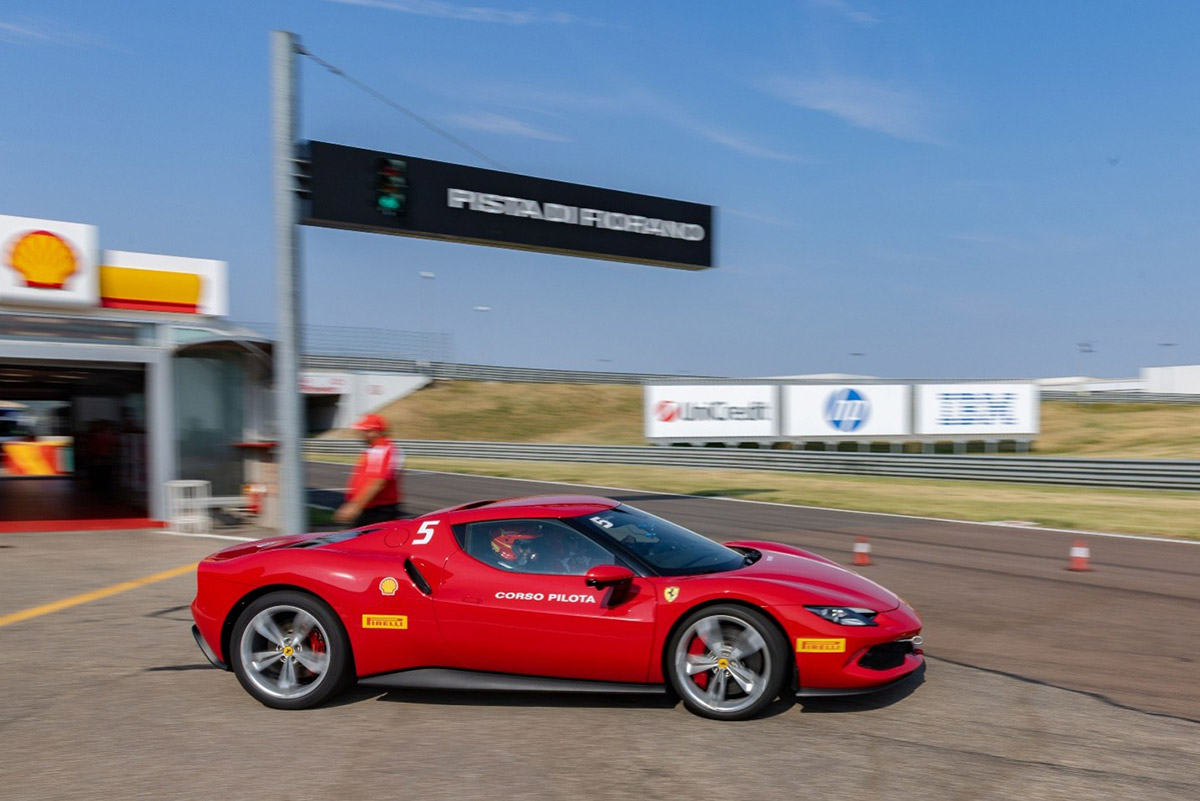
Speed Journal Principal Jeff Francis attended Ferrari Corso Pilota Sport at Pista di Fiorano to see how Maranello teaches owners and enthusiasts to get more from the cars wearing the Prancing Horse. The program brought together Ferrari hospitality, professional instruction, theory, track driving, car-control exercises, mental preparation, reaction training, telemetry analysis, and the kind of access that makes Fiorano feel less like a destination and more like an invitation.
The experience began in Modena at Hotel Rua Frati 48 in San Francesco, where guests arrived for check-in, accreditation, a welcome cocktail, course presentation, and dinner. The setting was polished without being stiff, an appropriate start for a program designed to blend Italian hospitality with serious driving development. The next morning, the mood changed from arrival to application. After breakfast, the group departed by bus for Fiorano.
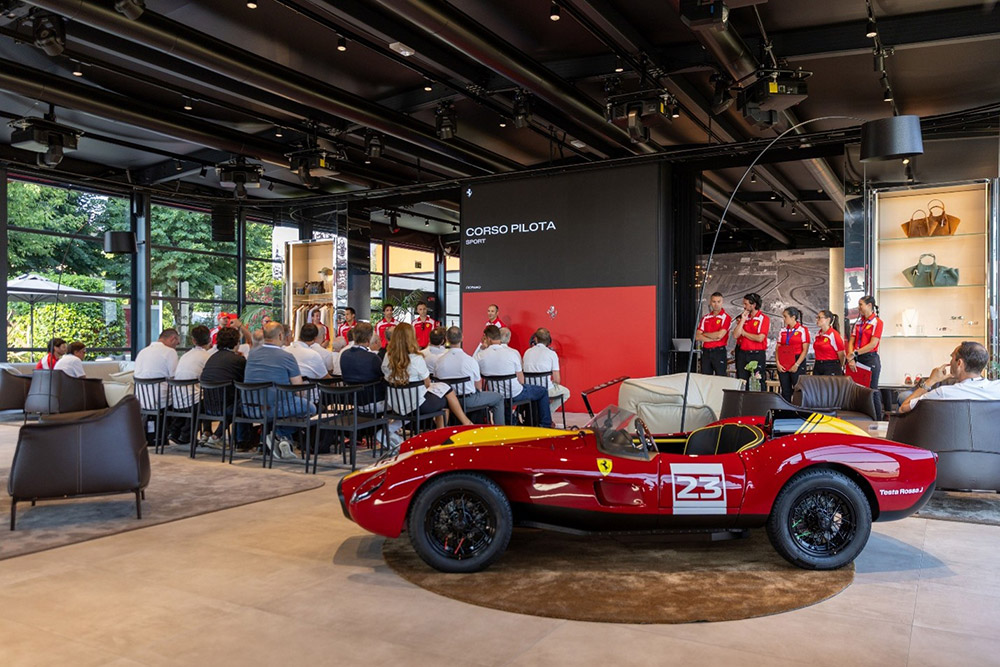
Ferrari does not treat Corso Pilota Sport as simple track time. The structure matters. The program started with theory, digital content, and instructor briefings before drivers went out on track. The message was clear from the beginning: speed is not the first lesson. Control is.
At Fiorano, that distinction becomes obvious quickly. The track is intimate enough that every corner returns often, but technical enough that a mistake can repeat itself lap after lap. It does not take long for a driver to learn whether they are looking far enough ahead, releasing the brake cleanly, and asking the car to rotate at the right moment. Fiorano rewards precision and exposes impatience.
The early track sessions introduced the 296 GTB and 296 Speciale as teaching tools. Both cars are fast enough to make the point immediately, but the instructors kept the focus on fundamentals: driving line, braking technique, acceleration through and out of bends, and visual targets. The temptation in any modern Ferrari is to talk first about horsepower and acceleration.
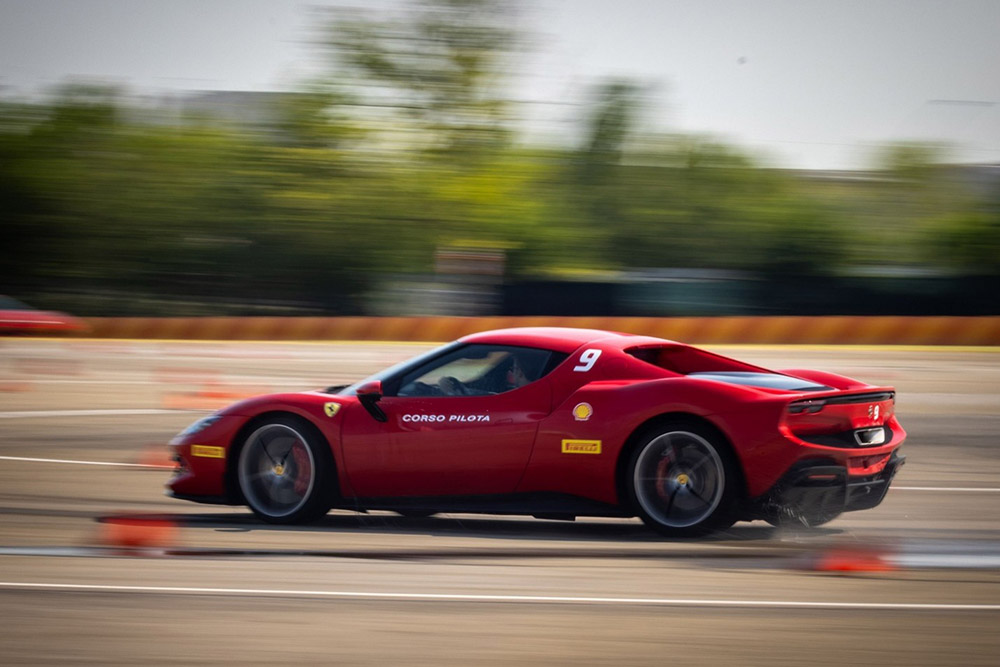
Corso Pilota Sport turns the conversation in a more useful direction. The car is capable. The question is whether the driver is ready to use it properly.
One of the recurring impressions from the event was how much the instructors mattered. They were not simply supervising laps. They were actively shaping the experience, helping drivers understand what the car was doing, why it was doing it, and how small changes in driver input affected the result. The lessons were not abstract. Brake a little differently. Look farther through the corner. Be patient with the throttle. Use less steering. Let the car work.
That instruction extended well beyond the driver’s seat. One session focused on mental preparation, asking each participant to identify personal weaknesses behind the wheel before working through practical solutions to overcome them. It was the kind of exercise more commonly associated with race drivers than road-car owners, but it made perfect sense in the setting. Driving quickly is not only mechanical. It is mental. Recognizing where hesitation, overconfidence, tunnel vision, or inconsistency can enter the process is part of becoming a better driver.
Another session measured response time and hand-eye coordination. Drivers worked through exercises including a tennis-ball drop and a sensor board where lighted targets had to be tapped as they appeared. It was simple in appearance but revealing in practice. The exercises connected directly to what happens on track, where the driver must observe, process, and respond without delay or unnecessary movement.
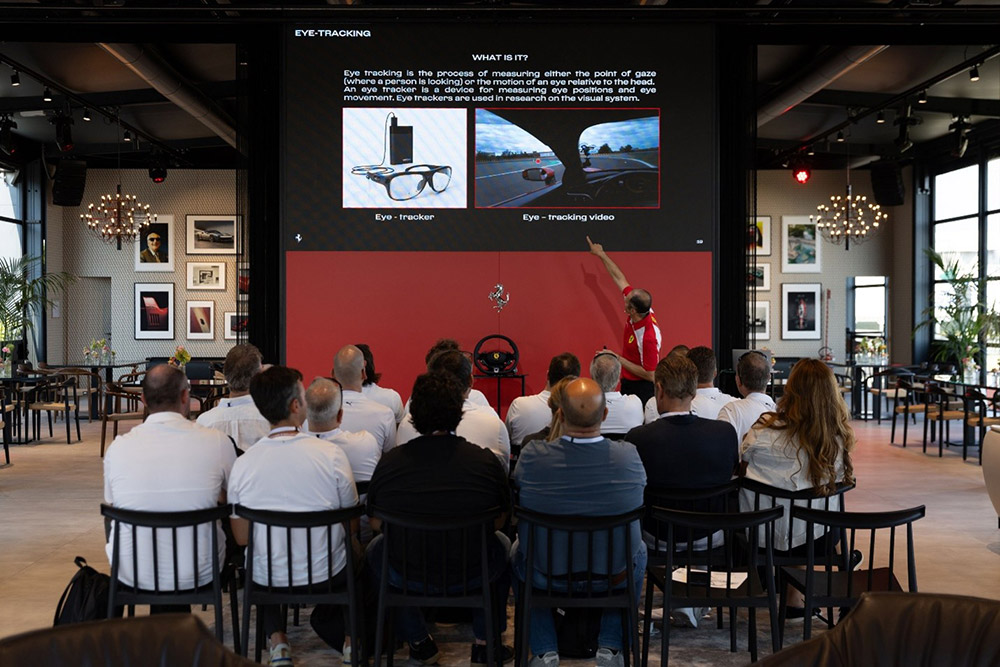
Ferrari also used vision-tracking technology to show exactly where drivers were looking. Participants wore clear glasses that recorded eye movement, and the instructors later reviewed the overlay with a dot marking the driver’s visual focus in real time. It showed whether the driver was looking at the proper turn-in point, apex, and exit at the right moment. The lesson was immediate and difficult to argue with. A driver may think they are looking far enough ahead, but the overlay shows the truth. At Fiorano, the eyes often explain the lap before the steering wheel does.
That kind of instruction changes the way a driver experiences a Ferrari. The electronics, drive modes, hybrid systems, and chassis responses are not there to hide poor technique. They become part of the language of the car. The driver learns that different settings can change the conversation, but they do not replace the need for judgment. The goal is not to make the car perform tricks. The goal is to understand how to ask for performance correctly.
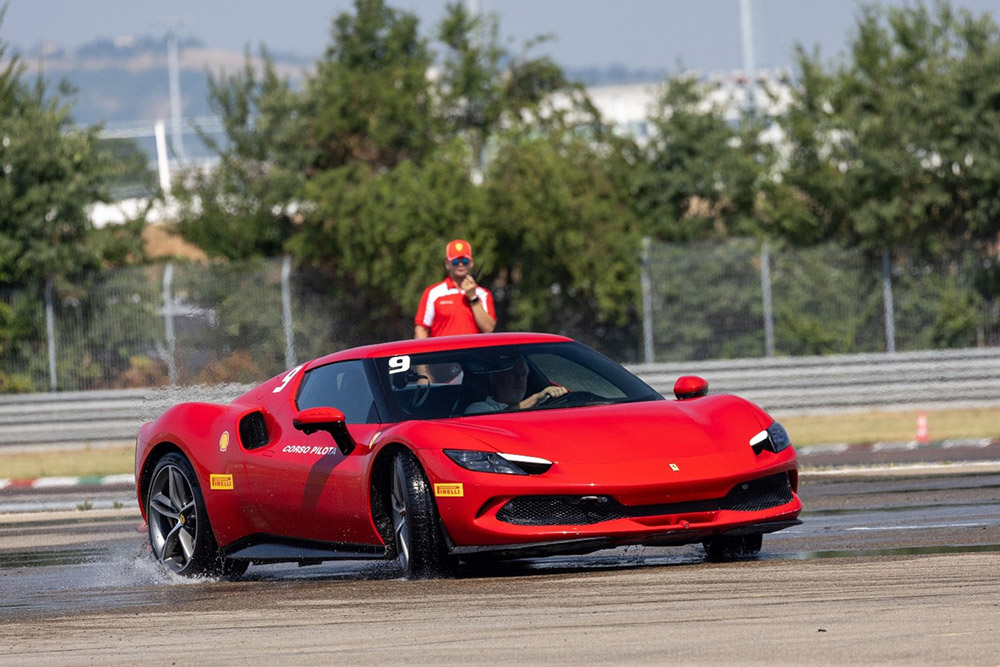
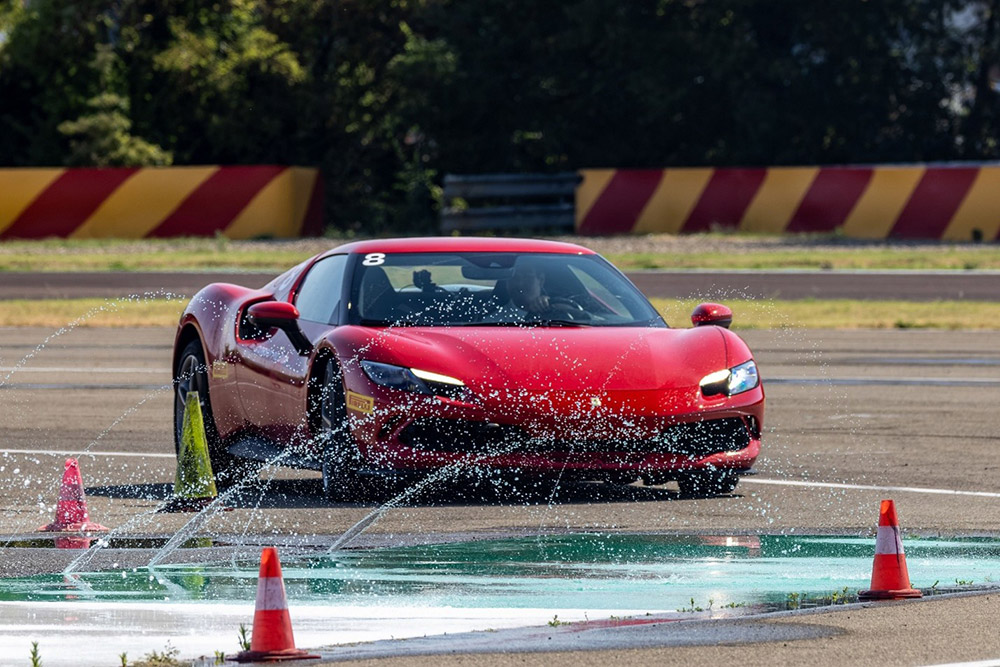
The car-control work made that point even clearer. In the 296 GTB, drivers worked through counter-steering technique in a controlled wet environment, a valuable reminder that even the most advanced road cars still answer to basic physics. When the rear steps out, the solution is not panic or aggression. It is timing, vision, and restraint. Too much input creates more work. Too little input lets the moment get away. The correct answer is usually smaller, smoother, and earlier than instinct suggests.
That lesson carried directly back to the track. Fiorano is a place where smoothness does not mean softness. It means being accurate enough that the car stays settled. It means braking with purpose, releasing the pedal with care, and getting back to power only when the car is ready to accept it. When those pieces come together, the lap feels calmer even as the speed increases.
Every time drivers entered a car for an on-track session, the instructor inserted an individual chip to collect telemetry. That data became one of the most valuable teaching tools of the program. Throughout both days, drivers reviewed their laps repeatedly, comparing braking points, throttle application, steering inputs, and line selection against an instructor’s reference lap. It showed mistakes without judgment and progress without exaggeration. The improvement was visible, not imagined.
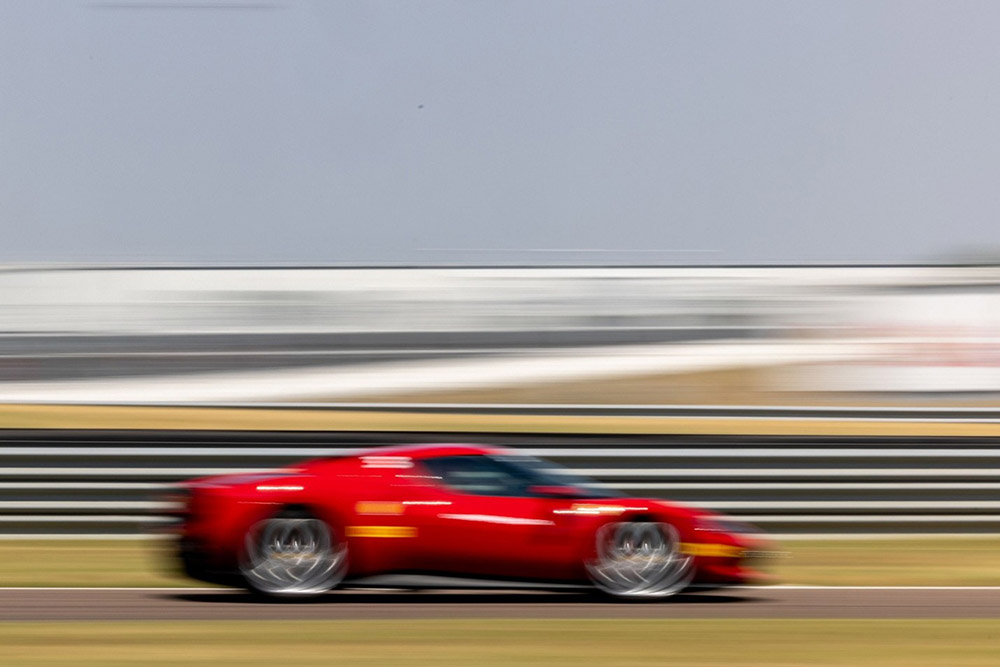
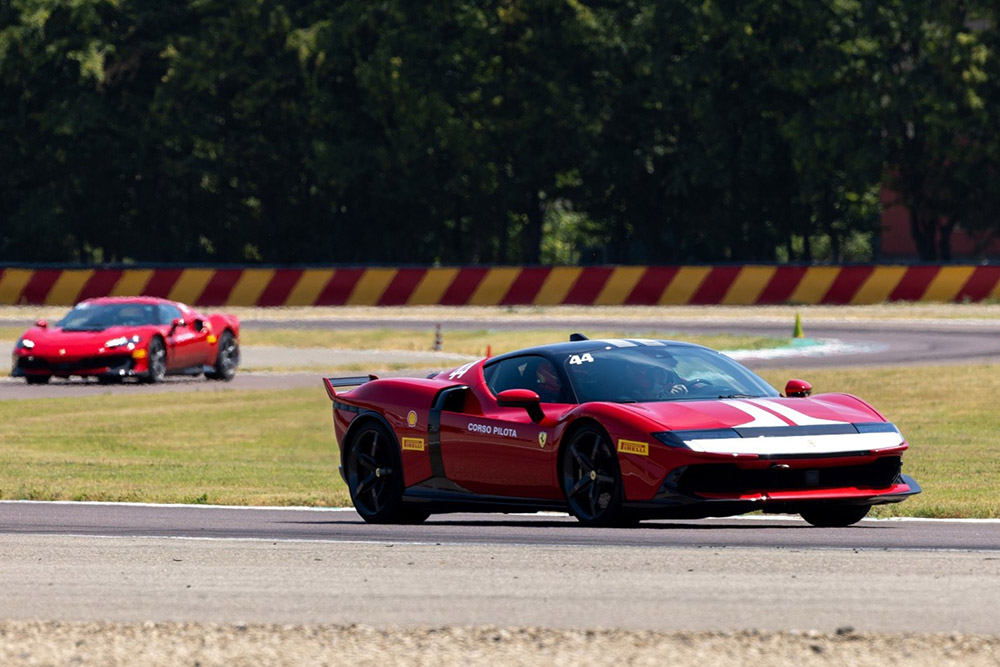
The 296 Speciale sharpened the lesson. Where the 296 GTB served as a foundation, the Speciale brought a more focused edge. Even the start-up made an impression, with an exhaust pop that set the tone for the driver and caught the attention of anyone standing nearby. It felt special before it ever turned a wheel.
On track, the difference was more than theater. The 296 Speciale’s additional aerodynamic development gave the car a different level of confidence compared with the 296 GTB. The most noticeable driving difference was the ability to push harder through the turns with greater compliance and composure. It encouraged commitment. The car felt more planted when loaded, more willing to accept speed at the point in the corner where the driver is deciding whether to trust the process or lift. A driver who overworked the car could still feel it, but a driver who trusted the instructions began to understand why the Speciale exists.
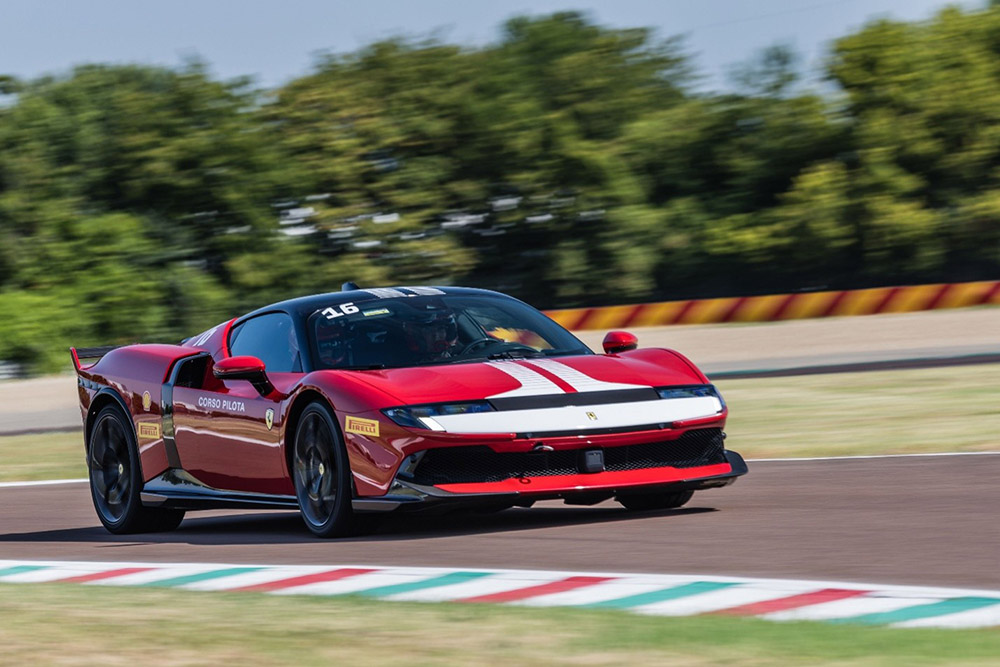
The 849 Testarossa added a different scale to the experience. It was fast, beautiful, and clearly capable, with a distinct new design language that separated it from the rest of the group. Yet around Fiorano, its personality was different from the 296 Speciale. The Testarossa brought speed and presence, but it did not feel like the same nimble track weapon as the Speciale. The Speciale was the car that seemed most at home being pushed deeper into Fiorano’s corners, while the Testarossa impressed with its pace, confidence, and sense of occasion.
The faster the car, the more important the fundamentals become. Vision matters more. Brake release matters more. Throttle timing matters more. Ferrari’s newest performance machinery may be extraordinary, but Corso Pilota Sport uses it to teach something old and enduring: speed is earned corner by corner.
The second day at Fiorano moved deeper into personal training and performance development. Data acquisition and telemetry analysis added an important layer. Memory is unreliable after a fast lap. A driver often believes the braking point was consistent, the throttle was clean, or the line was repeatable. Telemetry tells the truth without drama. It shows where the lap was strong, where time was lost, and where the driver’s perception did not match reality.
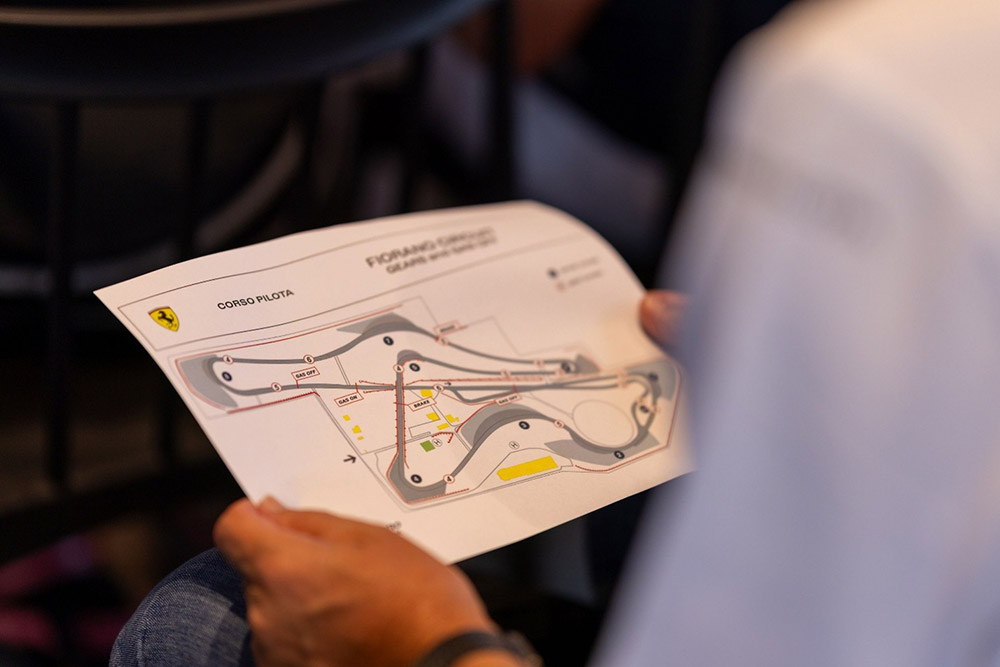
That can be humbling, but it is also the reason a program like this works. Corso Pilota Sport is not built around telling drivers they are heroes. It is built around helping them improve. The instructors, the circuit, and the data all point in the same direction. The result is a driving school that feels both exclusive and practical. It delivers the thrill of Fiorano, but the thrill is tied to progress.
Between sessions, Ferrari’s hospitality and history filled in the experience. Lunch at the track, a group photo, and an evening dinner at Hosteria Giusti in Modena gave the program a rhythm beyond the driving. That part matters in a TSJ Driver’s Series story because the best driving experiences are not only about laps. They are about place, people, and the memories that form around the cars.
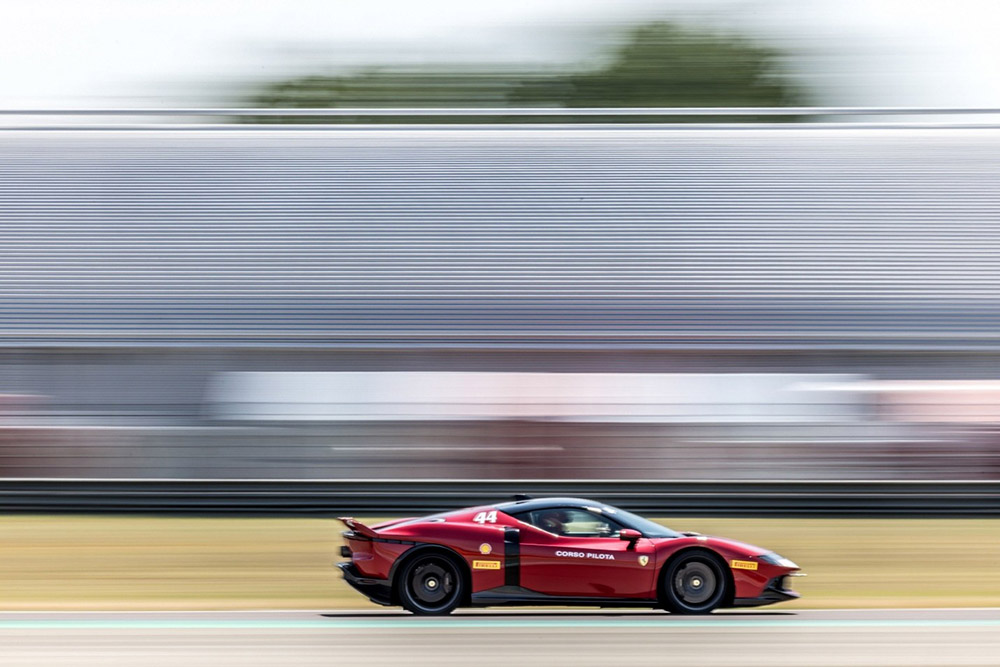
There was also the magic of Fiorano itself. Drivers staged in the garage area while waiting for their next session, the same environment where so many iconic Ferrari Formula 1 drivers prepared their cars before testing on the circuit. Nearby stood Enzo Ferrari’s white house, a quiet reminder that this is not just another track facility. Fiorano carries a different kind of weight. It is intimate, historic, and unmistakably Ferrari.
At the end of the first day, participants were taken into one of Ferrari’s most impressive spaces. On the lower level were the XX Programme cars, while the upper level housed Ferrari’s F1 Clienti machinery. Seeing those cars gathered together was extraordinary. It added another layer to the experience, connecting the Corso Pilota program to Ferrari’s broader world of client racing, development cars, and Formula 1 history.
By the final track session, the program had come full circle. The instructors, who had spent two days coaching, correcting, and refining each driver’s inputs, went quiet in the passenger seat. It was no longer about immediate direction. It was a chance for each driver to express themselves, blending Ferrari’s instruction with their own natural driving style. The lessons from theory, counter-steering exercises, mental preparation, reaction training, vision-tracking review, telemetry analysis, and instructor feedback all fed into one final opportunity to apply what had been learned. For participants with their own Ferraris, the optional final session added another layer: a chance to bring those lessons back into a familiar machine.
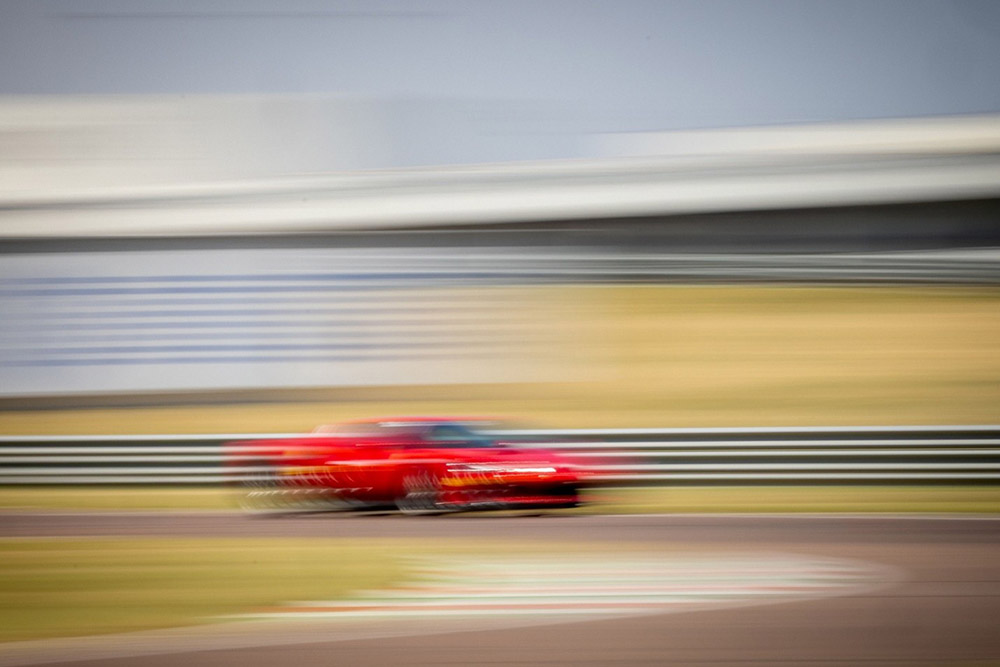
That may be the most valuable part of Corso Pilota Sport. It does not simply offer access to Fiorano or seat time in remarkable cars. It changes how a driver thinks about the Ferrari waiting at home. A car that once seemed defined by power begins to feel more like a system of feedback. The steering, brakes, throttle, electronics, aerodynamics, and chassis are all speaking. The driver learns how to listen.
Ferrari Corso Pilota Sport is serious fun, but it is not a joyride. It is a structured look into how Maranello believes its cars should be driven. The 296 GTB, 296 Speciale, and 849 Testarossa each bring their own character, but the lesson across all three is consistent. Speed is not by chance. It is a craft.
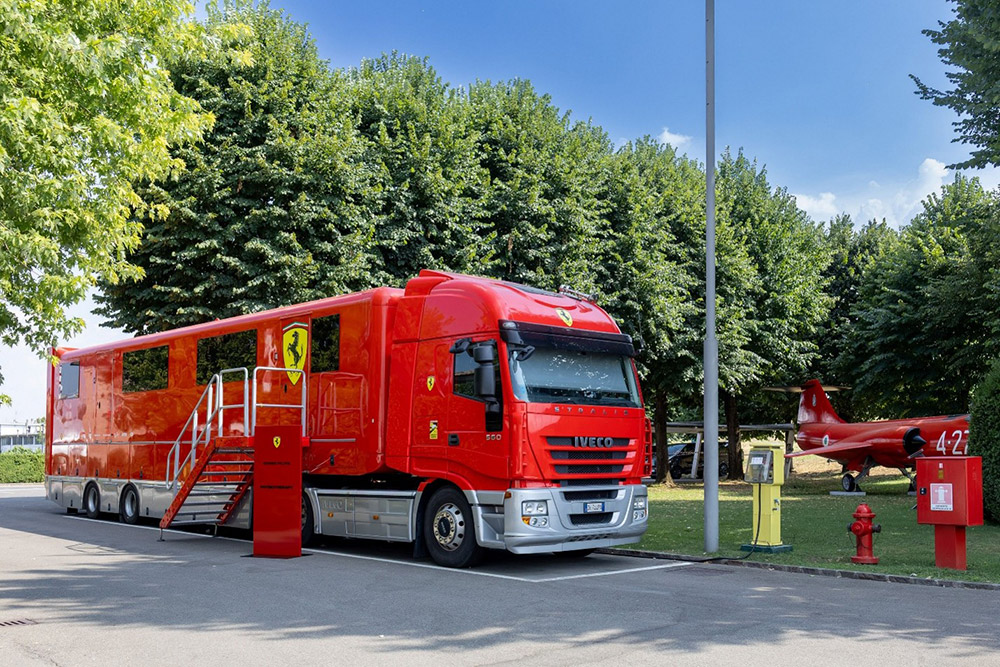
At Fiorano, Ferrari teaches that craft in the one place where the message feels most authentic. The private track, the instructors, the cars, the garages, Enzo’s house, and the surroundings all reinforce the same idea: Ferrari performance is not only something to admire. It is something to study, understand, and earn.
The Speed Journal would like to thank Ferrari and the Corso Pilota team for their training, hospitality and a memorable experience at Fiorano.