
There are fast laps—and then there are the laps that feel like a final stamp of approval. At Bahrain International Circuit, Dario Franchitti didn’t just validate Gordon Murray Automotive’s T.50s Niki Lauda prototype; he closed the book on development with a lap time that cleared the team’s GT3 benchmark by more than seven seconds.
For Gordon Murray, the goal was never a headline lap record. The brief was more fundamental: build the lightest, most driver-focused track car possible—then let speed arrive naturally as a byproduct of the formula.
Bahrain: The Stress Test That Matters
GMA chose Bahrain for the final Production Approval Test because it’s brutally honest. Heat, repeated heavy braking, tire punishment, and low-grip conditions expose weaknesses quickly—exactly what you want when you’re locking in a production-spec setup.
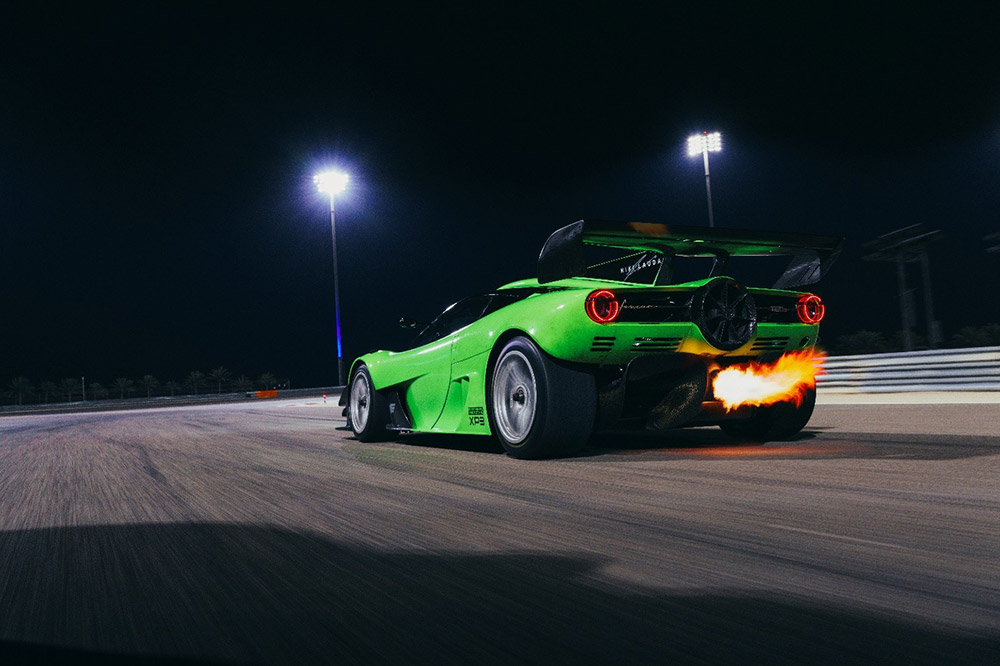
The numbers from Franchitti’s test read like telemetry from a modern prototype: a 3G peak under braking, 2.7G lateral load in high-speed cornering, and speeds north of 184 mph as the team assessed high-speed stability and finalized aero profiles.

And then came the lap. On the final day, Franchitti delivered a 1:53.03—more than seven seconds quicker than the GT3 benchmark the team referenced from 2001—providing the definitive “production-ready” proof point GMA needed.

“The Most Engaging Car I’ve Ever Driven”
Franchitti’s verdict wasn’t wrapped in corporate polish. He called the T.50s “the most engaging car I’ve ever driven,” saying its fun factor surpasses other track-only models, his favorite supercars, and even the race cars that carried him to world championship wins.
For a driver of his caliber to place any car above championship-winning machinery tells you what GMA is chasing: not just outright performance, but the rare blend of feedback, response, sound, visibility, braking confidence, and stability that makes a car feel alive beneath you.
The Engineering Thesis: Lightweight, Driver-Centric, No Compromise
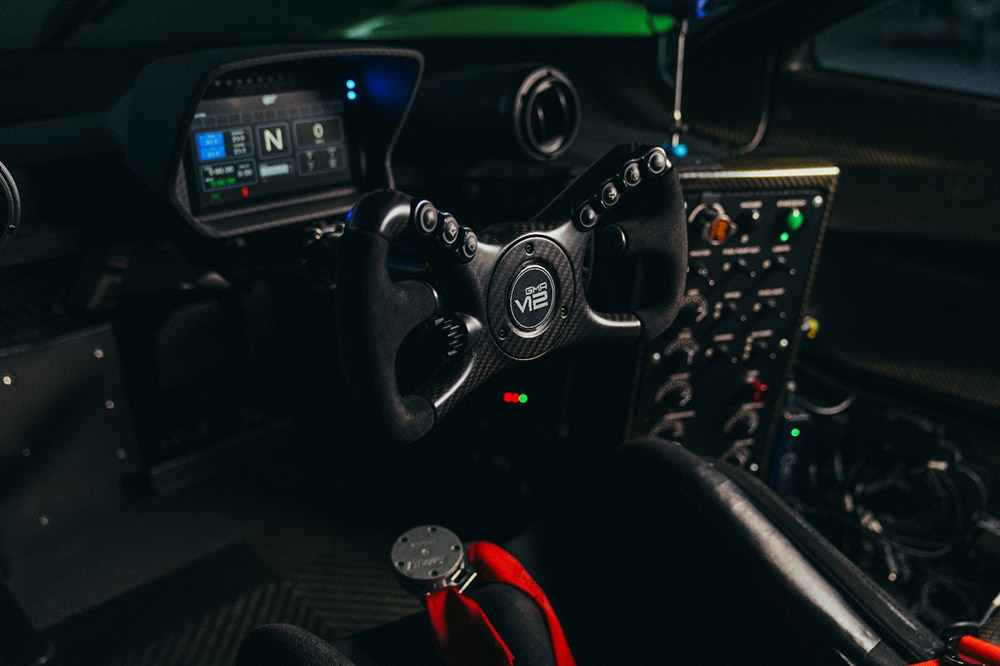
The T.50s Niki Lauda sits in a category that’s increasingly uncommon: uncompromising, track-only, and built around a single obsession—driver connection. It weighs under 900 kg and is powered by a 3.9-liter Cosworth GMA V12 producing 772 PS at 11,500 rpm, revving to 12,100 rpm.
Add a bespoke Xtrac six-speed paddle-shift gearbox, a central driving position, and a fully adjustable aerodynamic package capable of generating up to 1,200 kg of downforce, and you get a machine designed to reward precision—and demand it.

A Name With History: Niki Lauda
Gordon Murray named the T.50s after his friend Niki Lauda—an acknowledgment of a relationship, but also of an engineering philosophy rooted in purity and clarity of purpose.
Each of the 25 customer cars carries a unique commemorative name tied to one of Murray’s first 25 Grand Prix victories, connecting the program to the racing legacy that shaped it.
Production: The Countdown Is On
With Franchitti’s sign-off, production is fully greenlit. GMA says customer car builds are underway, with several nearing completion, and final calibrations (suspension, brakes, engine management, throttle response) will match Franchitti’s approved setup.
All 25 cars are expected to be finished by mid-2026, with allocations across North America, Europe, and beyond.
In a world where lap times can be chased with brute force, the T.50s Niki Lauda makes a different argument: get the fundamentals right—mass, response, visibility, feel—and speed becomes inevitable. Bahrain simply proved it.