Paris has a way of sharpening the senses in late January—cold air, warm lights, and the steady pulse of collectors moving from legend to legend under the roof of Porte de Versailles. From January 28 to February 1, 2026, Rétromobile returns as one of the great annual meeting points for the classic-car world—an event built on history, craftsmanship, and the enduring magnetism of mechanical art. This year, Pagani arrives not to look back, but to connect the past’s romance with the present tense of the hypercar.
Within the Ultimate Supercar Garage—Rétromobile’s dedicated showcase for the most exclusive modern supercars—Pagani Automobili will present four cars that read like four chapters of a single book: the Utopia Roadster, Huayra R, Huayra Roadster, and Zonda HP Barchetta. Together, they trace a clear line through Horacio Pagani’s worldview: timeless aesthetics, obsessive detail, and constant technical evolution—always in service of emotion.
Zonda HP Barchetta: A Reinterpreted Classic, Reduced to Essence
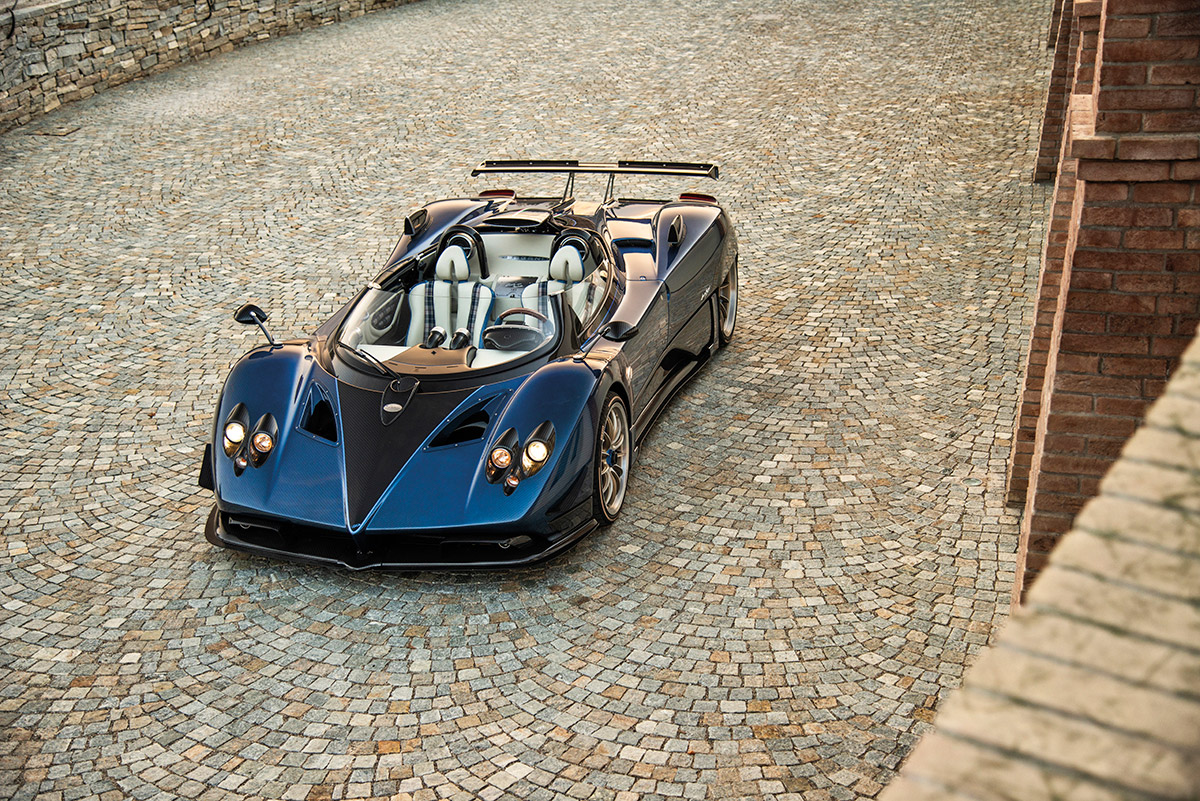
Some cars become icons; a rare few become personal statements. The Zonda HP Barchetta sits firmly in the latter category—described by Pagani as the ultimate expression of the Zonda project, and a deeply personal reinterpretation of the original idea. Produced in only three units, it lives under Pagani’s Grandi Complicazioni umbrella, where direct dialogue between client and atelier shapes the final result—bespoke in the truest sense.
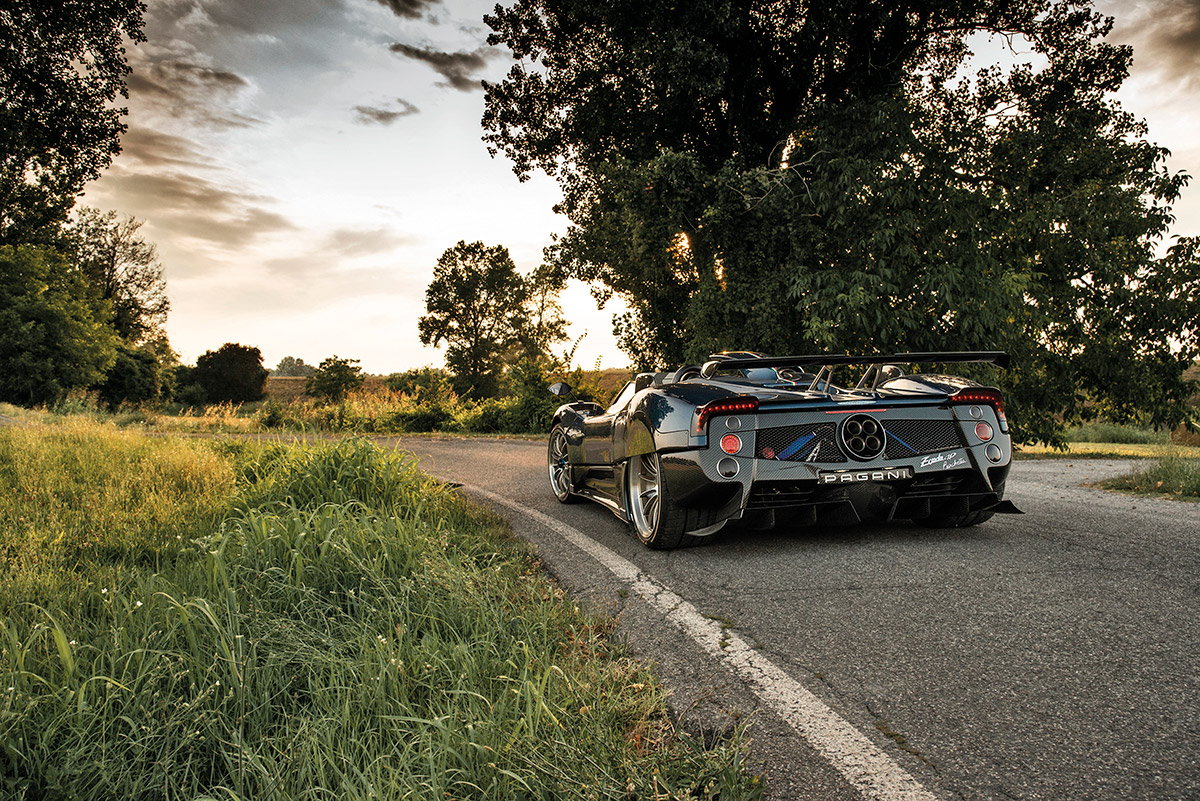
Beyond the romance, the engineering reads like a manifesto. Pagani cites a monocoque formed from Carbo-Titanium and Carbo-Triax HP52, with a quoted weight figure of 1,250 kg. Power comes from a naturally aspirated Mercedes‑AMG V12 developed exclusively for Pagani, paired with a six-speed manual transmission—an increasingly rare combination in this echelon, and an unmistakable nod to driving purity. Inside, the Barchetta leans into memory: solutions inspired by the racing era of Juan Manuel Fangio, tying heritage to innovation without becoming nostalgic.
Huayra Roadster: Sculpture That Happens to Deliver 840 Horsepower
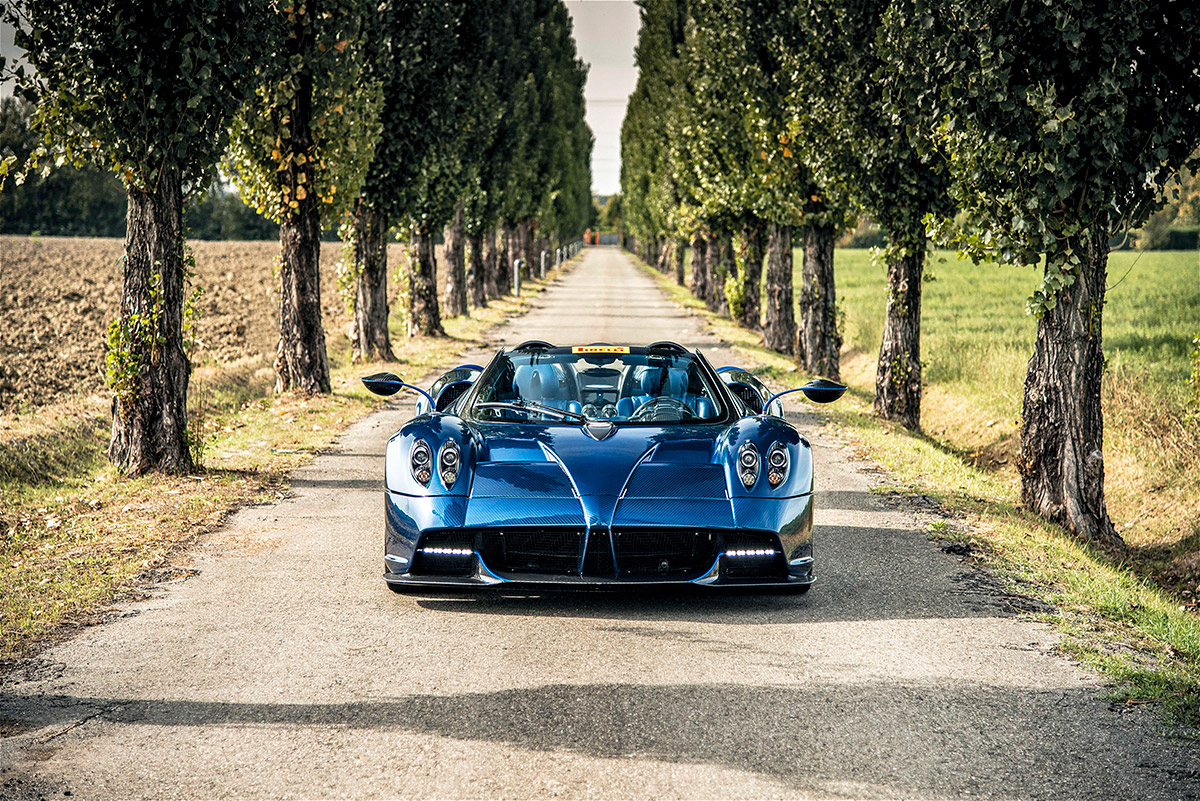
If the Zonda HP Barchetta is a love letter, the Huayra Roadster is a piece of kinetic architecture—born, Pagani says, from the pursuit of pure beauty paired with uncompromising engineering ambition. The car on display is presented as a distinctive interpretation of the Roadster’s fluid form, incorporating elements inspired by the Roadster BC, including dedicated aero featuring a front splitter and rear diffuser.
The numbers are as serious as the surfaces are sensual: Pagani notes a 6.0‑liter twin‑turbo V12 delivering 840 hp and 1,100 Nm of torque. Underneath, the chassis centers on a Carbo‑Titanium HP62 G2 and Carbo‑Triax HP62 monocoque, with front and rear subframes in chrome‑molybdenum steel. Pagani also states the Roadster was engineered to be 80 kg lighter than the Huayra Coupé while maintaining structural integrity and meeting global homologation requirements—proof that artistry here never excuses the discipline.
Utopia Roadster: Analog Soul, Modern Intelligence
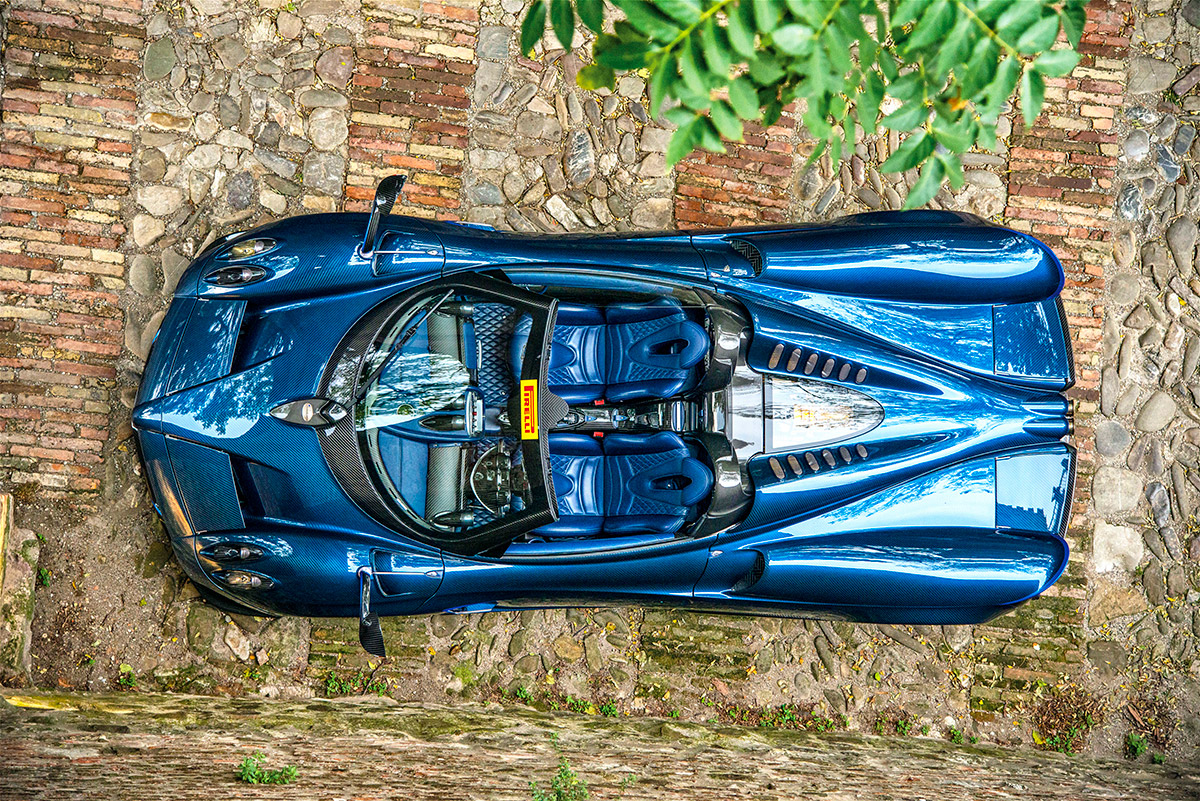
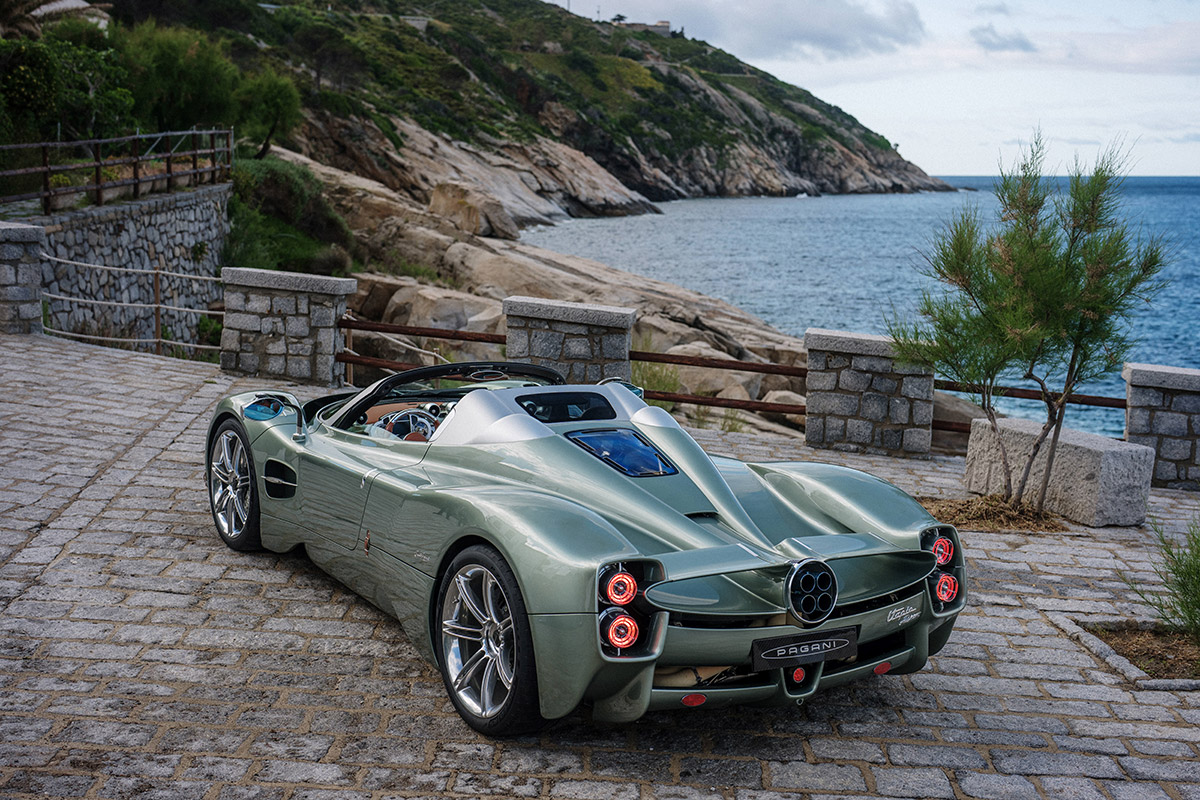
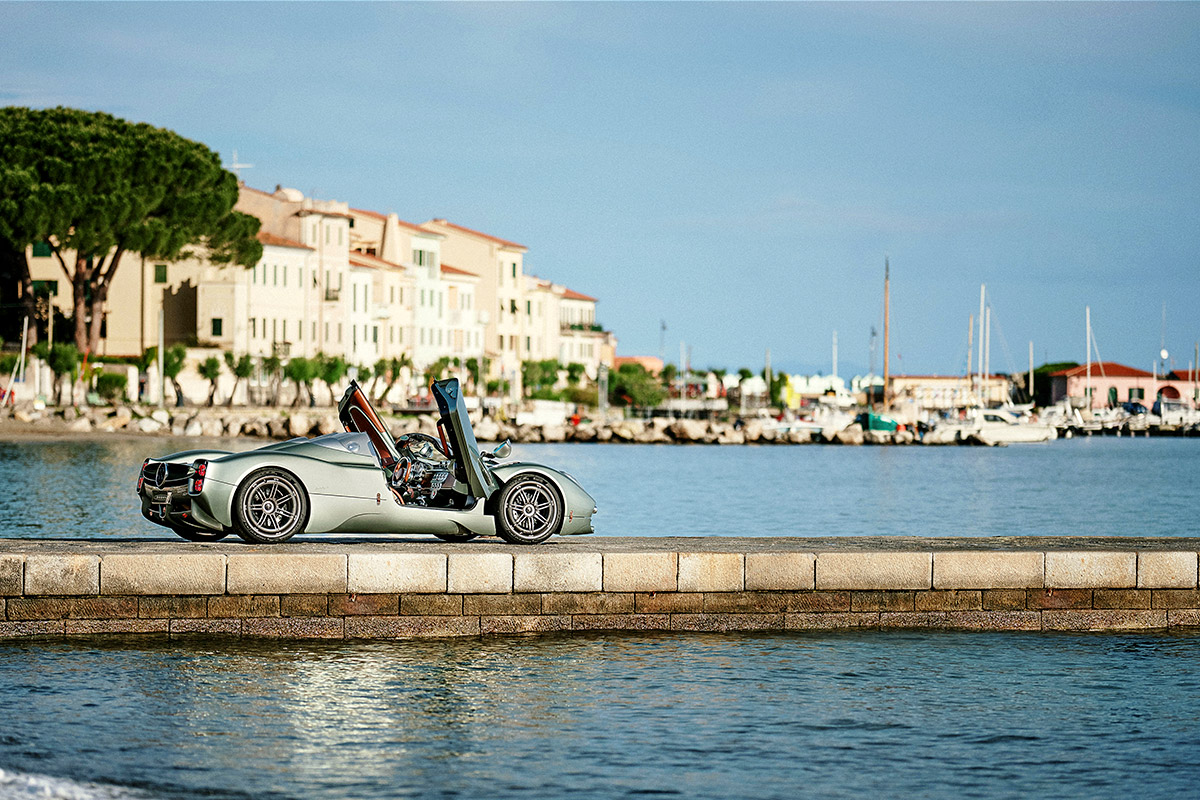
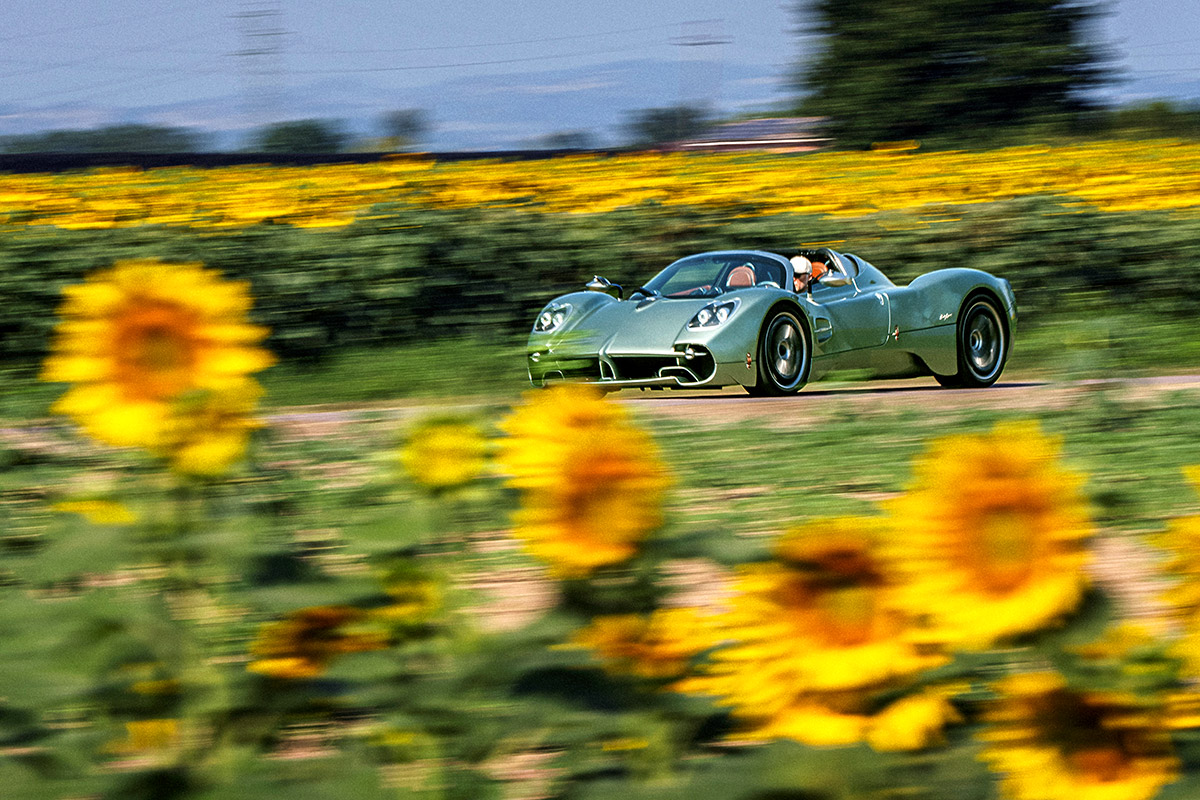
Pagani’s Utopia Roadster represents a delicate balancing act—one that many brands talk about, but few truly execute: advanced technology that never overpowers the tactile, analog heartbeat of the driving experience. In Pagani’s framing, the Roadster is the pinnacle of its research into combining innovation with timeless design, while preserving that analog soul.
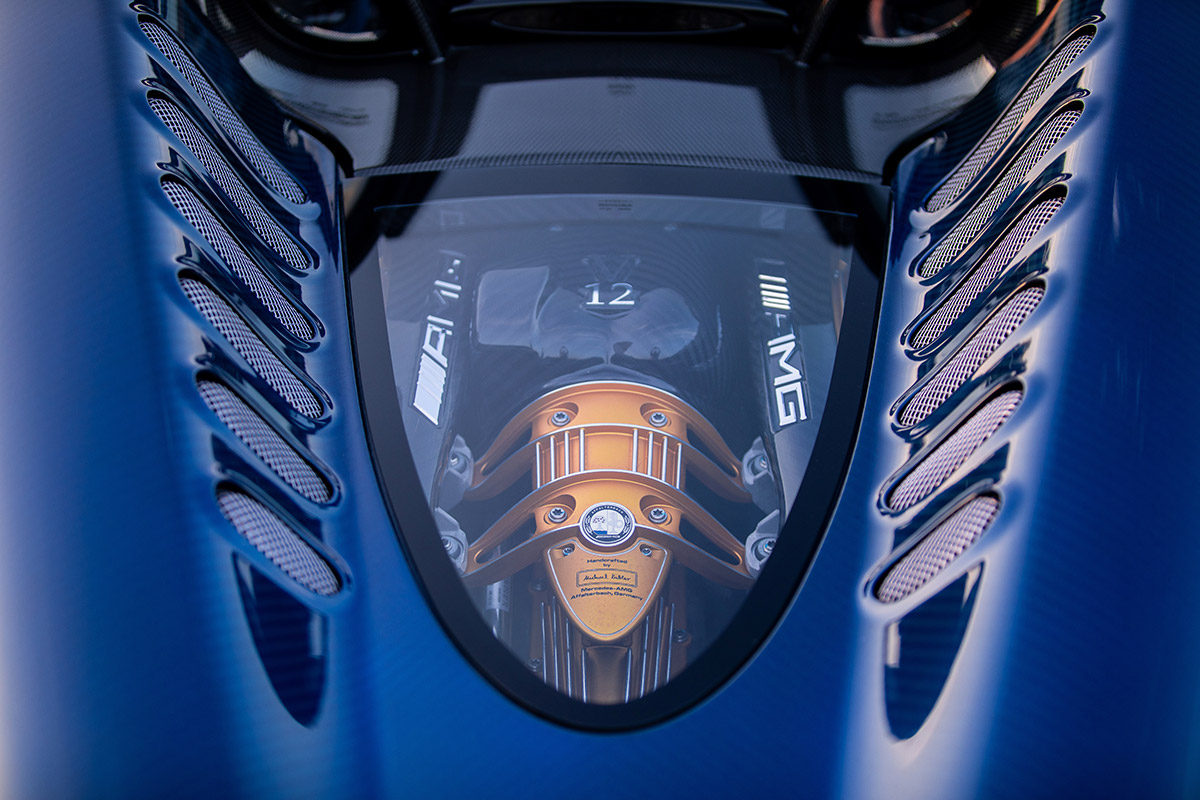
Lightness is a central theme. Pagani points to more than forty different composite material formulations—including Carbo‑Titanium HP62‑G2 and Carbo‑Triax HP62—and states a weight figure of 1,280 kg, achieved without any hybrid assistance. The twin‑turbo V12, developed with Mercedes‑AMG and entirely hand‑assembled, is quoted at 864 hp and 1,100 Nm of torque.
But perhaps the most intriguing detail is what happens at the tire contact patch. Pagani says the Utopia Roadster on display is the world’s first vehicle to integrate the Pirelli Cyber™ Tyre system, enabling real‑time communication between tires and the car’s electronics to enhance safety and adapt performance to conditions. Pagani also notes this technology will be the focus of a dedicated in‑depth presentation at the show—an invitation to explore how modern electronic intelligence can support, rather than replace, an analog relationship between driver and machine.
Huayra R: Arte in Pista, Turned Up to 9,000 RPM
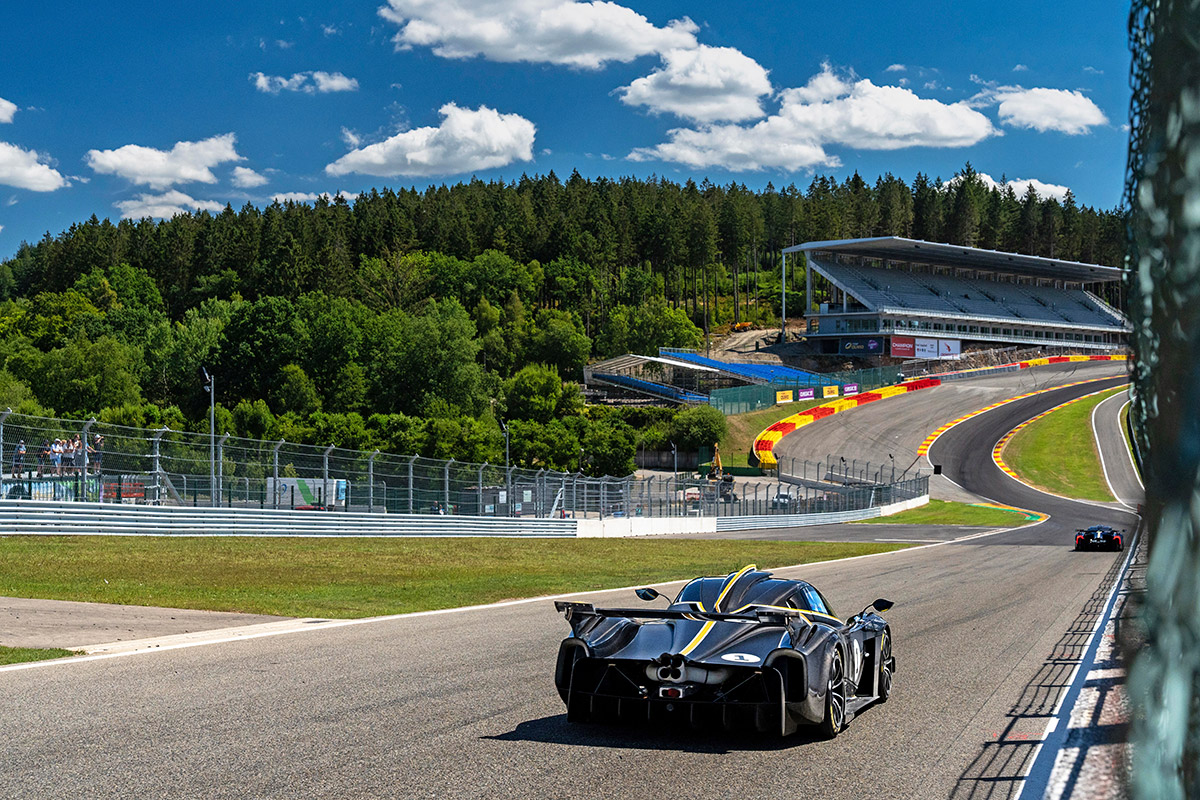
Then there is the Huayra R—Pagani’s no‑apologies, circuit‑only expression of its philosophy, conceived to deliver maximum performance with maximum safety. Where road cars must compromise, the R exists as pure creative freedom: a hypercar designed from the outset for the track, where its full potential can be explored without filters.
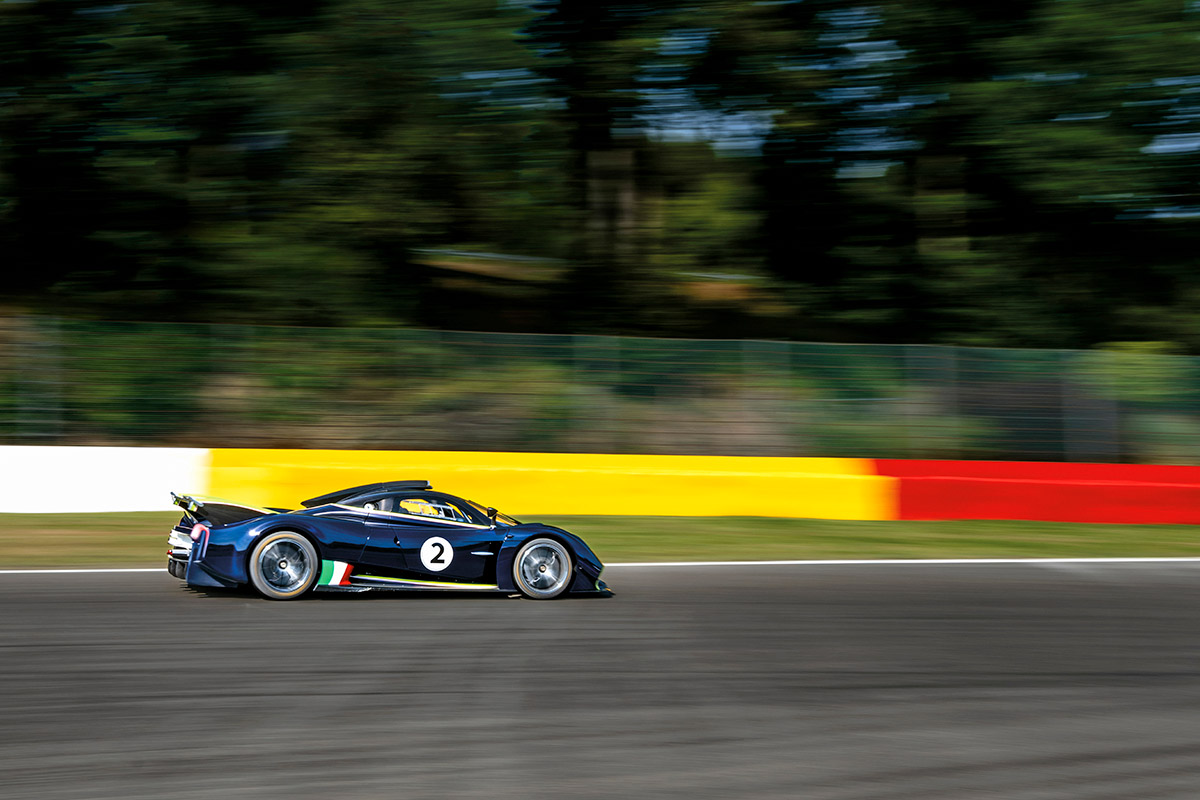
Its silhouette draws inspiration from the great Le Mans prototypes of the 1960s—cars that married speed and beauty before aerodynamics became purely algorithmic. Yet the Huayra R’s performance, Pagani explains, is “born from within,” led by the Pagani V12‑R: a naturally aspirated 6.0‑liter engine developed by HWA, quoted at 850 hp and 750 Nm, with operation up to 9,000 rpm.
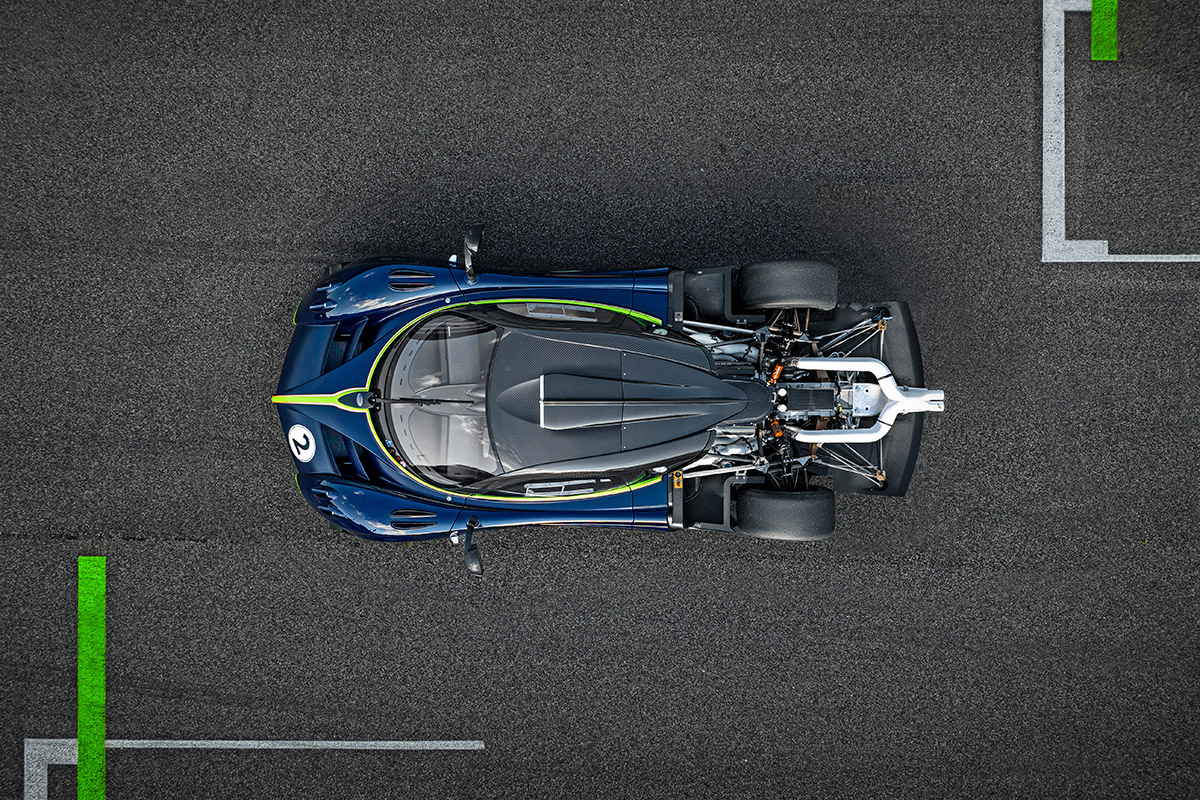
Safety and structure are equally emphasized. Pagani describes a monocoque in Carbo‑Titanium HP62‑G2 and Carbo‑Triax HP62, engineered to exceed FIA LMPH safety standards, plus a Kevlar motorsport-derived fuel cell and a composite protective structure with 20 mm carbon fiber walls. Only 30 units were produced—making the Huayra R not just a track tool, but a rare artifact of the modern performance era. Pagani also credits the Huayra R as a catalyst for “Arte in Pista,” its tailor‑made program for customers who want motorsport intensity shaped with atelier-level personalization.
Where to See Pagani in Paris
Pagani’s four-car display will be presented within the Ultimate Supercar Garage at Paris Expo Porte de Versailles during the Rétromobile week. For anyone attending, it’s a rare opportunity to see Pagani’s story told in four distinct voices—each one different, each one unmistakably from the same atelier.