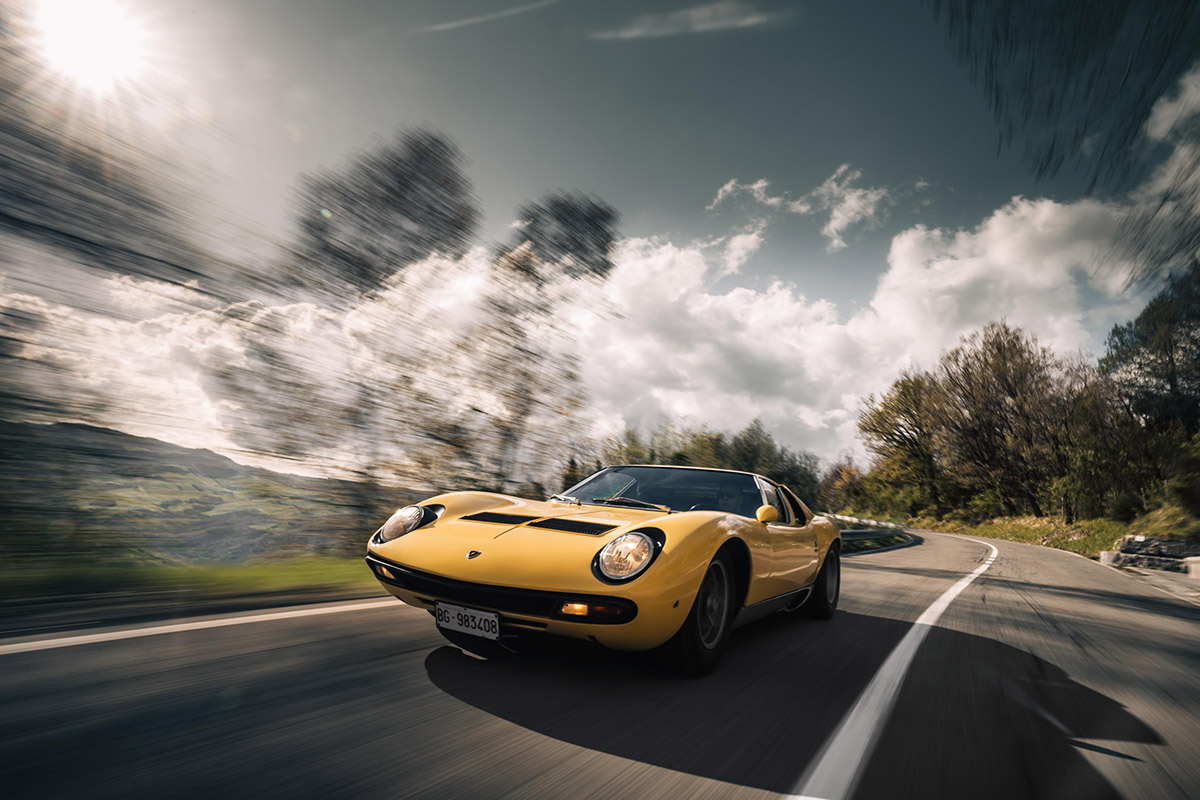
Before the poster-car era had a poster car, the Miura had already done the hard part: it made fantasy look engineered. Low, theatrical, and startlingly compact, Lamborghini’s V12 coupe arrived at the Geneva Motor Show on March 10, 1966 with its engine mounted transversely behind the driver, bringing motorsport logic into a road-going machine that looked unlike anything else in the room. In 2026, as Lamborghini marks 60 years of the Miura, the anniversary lands with real weight, because this was not simply a fast new model. It was the machine that reset the architecture, ambition, and visual language of the supercar.
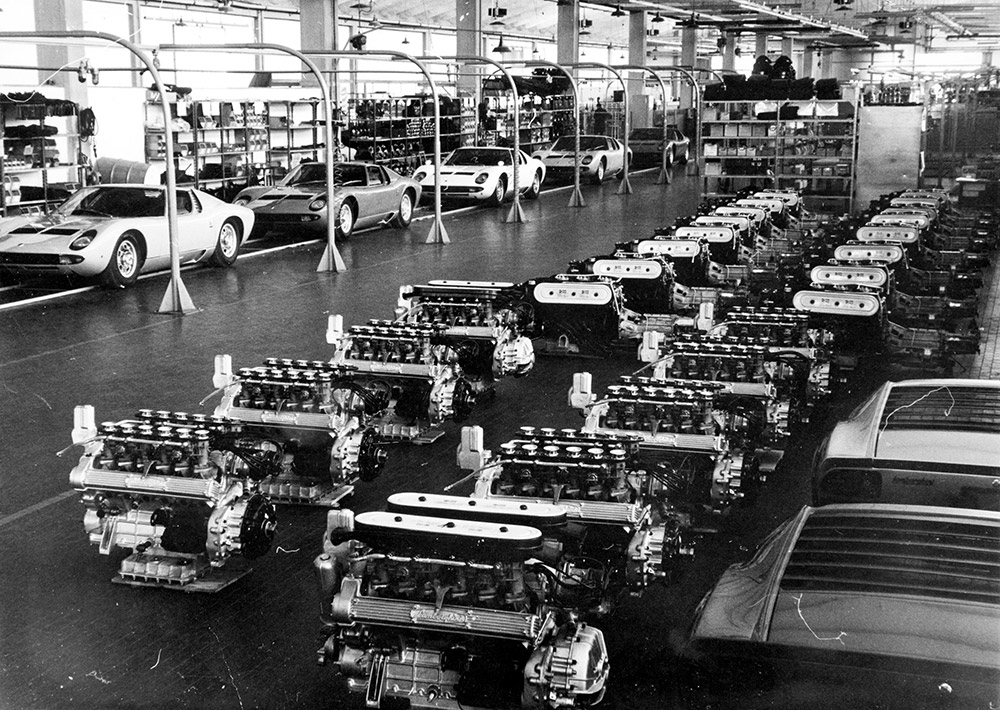
What makes the Miura story even better is how early it arrived in Lamborghini’s own timeline. Automobili Lamborghini was still a young company, and the Miura was only the third model it unveiled. Yet instead of refining the grand touring formula, the brand chose to detonate it. Lamborghini’s own history treats the Miura as the car that created a new segment, the model that established the company’s appetite for bold engineering, V12 drama, and rule-breaking design. That through-line is still visible today, from the Countach to the Revuelto, but the first unmistakable statement of intent happened here.
Before There Was a Body, There Was a Shock
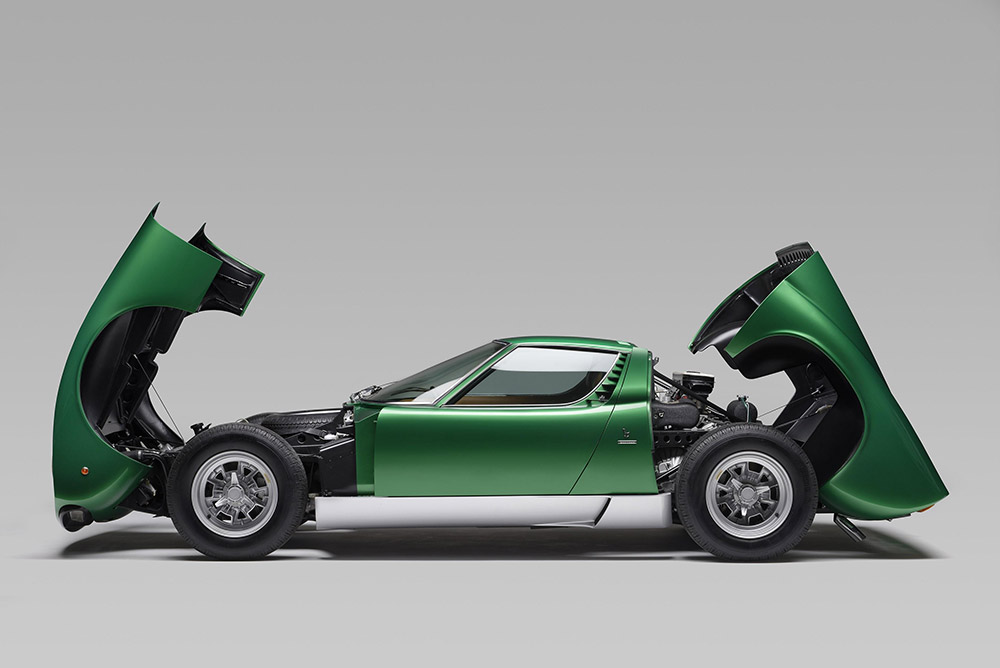
The revolution actually started before the car even had skin. Beginning in 1964, Gian Paolo Dallara, Paolo Stanzani, and test driver Bob Wallace developed the idea for a new high-performance road car under what became Project L105. Then, on November 3, 1965, Lamborghini brought the chassis to the Turin Motor Show in satin black, exposing the engineering instead of hiding it. The structure was extraordinarily light at just 120 kilograms, and its four white exhaust pipes made sure nobody mistook it for another polite GT. Long before the finished Miura took shape, the reaction in Turin made it clear that Sant’Agata had something far more disruptive on its hands.
Bertone’s Perfect Answer
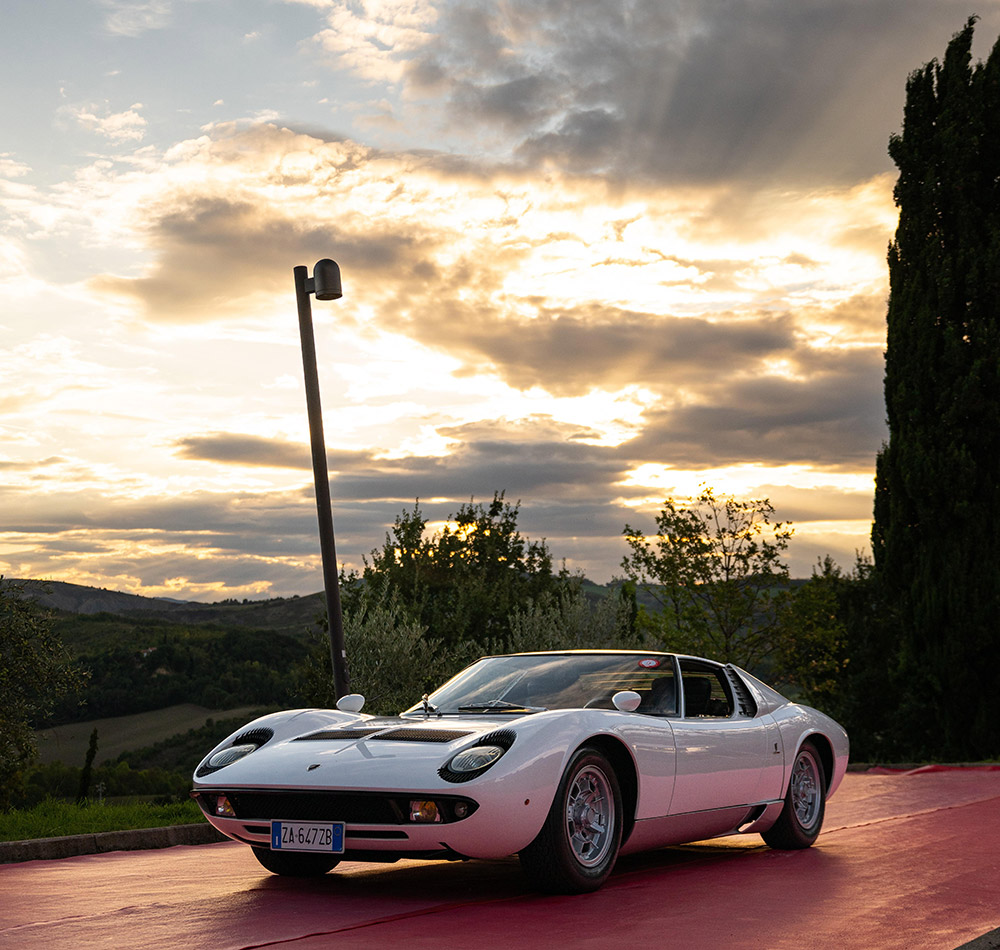
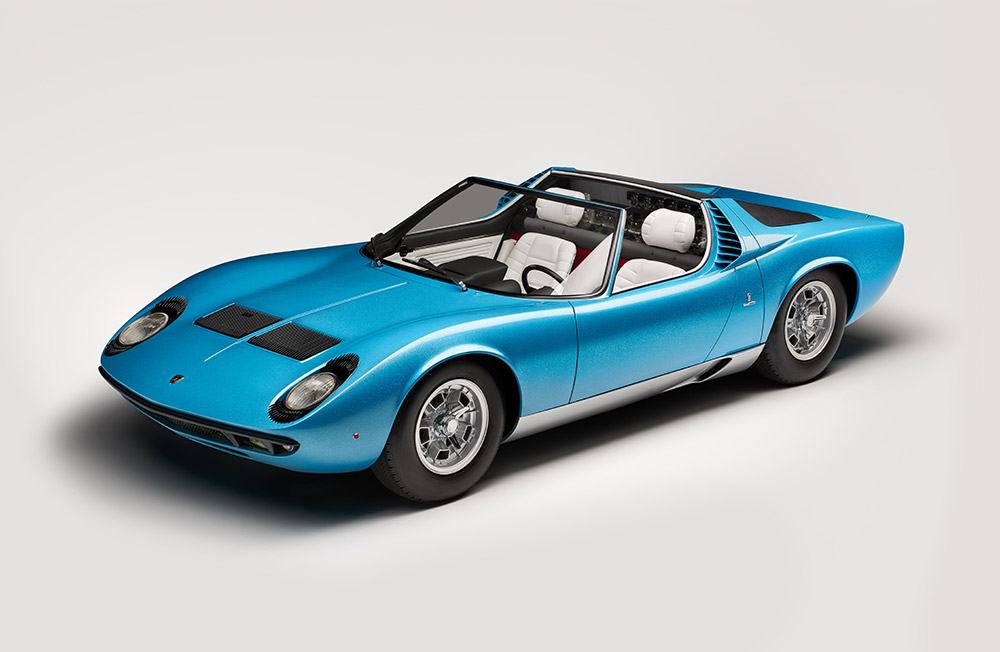
According to Lamborghini lore, Nuccio Bertone studied that exposed chassis and promised the perfect shoe for such a remarkable foot. Whether the line was spoken exactly that way matters less than what came next: Bertone got the project, Marcello Gandini led the design work, and within weeks the Miura began to look like a machine from a different decade. By early January 1966, the design was finalized; by March, Bertone had completed the prototype with the support of 30 employees. The result was a body that still reads as wildly confident: low and wide, with dramatic air intakes, delicate proportions, and the famous “eyelash” surrounds that turned its pop-up headlights into one of the most recognizable faces in automotive history.
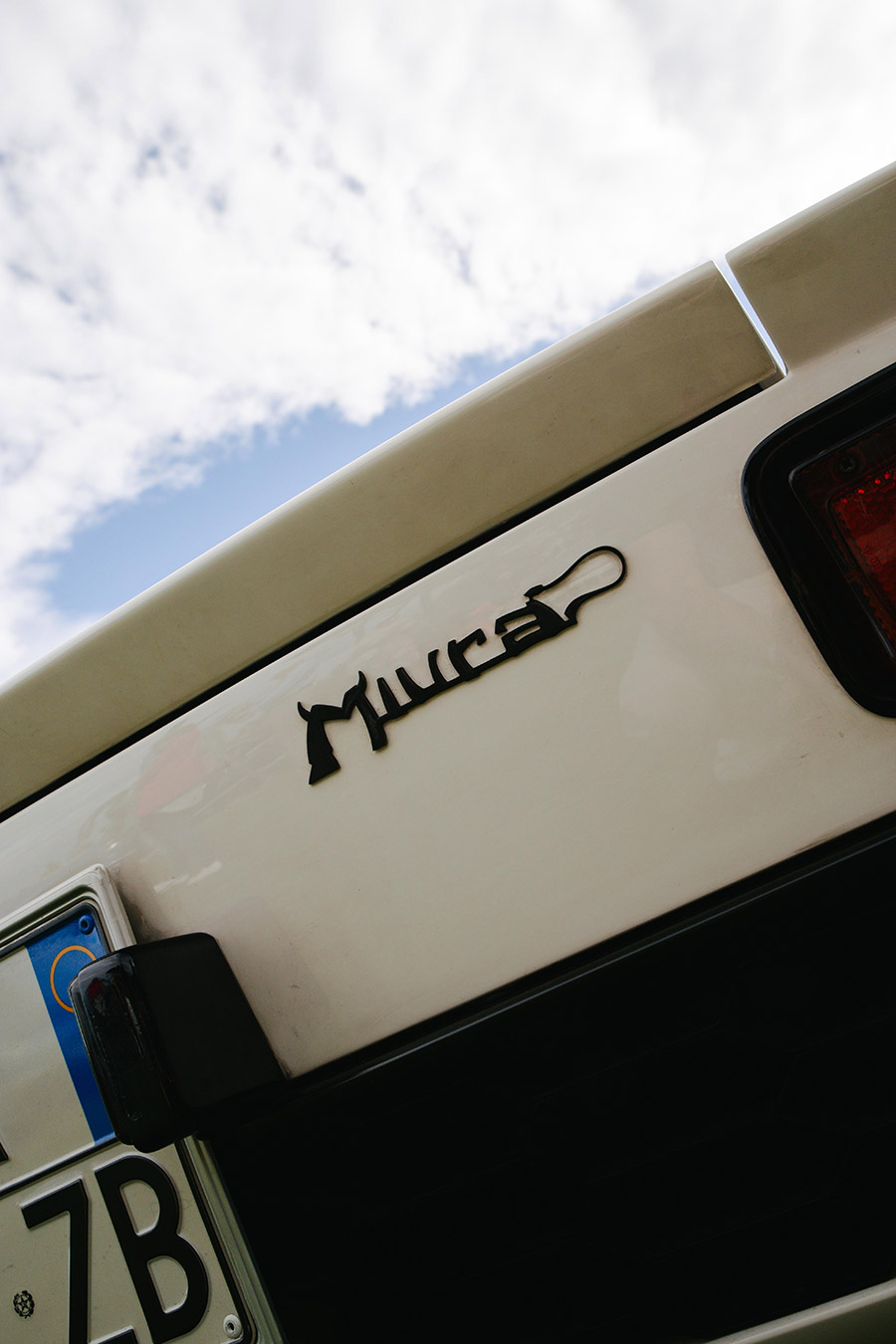
The name mattered too. Miura was the first time Lamborghini deliberately turned to the name of a famous Spanish bull breed, linking the car to Don Eduardo Miura Fernández and setting in motion a naming tradition that would become inseparable from the brand’s identity. It was a fitting choice. The Miura did not feel named so much as christened.
Three Evolutions, One Legend
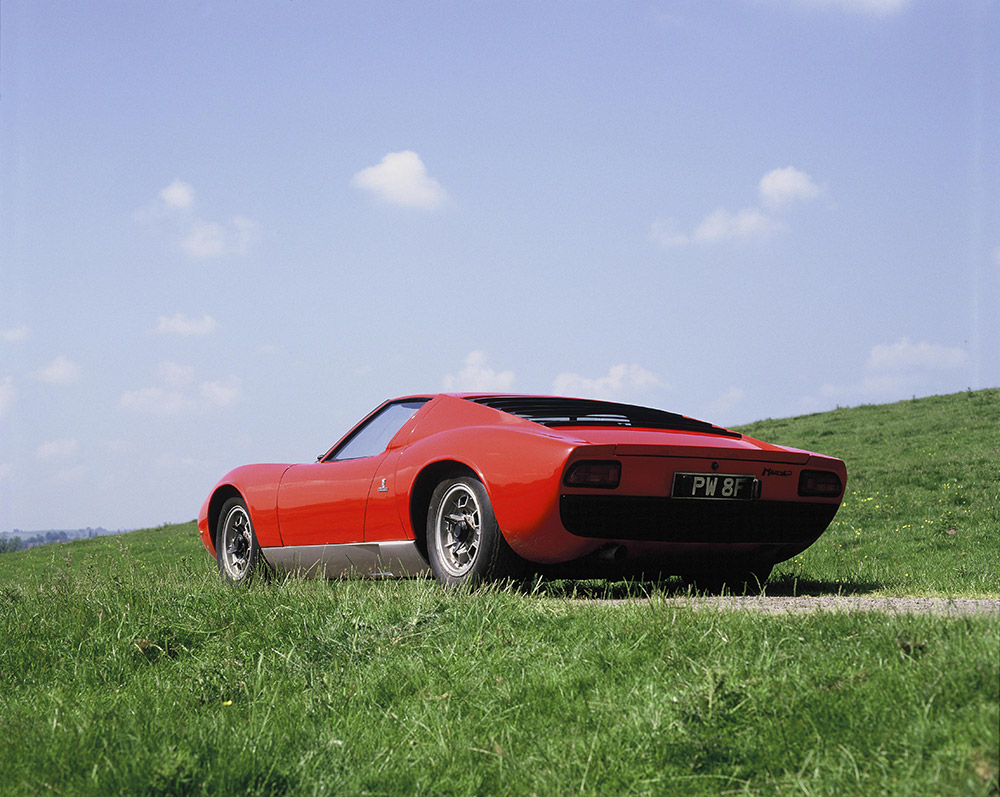
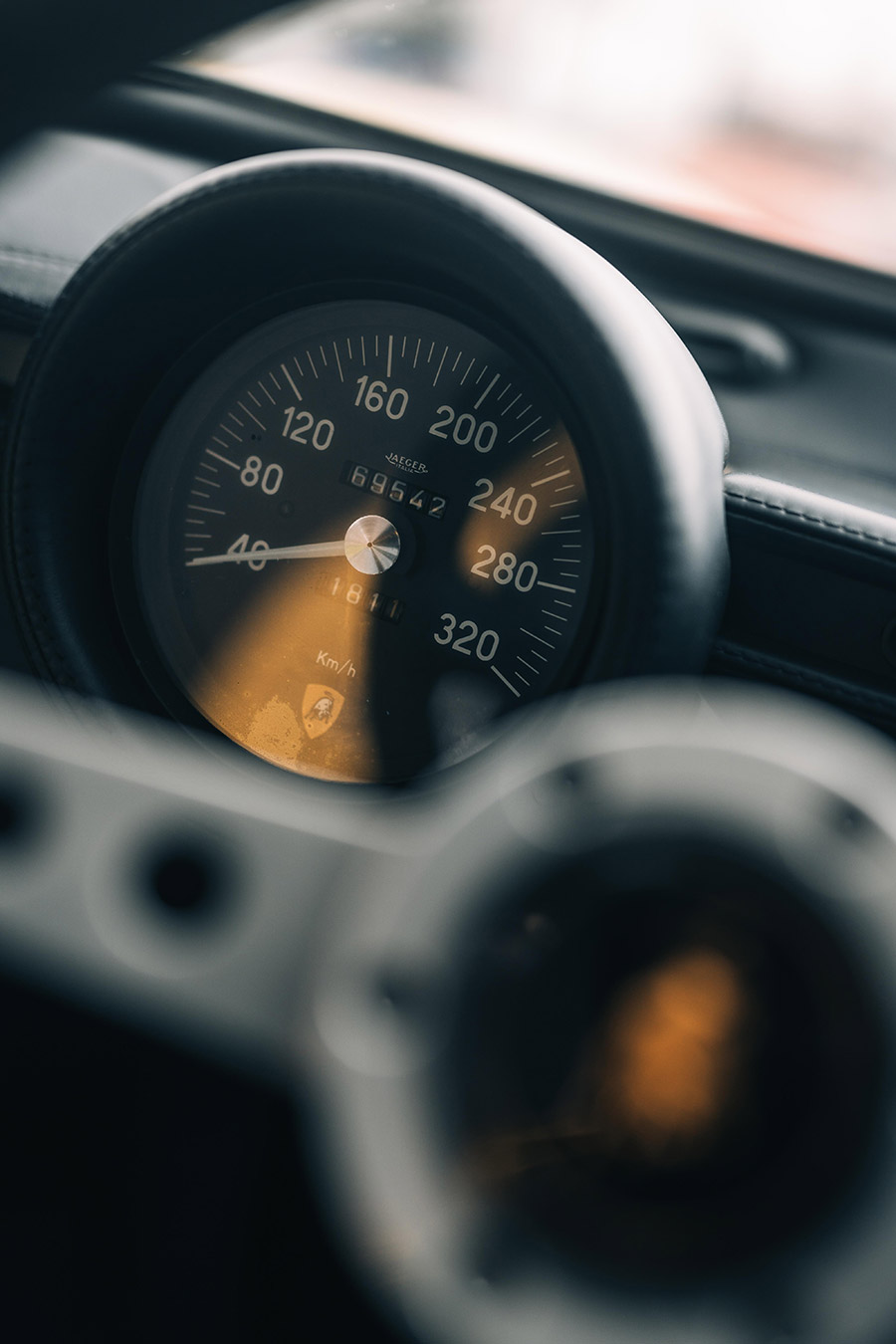
The original P400 established the formula in 1966 with a 3.9-liter V12 producing 350 horsepower, a five-speed manual, a top speed of roughly 280 km/h, and the kind of balance and immediacy that made it feel closer to a road-legal competition car than a conventional touring machine. Then came the P400 S, which lifted output to 370 horsepower while adding a little more polish to the cabin and chassis. The final act, the P400 SV, pushed the idea harder still, with 385 horsepower, a top speed beyond 290 km/h, wider rear track, and separate lubrication for engine and transmission. It was the Miura at its most resolved, most road-ready, and most complete.
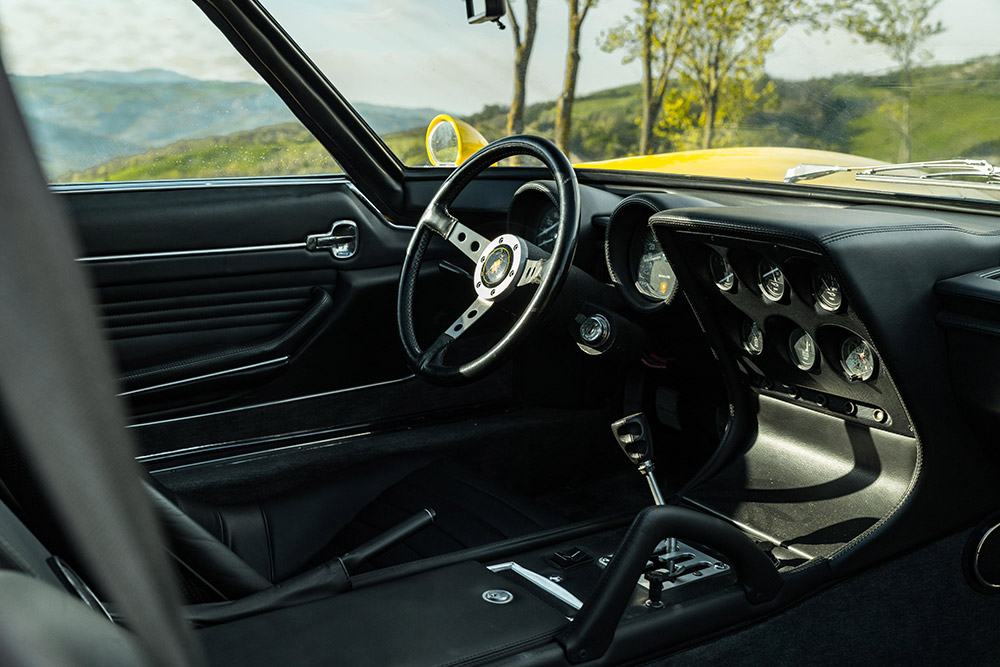
And yet the Miura never lost the rawness that made it such a revelation in the first place. Official Lamborghini history records 265 P400 cars, 338 P400 S models, and 150 SVs, which helps explain why the car’s presence still feels so concentrated today: rare enough to remain mythical, influential enough to feel everywhere. This is one of those machines whose shape became part of the larger cultural memory of speed.
More Than a Car World Car
The Miura’s impact was never confined to spec sheets and concours lawns. Lamborghini notes that it appeared in 43 films, and its place in cinema folklore was cemented by The Italian Job, whose opening sequence helped frame the Miura not just as a performance icon, but as an object of pure atmosphere. It was also the car of choice for musicians, actors, collectors, and royalty—evidence that the Miura moved easily between engineering achievement and cultural symbol. Few cars have done that with quite the same ease.
Why It Still Matters
Six decades later, the Miura remains important for more than nostalgia. Lamborghini’s 2026 anniversary program includes global celebrations and a dedicated Polo Storico tour in Northern Italy from May 6–10, underscoring how central the model remains to the brand’s own understanding of itself. That makes sense. The Miura was the first Lamborghini to prove that radical engineering could be inseparable from beauty, that outrageous performance could live inside sculpture, and that a road car could permanently alter the trajectory of an entire category.
That is why the Miura still feels modern. Not because time forgot to touch it, but because it arrived so far ahead of its moment that the rest of the industry has been catching up ever since.