
There’s a quiet kind of confidence in design that doesn’t chase novelty—design that refuses to date itself. Bugatti has been practicing that discipline for 116 years, threading a recognizable identity through wildly different eras of engineering and taste. And in the Tourbillon, that philosophy isn’t a slogan—it’s the interior’s job description.
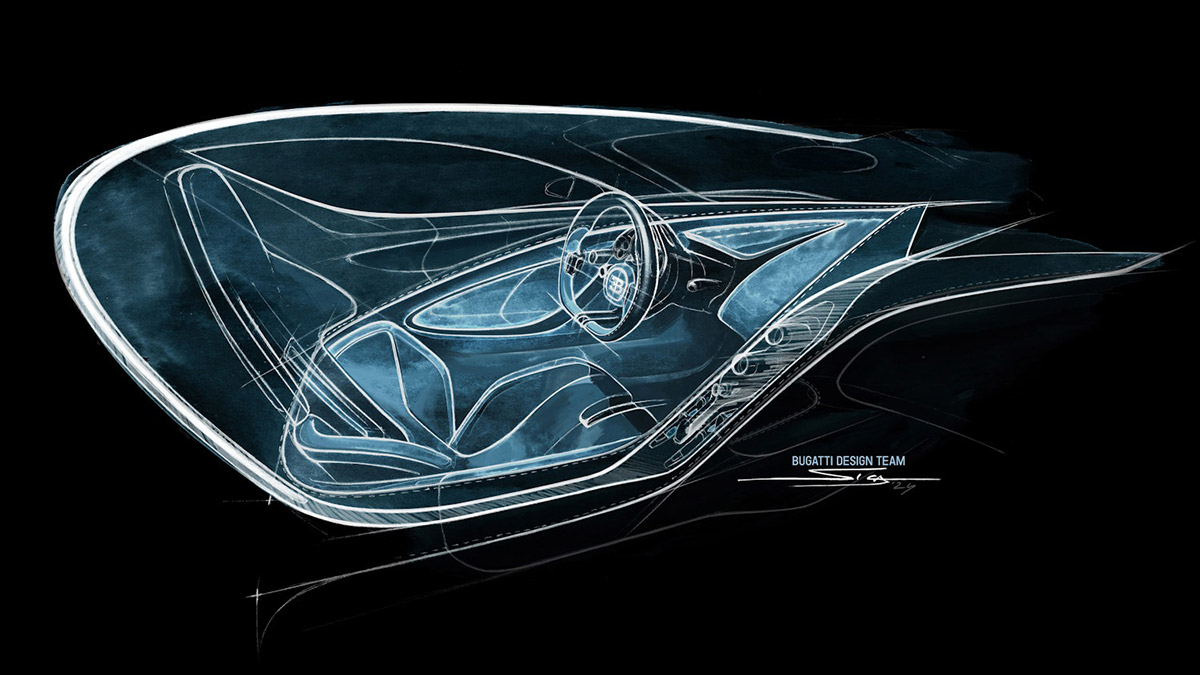
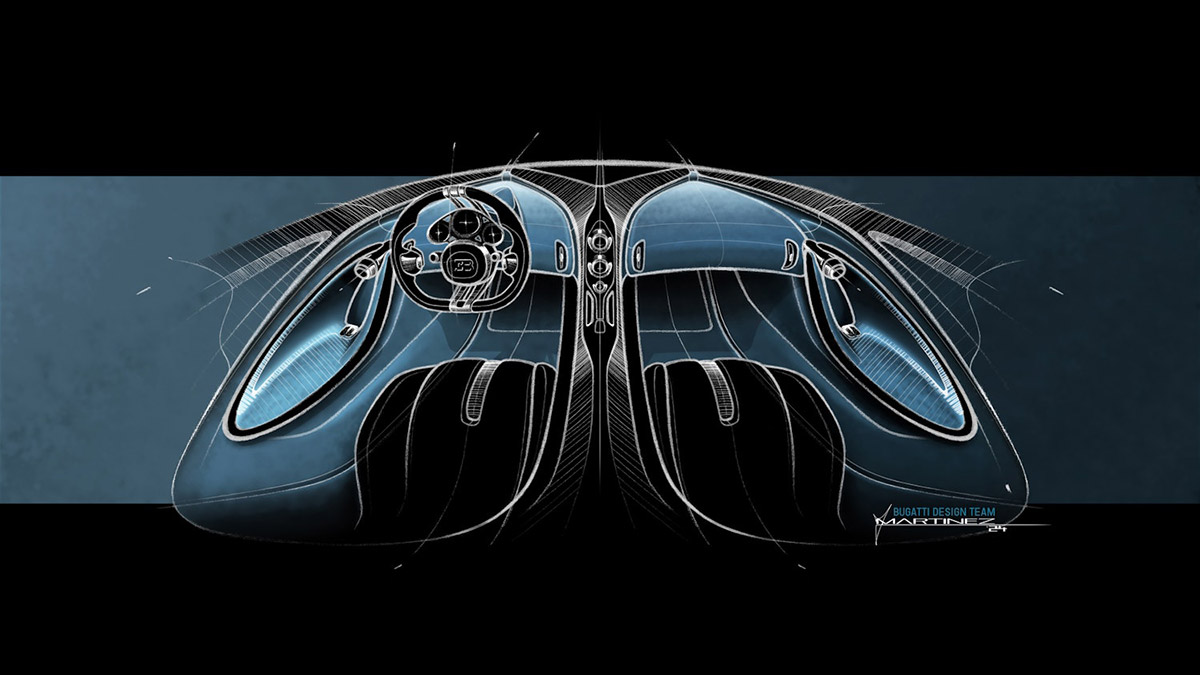
In Bugatti’s “A New Era” series, the Tourbillon’s cabin is presented not as a backdrop for performance, but as a full narrative: from the first sketch, through hard packaging realities, into a finished environment that’s meant to feel inevitable—like it was always supposed to exist this way. Chief Interior Designer Ignacio Martinez describes that journey as both creative and deeply methodical: honoring Bugatti DNA, building a theme, and crafting a user sequence that makes sense every time you step inside.
A cockpit drawn on a center line
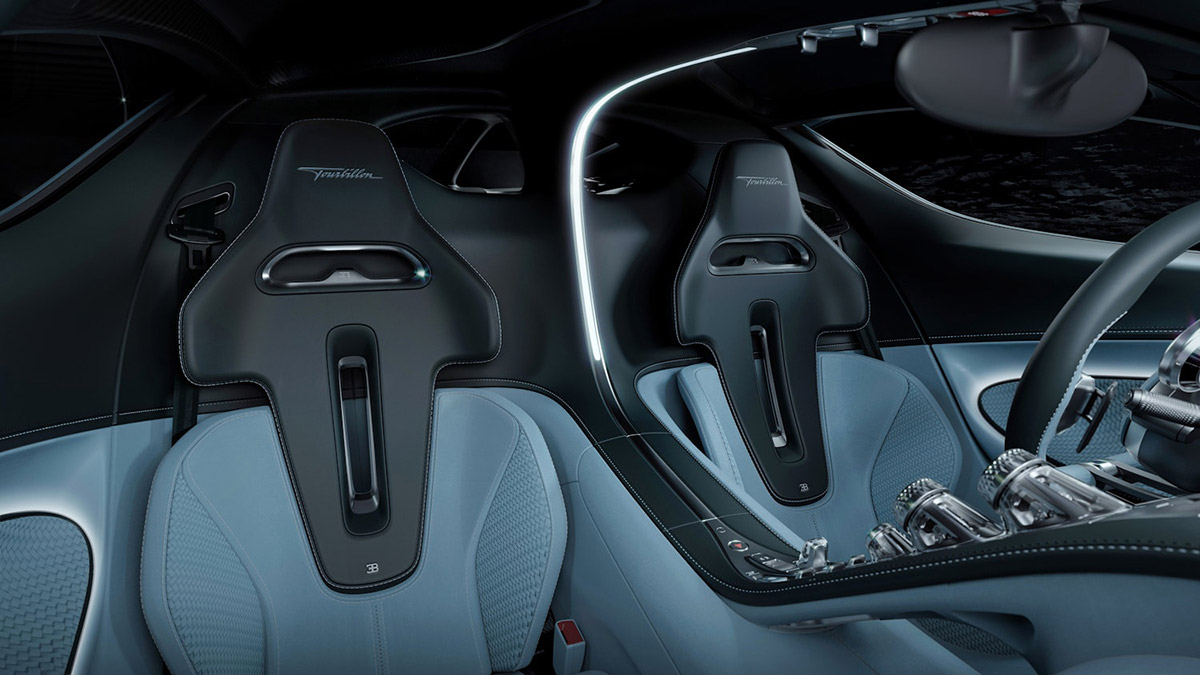
Bugatti cabins have always had structure—lines that guide the eye and define the experience. In the Tourbillon, the brand’s iconic center line and C-line translate into the interior and converge into a new form, creating a distinct, bespoke space: driver on one side, passenger on the other. It’s a subtle separation that reads as design—until you realize it’s also choreography, guiding hands and attention where Bugatti wants them.
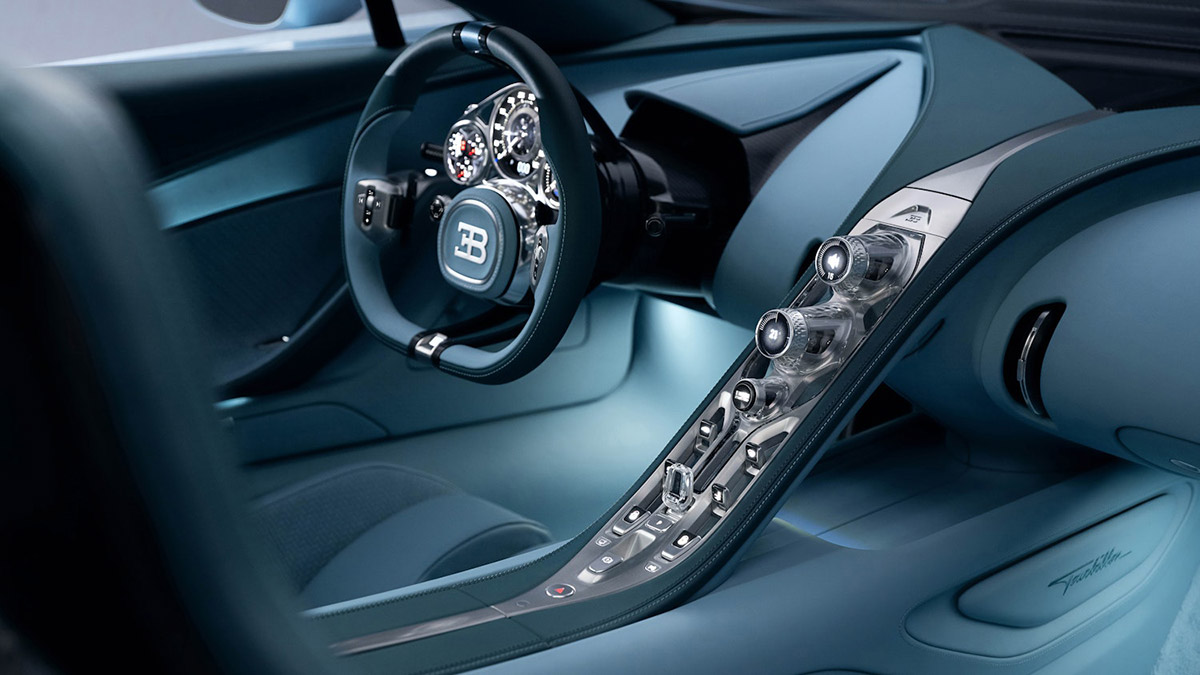
The visual architecture is reinforced with a horizontal color split and an expanded palette of materials. The idea isn’t to shout “luxury,” but to build an atmosphere—heritage and craftsmanship rendered in textures that feel intentional at a glance and rewarding up close. Bugatti points to newly developed, tailor-made fabrics for seats and door interiors paired with supple leather, an approach the brand calls “car couture,” translating haute couture thinking into the automotive world.
The hard part: making timelessness street-legal
It’s easy to romanticize “concept” interiors—until you remember the real world insists on rules. The Tourbillon’s cabin development was forced to balance artistry with the non-negotiables of a modern road car: airbag requirements, seatbelt geometry, and crash behavior—plus comfort and performance expectations. Martinez is explicit about that tension: the interior had to be designed not only to look and feel exceptional, but to meet the constraints that bring it to production.
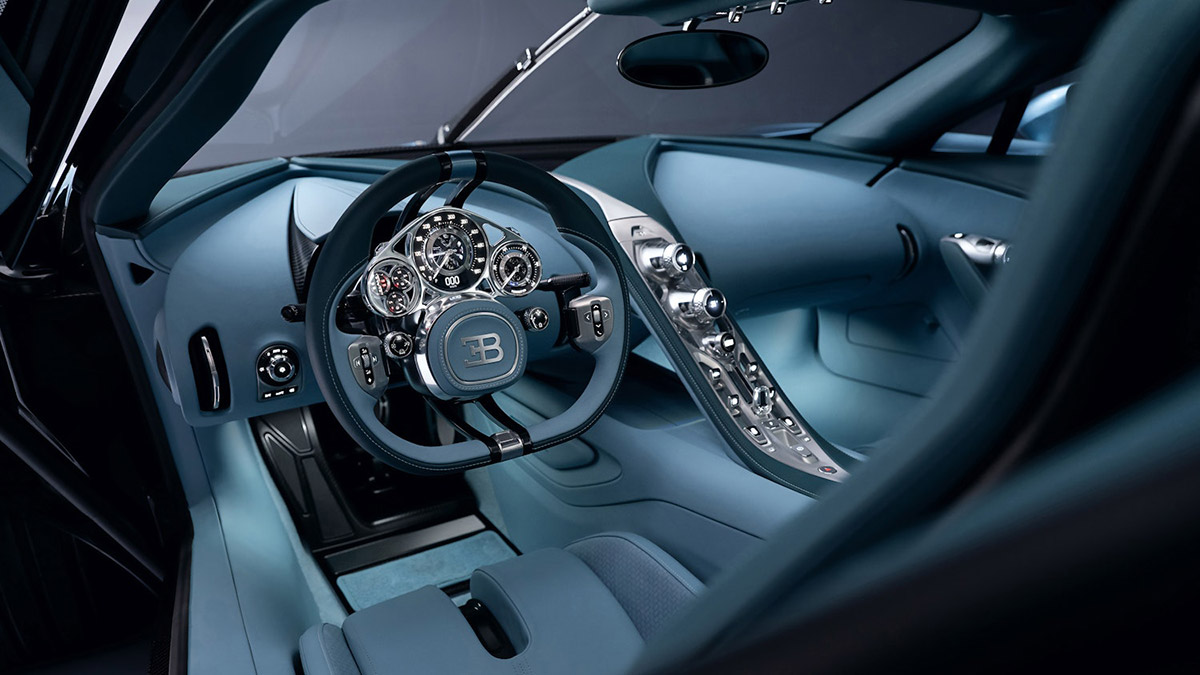
That practical reality matters because it’s part of what makes the Tourbillon interior impressive. The cabin isn’t a fantasy carved from compromise-free space. It’s a finished, engineered environment that aims to preserve the purity of the concept while still living in the world.
Tourbillon: not just a name—an interior thesis
Bugatti names the car after a watchmaking innovation from the very early 19th century. That reference isn’t decorative; it’s the interior’s organizing principle. The Tourbillon’s cabin is built around the idea of timelessness—objects that can be admired across generations, rather than aged by trends. Design Director Frank Heyl frames the decision bluntly: in a digital era, Bugatti wanted analogue technology—what Bugatti describes as a meeting point between watchmaking craft and a kind of “digital detox.”
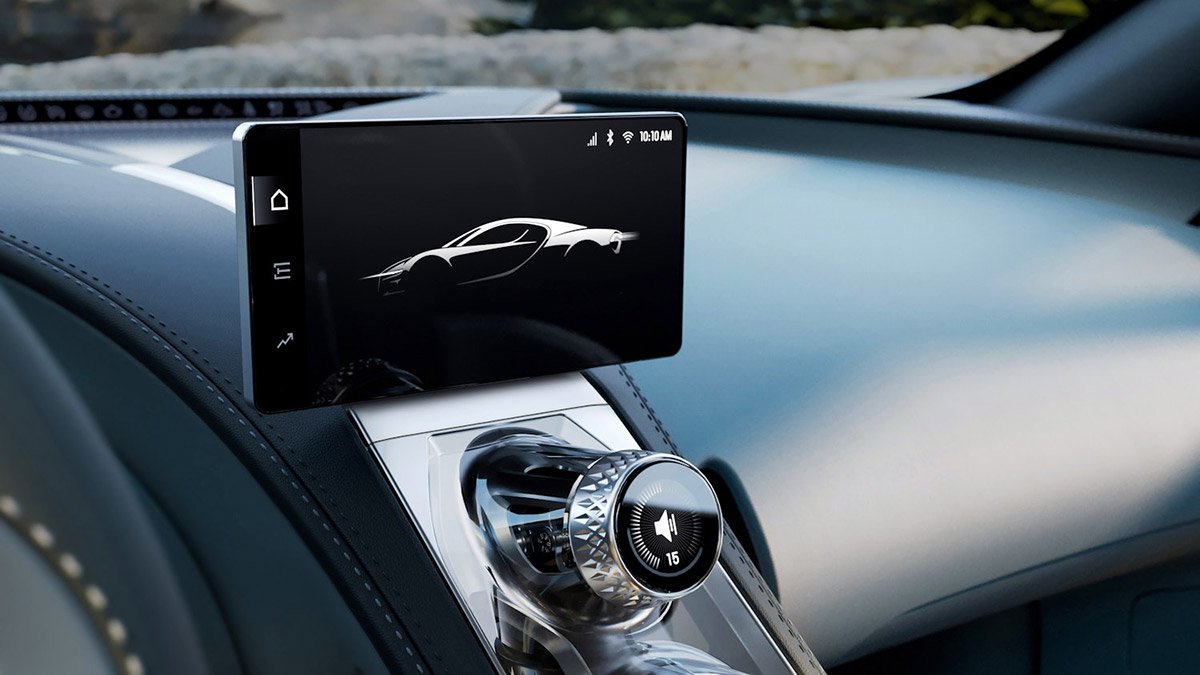
That’s the pivot that defines the Tourbillon interior. Instead of filling the cabin with permanent screens, Bugatti minimized the digital footprint and emphasized physical controls engineered for quality haptic feedback—resistance, travel, the satisfying sense that the car responds to touch with mechanical seriousness. When the car does need a display, Bugatti’s solution is deliberately restrained: the central display is hidden inside the dashboard and deploys only on command.
The centerpiece: an analogue promise you can see
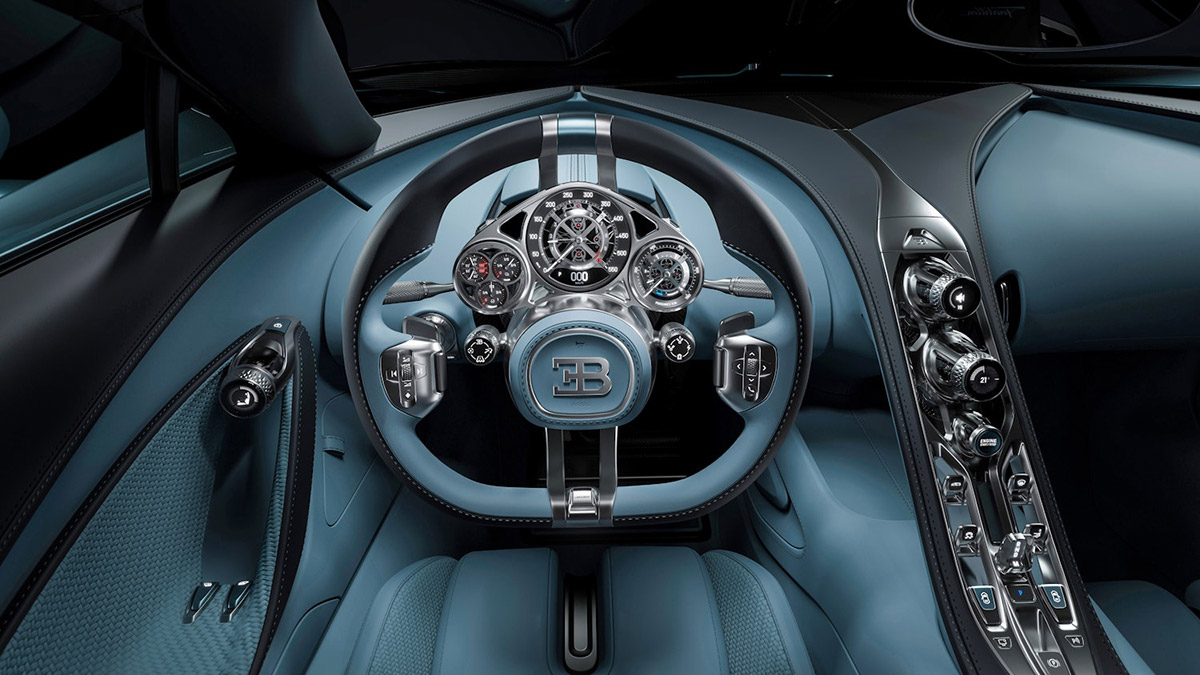
Follow the interior’s center line and your eyes land where Bugatti wants them: the steering wheel and instrument cluster—described as the centerpiece of the driving experience.
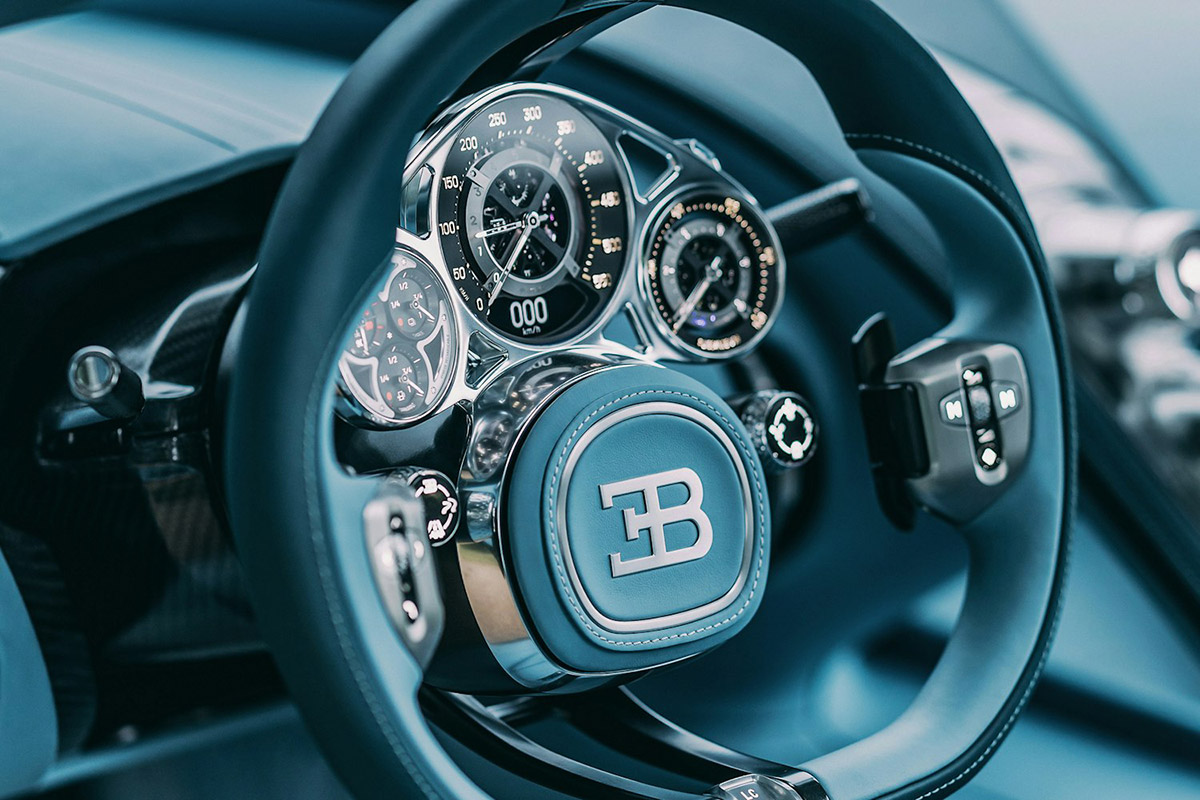
This is where the Tourbillon’s philosophy stops being an idea and becomes a mechanism. The steering wheel uses a fixed-hub concept: user controls and paddle shifters are integrated within the rim, while the rim rotates freely around the central airbag. Bugatti calls it a mechanical achievement—one that pairs naturally with the exquisitely crafted dial binnacle positioned beneath.

And then there’s the instrument cluster itself: fully analogue, engineered as a machine in miniature. Bugatti says every gear and mechanism was developed together with master watchmakers in Switzerland—an explicit bridge between horology and motoring craftsmanship.
Even the cluster’s visual language leans into that mechanical beauty: milled aluminum casing, an elegantly skeletonized composition, and a crystal-housed display. Bugatti notes that the effect recalls the refined mechanical simplicity of the brand’s early 20th-century models—less about nostalgia, more about continuity.
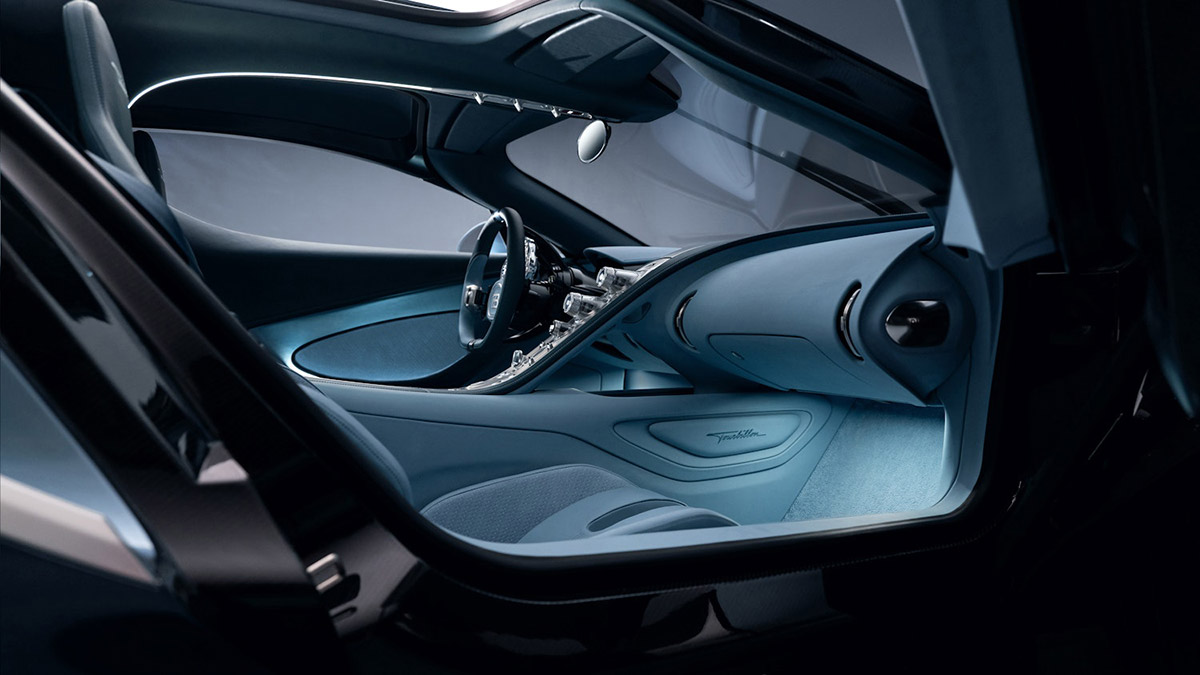
Martinez sums up the intent with a line that feels like the Tourbillon interior’s mission statement: everything inside is semantically connected to watchmaking—so the experience can remain timeless for years to come.
Why this matters
Bugatti’s interior strategy is unusually editorial: it’s designed to be understood quickly, then admired slowly. Big, legible architecture (center line, split cockpit). Then layered detail (materials, couture logic). Then the signature moment—an analogue cluster that reads like a mechanical artifact, not a UI.
That’s why the Tourbillon interior doesn’t just look premium. It looks decisive. It’s Bugatti betting that the future of luxury isn’t more screens—it’s more permanence.